Japan’s bond market tests a ceiling policymakers can no longer ignore
Japan’s 10-year government bond yield reached a three-decade peak on 18 August 2026, turning a domestic fiscal signal into a wider test of how much geopolitical risk investors will still absorb.
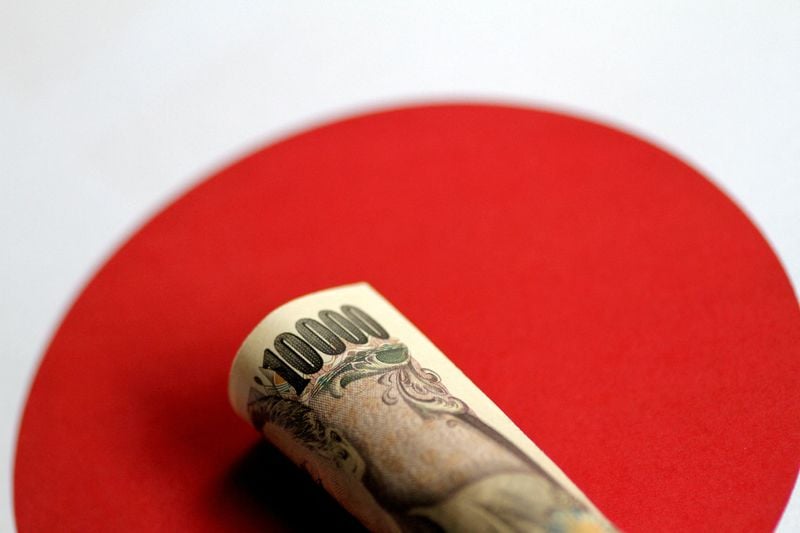
At 00:18 UTC on 18 August 2026, Japan’s 10-year government bond yield rose to a three-decade peak. The move is more than a market statistic. It is a warning that one of the world’s most important sovereign debt markets is beginning to price uncertainty with a seriousness that official rhetoric has not matched.
The available reporting does not specify the exact closing yield, the size of the daily move or a single cause for the rise. That matters. A bond yield can move because investors demand more return for lending, because expectations about inflation or policy change, or because they are trading liquidity and risk in a volatile session. The safe conclusion is narrower, but still consequential: Japan’s long-term borrowing costs are now trading at their highest level in roughly three decades.
The price of patience
The immediate story is a repricing in Tokyo. The 10-year bond is a benchmark for the country’s borrowing costs and a reference point across the financial system. When its yield reaches a three-decade peak, the signal reaches beyond the bond market. Banks, companies and policymakers all face a less forgiving arithmetic: capital costs are no longer anchored in the low-yield environment that shaped Japan’s post-crisis economy.
The reporting supplied for this article does not specify the exact yield, the Japanese government’s response or a full account of the trading behind the move. It would therefore be wrong to turn one market print into a declaration that Japan has lost control of its debt market. The more defensible reading is that investors are testing how much risk they are willing to carry at a time when geopolitical friction is rising around Japan’s security environment.
Japan’s position is unusually sensitive to that question. Tokyo sits beside a major power whose military posture and regional ambitions are central to Japanese security planning, while Russia has publicly criticised Japan for what it describes as efforts to highlight Moscow’s military moves. The dispute is not a market catalyst that the available sources quantify. It is the political background against which investors are deciding whether Japan’s traditional stability still deserves the valuation it once commanded.
The alternative explanation is mundane: the yield rise may reflect technical market forces rather than a geopolitical verdict. Bond prices move every day, and the supplied reporting does not identify a policy decision or a single external shock. Monexus analysis: the most plausible reading is that both explanations are operating together. The market can be responding to ordinary supply, inflation and positioning dynamics while also placing a higher risk premium on Japan because the country is being drawn more directly into a dangerous regional security conversation.
Moscow’s complaint, Tokyo’s dilemma
On 18 August 2026, Russian Foreign Minister Sergei Lavrov accused Japan of seeking to cover up its own military moves by lashing out at Russia, according to CGTN. The statement is a political accusation, not independent evidence of the underlying military facts. Its significance here is that Moscow is publicly contesting the framing of Japan’s response rather than allowing Tokyo to set the terms of the dispute.
That exchange places Japan in a difficult position. Its government can defend its own military posture while criticising Russia, but every public confrontation raises the possibility that markets will treat Japan as a more direct participant in a regional security confrontation. The economic effect is not automatic, and the available source items do not establish a direct causal link between Lavrov’s comments and the 10-year yield. The risk is nevertheless intelligible to investors: a country with a large sovereign debt market cannot assume that geopolitical distance will insulate its currency, bonds or fiscal choices.
Russia’s framing also matters because it presents Japan’s security policy as part of the problem, not as a response to it. That is Moscow’s position, and it should be reported as such rather than treated as a neutral description. Japan’s underlying concern remains the military pressure and uncertainty created by Russia’s actions, while the specific details of the latest military moves are not specified in the available source material.
The market does not need to resolve that argument to price it. Investors must price the chance that rhetoric hardens, that security spending competes with other fiscal demands and that Japan’s relationships with major powers become more costly to manage. A three-decade peak in a benchmark yield is not proof that those costs have arrived all at once. It is evidence that the market is no longer treating them as negligible.
A fiscal balance under pressure
Japan’s sovereign bond market is where domestic politics and international power meet. A higher 10-year yield can affect the government’s cost of financing, but the available source does not provide a figure for debt-service costs, budget deficits or the Bank of Japan’s policy response. The correct analytical discipline is to distinguish between a market signal and a fiscal outcome. The former is documented; the latter cannot be calculated from the supplied reporting.
Even so, the direction of travel is politically uncomfortable. Tokyo must fund public spending while maintaining credibility with investors who have spent years operating in an environment of exceptionally low borrowing costs. If yields remain elevated, the pressure will appear first in refinancing and then in the political choices required to keep public finances sustainable. The market’s message is not that a particular budget must be cut. It is that the price of waiting for perfect certainty has risen.
This is also why the geopolitical dispute cannot be confined to foreign ministries. Japan’s defence choices, alliance commitments and relations with Russia now sit inside a fiscal calculation. The country’s security policy has an economic cost, and its economic choices can shape the credibility of its security posture. Investors are not asked to approve that posture, but they are asked to price it.
The key uncertainty is whether the yield move marks a lasting change in Japan’s risk premium or a brief adjustment around an unreported catalyst. The source record does not specify the yield’s prior close, the auction context or the participation of domestic and foreign investors. Without those details, the case for a structural break remains incomplete.
What investors will watch next
The immediate test is persistence. If the 10-year yield remains near its three-decade peak after the volatility of 18 August 2026, the market will have delivered a stronger signal than a single print. A retreat would suggest that the move was driven by temporary positioning. Another leg higher would raise the cost of Japan’s fiscal and security choices together.
The second test is policy. Any official statement on bond purchases, interest rates, fiscal financing or military expenditure could clarify whether the government sees the yield rise as a market event or a strategic problem. The supplied sources do not specify such a response, and this article does not have material on whether one is being prepared.
The third test is the Russia-Japan dispute. Lavrov’s accusation shows that the diplomatic contest is active, but it does not establish what military activity prompted Tokyo’s response or whether the dispute will widen. The more confrontational the rhetoric becomes, the more investors may demand compensation for holding Japanese duration. Conversely, if the exchange remains rhetorical, the yield spike may prove less durable than its headline suggests.
Monexus assessment: the strategic point is that Japan is entering a less forgiving market environment, one in which fiscal credibility and geopolitical credibility can no longer be treated as separate. Tokyo’s challenge is not simply to finance its debt more cheaply. It is to persuade investors that the country can manage security pressure without allowing the cost of confrontation to become a self-reinforcing fiscal burden.
Japan’s 10-year yield has crossed a symbolic threshold. The next useful signal will not be another dramatic comparison, but the persistence of the move after policymakers and investors have had time to explain it.
Desk note: Monexus framed the yield rise as a documented market signal, while separating it from claims about causation, fiscal costs and military activity that the supplied source items do not specify.
Wire provenance
This editorial synthesis draws on the following public wire/social posts:
- https://www.investing.com/news/economy-news/japans-10year-government-bond-yield-rises-to-threedecade-peak-4864126
- https://reut.rs/4gCCg2r
- https://x.com/Reuters/status/2089568017378066595
- https://news.cgtn.com/news/2026-08-18/Russian-FM-slams-Japan-for-seeking-to-cover-up-its-own-military-moves-1PHsYVvQ6Mo/p.html
- https://x.com/CGTNOfficial/status/2089547838703419514
- https://www.investing.com/news/economy-news/japans-10year-government-bond-yield-rises-to-threedecade-peak-4864126
- https://reut.rs/4gCCg2r
- https://x.com/Reuters/status/2089568017378066595
- https://news.cgtn.com/news/2026-08-18/Russian-FM-slams-Japan-for-seeking-to-cover-up-its-own-military-moves-1PHsYVvQ6Mo/p.html
- https://x.com/CGTNOfficial/status/2089547838703419514