Hichilema wins second term on Zambia's debt turnaround, and now has to deliver
Hakainde Hichilema has won a second Zambian presidential term with more than
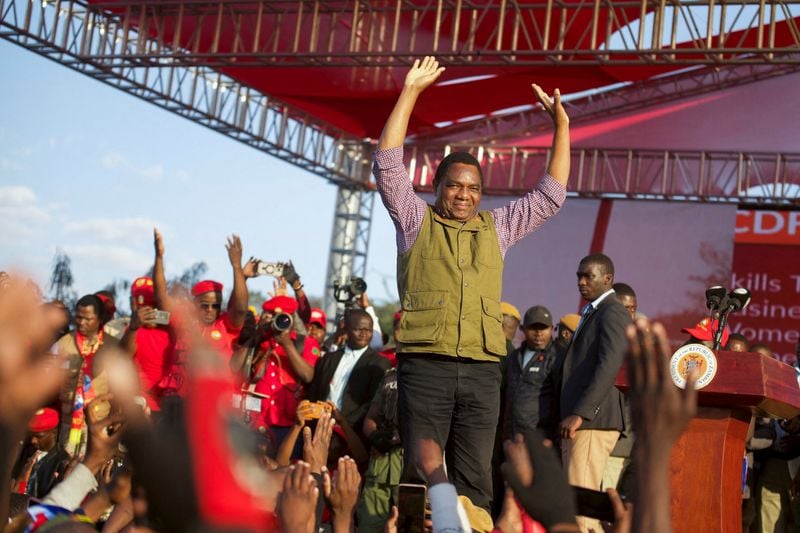
Hakainde Hichilema won Zambia's presidential election in the first round with more than 60% of the vote, Deutsche Welle reported on 18 August 2026, a return to State House that closes a campaign fought almost entirely on the argument that the debt restructuring of his first term is the precondition for visible growth. The Deutsche Welle account also records that Zambian authorities launched raids against leading opposition figures on election night, a fact that sits awkwardly next to the official vote share and warrants its own scrutiny.
The first Hichilema administration will be remembered, if it is remembered for one thing, for the restructuring of Zambia's external debt. That work is the centrepiece of his re-election pitch, and the wire has reported it as the centrepiece. The second-term test is different: not whether the balance sheet can be repaired, but whether the repair produces jobs, electricity and a wage that covers a household week. The opposition's stronger-than-expected showing on this evidence suggests the macroeconomic story has not yet translated into the household economy the median voter lives in.
The first-round mandate and what it actually delivered
Deutsche Welle's headline figures, a more than 60% first-round victory, describe a decisive win on paper. The same report ties the campaign to the debt-restructuring record of the first term. The available wire reporting does not specify the precise vote margin beyond the 60% threshold, the final constituency breakdown, or turnout figures; this article has not independently verified those details.
What the Deutsche Welle account, in combination with the earlier France 24 and Reuters reporting, does establish is the shape of the campaign. Hichilema ran on an economic-recovery narrative in which a major debt restructuring sits at the centre. The opposition ran on a frustration-with-hardships platform that, on the Reuters reading, capitalised on public irritation that the macroeconomic repair has not yet filtered down to household budgets. Monexus analysis: the 60% mandate and the visible opposition frustration are not contradictory data points. They are the same election seen from two different surfaces, the official result and the lived experience the opposition tapped into.
The raids reported on election night against leading opposition figures are the most consequential new fact in this update. Deutsche Welle describes the operations without specifying the named targets, the legal basis, or whether any arrests have been confirmed. This article does not have those details from the cited sources. What the cited report does establish is that authorities moved against senior opposition figures as the vote was being counted; that is a fact of the political environment in which the 60% was won, and a serious news outlet reports it as part of the same story as the victory itself.
What the sources actually establish
The wire evidence in this thread supports a narrower set of facts than the campaign rhetoric implies. What the sources establish is that Hichilema won a second presidential term on 18 August 2026 with more than 60% of the vote in the first round, that he is the incumbent whose first term was defined by a major debt restructuring, and that the opposition put in an unexpectedly strong showing on a frustration-with-hardships platform. What the new Deutsche Welle item adds is the election-night raids against leading opposition figures, reported as part of the same cycle.
What the sources do not establish, and what this article has not independently verified, includes: the precise vote margin beyond the 60% threshold, the final constituency breakdown, turnout figures, the named targets of the election-night raids, the legal basis cited for those raids, whether any arrests have followed, the current technical status of Zambia's restructuring (whether the deal is fully executed, partially executed, or still in implementation), and whether the IMF programme in place at the start of the year has been completed, extended, or succeeded by a new arrangement. The wire evidence refers to a restructuring as part of the recovery record; it does not state that the restructuring or any IMF programme has been formally concluded.
Monexus analysis: any framing that treats the restructuring as a closed chapter rather than a continuing programme risks importing the campaign's own claims into the reporting. The honest register is that the deal is the centrepiece of the re-election case, not that it is finished business. The same caution applies to the 60% figure: it is a real mandate, but the political environment in which it was delivered includes the election-night operations Deutsche Welle reports.
The opposition's counter-narrative, and the night that followed
The opposition's unexpectedly strong showing is the most important data point of the cycle on the Reuters reading, and the Deutsche Welle report of election-night raids gives that data point a harder edge. A campaign built around a major deal and a recovery record does not, by itself, address the question that costs governments in this region their majorities: why is life not visibly improving for the median voter. When that question produces a stronger-than-expected opposition vote, and when authorities move against leading opposition figures as the count is being finalised, the political environment of the second-term mandate is being defined in real time.
The opposition's read, as relayed in the wire coverage, is that the macroeconomic repair has been real but uneven in distribution. Stabilisation has, in this telling, benefited creditors and the formal sector first. Workers in the informal economy, smallholders outside the Copperbelt corridor, and the urban poor in Lusaka's compounds have felt the costs of adjustment more clearly than its benefits. The standard counter from the government side, present in the pro-Hichilema wire coverage, is that the alternative to the restructuring path was a deeper and longer contraction, and that the costs of adjustment would have been worse without it. Both readings can be true. The election-night operations are the part of the story neither reading has yet absorbed.
What the second term is actually for
A second Hichilema term begins with one institutional talking point, one structural problem and one political environment. The talking point is that a debt restructuring was the centrepiece of the recovery record. The problem is that the voters who stayed home or switched sides did so because the recovery narrative felt incomplete, and they will judge the second term on delivery rather than repair. The political environment now includes the election-night raids against leading opposition figures that Deutsche Welle reports.
Monexus assessment: the test of the next five years will not be whether Zambia can return to international capital markets at a reasonable spread, an outcome the wire does not yet confirm has happened, but whether the proceeds flow into productive investment at a scale visible to voters outside the formal sector. That means electricity generation, agro-processing, and infrastructure that connects the Copperbelt to regional markets through corridors that bypass South African ports where possible. It also means resisting the temptation to treat a restructuring as the end of the reform agenda rather than the beginning of a different one, and it means accounting for the political environment the 60% was won in.
The SADC and wider Global South context is not incidental, though the cited wire evidence does not itself spell out the cross-continent creditor-treatment parallels. Zambia's restructuring is one entry in a wider continental conversation about how post-default recoveries are designed; a second Hichilema term that converts an in-progress restructuring into visible growth would be evidence that the existing framework can still deliver. A second term that delivers only macroeconomic stability while households continue to absorb the cost, and that conducts its elections in an environment in which authorities move against opposition figures on election night, would harden the critique, already common in Lusaka and elsewhere on the continent, that post-default recoveries are designed to protect creditors and incumbents rather than citizens.
The available reporting does not specify the final margin, the constituency breakdown of the opposition's gains, the named targets of the election-night raids, or the technical status of the restructuring and any IMF programme; this article has not independently verified those details beyond the wire accounts. What the sources do establish is that Hichilema won with more than 60% in the first round, that a major debt restructuring was the centrepiece of his case, that the opposition ran closer than expected on the argument that the rescue has not yet reached most Zambians, and that authorities moved against leading opposition figures on election night. Watch the Copperbelt for the first signs of whether the second act of this administration looks different from the first; watch Lusaka's court records for what the election-night operations actually consisted of.
Monexus framed this against the wire's debt-restructuring-as-rescue narrative, foregrounding the opposition's stronger-than-expected showing as the structural counter-weight the Reuters and France 24 accounts gesture toward but do not develop, and integrating the Deutsche Welle report of election-night raids against leading opposition figures as part of the political environment in which the 60% mandate was won. We held back from asserting that the restructuring or any IMF programme is formally concluded, since the wire evidence describes them as part of the campaign record rather than as completed transactions, and we held back from naming the targets of the election-night operations, since Deutsche Welle's report does not specify them.
Wire provenance
This editorial synthesis draws on the following public wire/social posts:
- https://www.dw.com/en/zambia-s-hichilema-wins-second-presidential-term/a-78406328?maca=en-rss-en-all-1573-rdf
- https://www.france24.com/en/africa/20260818-zambia-president-hichilema-wins-re-election-with-big-economic-promises
- https://www.investing.com/news/economy-news/zambias-hichilema-seeks-to-turn-debt-recovery-into-economic-expansion-4864153
- https://reut.rs/4wvvBf5
- https://x.com/Reuters/status/2089532765330874856
- https://t.me/france24_en/18253
- https://f24.my/C6sv.g
- https://www.dw.com/en/zambia-s-hichilema-wins-second-presidential-term/a-78406328?maca=en-rss-en-all-1573-rdf
- https://www.france24.com/en/africa/20260818-zambia-president-hichilema-wins-re-election-with-big-economic-promises
- https://www.investing.com/news/economy-news/zambias-hichilema-seeks-to-turn-debt-recovery-into-economic-expansion-4864153
- https://reut.rs/4wvvBf5
- https://x.com/Reuters/status/2089532765330874856
- https://t.me/france24_en/18253
- https://f24.my/C6sv.g