Hichilema wins a second term; the harder fight is over Zambia's copper
Hakainde Hichilema has won a second term with more than 60% of the vote, but the harder fight is the one Lusaka now has to navigate: how the savings from his debt-restructuring record get spent, and on what terms Zambia's copper reaches Washington and other buyers.
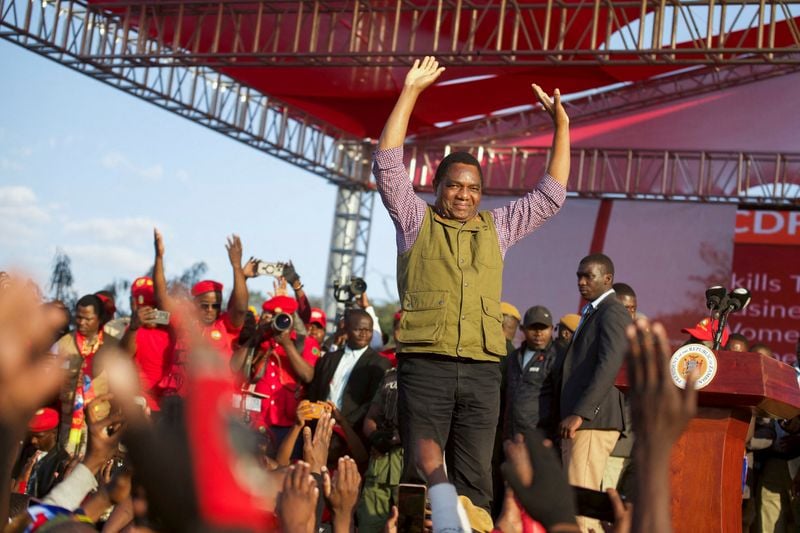
Lusaka returned Hakainde Hichilema to State House in the early hours of 18 August 2026, with electoral officials putting the incumbent above 60% of the vote in the first round, a margin wide enough to rule out a runoff but not wide enough to bury the opposition's complaints. The result, announced after a count briefly halted by attacks on election officials, hands the incumbent a second five-year term and a mandate to convert the debt restructuring he has campaigned on into something more durable: actual industrial capacity, on a continent where commodity booms have historically enriched distant smelters more than local economies.
The contest was, on paper, a referendum on economic recovery. Zambia spent years under a debt overhang that the incumbent has spent his first term unwinding, and Hichilema's pitch was that he had walked the country back from the brink. The opposition's pitch was that ordinary Zambians had not felt the walk-back, and that the price of mealie meal, the cost of fuel, and the slow grind of unemployment had not moved enough to match the macro headlines. Both stories were true. The vote suggested that, on balance, voters trusted the incumbent with the next chapter more than they trusted the alternative, but the stronger-than-expected opposition showing is the real measure of how thin that margin of confidence is. France 24, reporting on the same result, framed the second term as Hichilema's attempt to convert a debt-restructuring record into a wider economic promise.
The economy Hichilema inherits
The macro story is genuine. The Investing.com write-up published at 01:00 UTC on 18 August frames Hichilema's project explicitly as turning debt recovery into economic expansion, a phrase that catches the second-term ambition: not just paying creditors on time, but routing the savings into power, rail, and processing capacity so that more value from Zambian copper stays in Zambia. The France 24 dispatch at 01:50 UTC on the same day led on the same point, that Hichilema won a second term "after campaigning on his record of economic recovery, including a major debt restructuring deal."
The micro story is harder. Public frustration with the cost of living gave the opposition a stronger-than-expected showing, and Deutsche Welle's 04:03 UTC report on 18 August led with raids on the homes of senior opposition figures on election night. The Deutsche Welle framing also placed those raids in the same paragraph as the result, putting the celebratory coverage and the irregularities on the same page. Both are first-order facts. The European and African press have, in past Zambian cycles, been quicker to treat such reports as opposition talking points; this time the raids are on the record of a major German public broadcaster, which raises the cost of looking away.
What the supplied reporting does not specify is the size of the debt restructuring that Hichilema campaigned on, the creditor composition of that deal, or the policy instruments the government used to compress sovereign spreads. The "second chapter" argument has to be read off the Investing.com framing and the France 24 headline language, not off a detailed debt ledger in the wire reports on 18 August. The available source items do not specify how those savings have been routed in the first term, or whether the wage bill or the capital budget has been the larger claimant on the fiscal space. Readers looking for a forensic reconstruction of the first-term fiscal record will need to look beyond the 18 August wire.
Washington, the copper question, and the corridor
The harder second-term problem sits in Washington, not Lusaka. The New York Times piece published at 02:00 UTC on 17-18 August frames the next chapter as a negotiation with the Trump administration, which, per the report, "has sought greater access to the copper-rich nation's natural resources." That is the only characterisation of the US position the supplied 18 August wire supports, and any tighter reading of what Washington is asking for has to be set aside until more reporting lands.
This is where the structural frame matters. Critical-mineral politics is not a bilateral story between donor and recipient; it is a corridor story, with multiple competing anchors and competing models of how a copper economy gets built. Monexus analysis: the natural reading of the supplied evidence is that Lusaka will be forced to triangulate, accepting small packages from several partners rather than a single grand bargain, because the political cost inside Zambia of choosing one anchor over the others is plausibly higher than the financial benefit of any one of them. That judgment is ours, not the wire's, and it sits on a thinner factual base than is comfortable: the supplied sources do not specify the precise terms of any non-US engagement in Zambia's copper belt, nor do they describe the structure of the US conversation in any detail beyond the general line that the Trump administration has sought greater access. The structural argument is therefore offered as analysis, with the caveat that the granularity in the public reporting on 18 August does not yet support a finer-grained forecast.
A plausible alternative reading is that Zambia is already sliding into an American sphere of influence on critical minerals, and that the second term is essentially a managed transition out of an alternative orbit in copper processing. The supplied sources do not commit this publication to that reading. The Reuters and France 24 dispatches record a re-election framed around debt restructuring and economic recovery, not around any specific alignment with Washington on copper. The dominant framing, that Lusaka is keeping its options open rather than committing, holds for now, but the next twelve months will tell us whether that posture survives contact with the politics of the Trump White House.
What the vote does, and does not, settle
Hichilema can claim a personal mandate and a continued ability to negotiate from the largest electoral coalition in the country. That is not nothing. It closes the door, at least for this cycle, on the kind of sequenced political crisis that consumed Zambia between 2016 and 2021, and it gives the executive the political room to keep the reform track running into the second term. Reuters, via the X post timed at 02:00 UTC on 18 August, characterised the result as a re-election in which "the opposition leader put in an unexpectedly strong showing, capitalizing on public frustration with lingering hardships," which is the sentence to remember when the victory tours are over and the budget tables come out.
It does not settle the cost-of-living question that powered the opposition's stronger-than-expected showing. It does not settle how the savings from the debt restructuring are recycled into the domestic grid, which is the binding constraint on any export-led industrialisation story in Zambia. And it does not settle the question of where Zambian copper is refined, and on whose terms. The available 18 August wire coverage does not detail the ownership structure of Zambia's copper assets, nor does it name the specific state-owned or privately operated mines that will be at the centre of the next round of negotiation. These are exactly the questions the next twelve months will force onto the public record, and the wire so far has not pre-empted them.
The next twelve months
Three windows are worth watching, even though the precise dates are not in the supplied reporting. First, the post-result legal and political process through which the opposition's complaints, and the election-night raids documented by Deutsche Welle, either harden into a formal challenge or fade into a footnote. The available source items do not specify the constitutional window for an opposition challenge to the result, and this article has not independently established that timeline. Second, the second-term budget cycle, which will show whether the savings from the first-term debt restructuring are being recycled into productive capacity or absorbed into the wage bill; the supplied 18 August wire does not pin a date to that budget. Third, and most consequential, the bilateral conversations with the Trump administration on access to Zambia's copper, which will be the first real test of whether Hichilema's post-election posture survives its own success.
The plausible alternative reading of the same facts is that Zambia is now firmly inside an American sphere of influence on critical minerals, and that the second term is essentially a managed transition. The supplied sources do not commit this publication to that reading. The Hichilema government's reported mandate is built on debt restructuring and economic recovery, and the 18 August wire does not record any formal alignment with Washington beyond the existing access-seeking framing. The dominant framing, that Lusaka is keeping its options open rather than committing, holds for now, but the next twelve months will tell us whether that holds, or whether the price of copper, and the politics of the Trump White House, force a decision.
The Monexus desk put the second-term economic brief at the centre of the piece because the wire coverage on 18 August ran on the vote first and the debt-and-copper agenda second; the argument here is that the agenda is the real story, and the vote is the permit to pursue it.
Wire provenance
This editorial synthesis draws on the following public wire/social posts:
- https://www.dw.com/en/zambia-s-hichilema-wins-second-presidential-term/a-78406328?maca=en-rss-en-all-1573-rdf
- https://www.aljazeera.com/video/newsfeed/2026/8/18/08-18-26-zambia-elections-sv?traffic_source=rss
- https://www.nytimes.com/2026/08/17/world/africa/zambia-election-hichilema.html
- https://www.investing.com/news/economy-news/zambias-hichilema-seeks-to-turn-debt-recovery-into-economic-expansion-4864153
- https://www.france24.com/en/africa/20260818-zambia-president-hichilema-wins-re-election-with-big-economic-promises
- https://x.com/Reuters/status/2089532765330874856
- https://www.dw.com/en/zambia-s-hichilema-wins-second-presidential-term/a-78406328?maca=en-rss-en-all-1573-rdf
- https://www.aljazeera.com/video/newsfeed/2026/8/18/08-18-26-zambia-elections-sv?traffic_source=rss
- https://www.nytimes.com/2026/08/17/world/africa/zambia-election-hichilema.html
- https://www.investing.com/news/economy-news/zambias-hichilema-seeks-to-turn-debt-recovery-into-economic-expansion-4864153
- https://www.france24.com/en/africa/20260818-zambia-president-hichilema-wins-re-election-with-big-economic-promises
- https://x.com/Reuters/status/2089532765330874856