Two clocks, one deadline: Trump leans on Ottawa while sanctioning the court in The Hague
A 50% tariff deadline on Canadian goods and a fresh round of sanctions on International Criminal Court figures landed on the same Washington afternoon, exposing the breadth of the administration's economic-statecraft playbook.
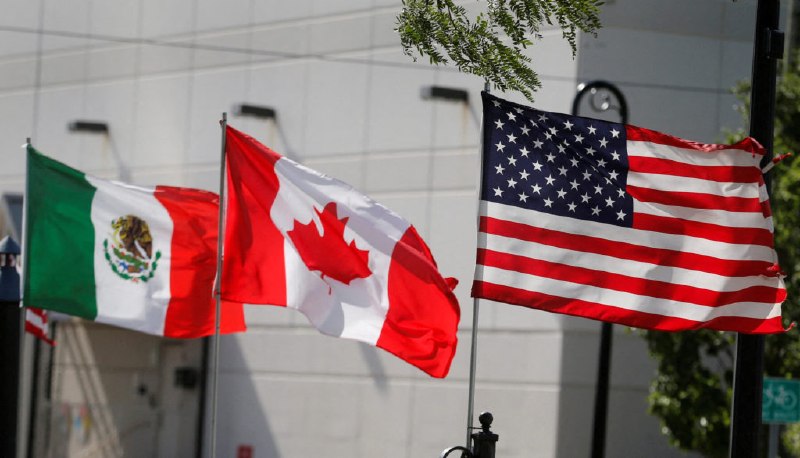
Two separate announcements landed within roughly five hours of one another on 18 August 2026: a new package of US sanctions on senior officials of the International Criminal Court, and a final round of US–Canada negotiations aimed at pulling back from a 50% tariff wall. Read together, the two moves sketch the operating logic of this White House. Economic leverage is applied to neighbours and rivals in roughly equal measure; legal architecture that constrains American power is treated as a target rather than a fact on the ground. The administration is pursuing both tracks in public, on the same news day, and betting that the rest of the world will treat each as a discrete story. They are not discrete.
The tariff clock
By 18:09 UTC on 18 August 2026, US and Canadian negotiators were reported to be in last-ditch talks to head off the duties, hours before they were set to take effect at midnight. CNBC's reporting on the Trump–Carney exchanges puts the dispute in longer context: the administration has already imposed duties on Canadian metals, lumber and auto parts, and the threatened 50% tranche is layered on top of those existing measures rather than replacing them. The negotiation therefore is not about whether Canada pays more at the border, but about how much more, and on which categories of export.
For Ottawa, the arithmetic is unforgiving. Canada's economy is more exposed to the US market than almost any peer in the G7; a doubling of effective tariff burden on a wide product set would compress margins in steel towns in Hamilton, lumber mills in British Columbia, and the auto-parts corridors that wrap around Ontario. The political incentive for Prime Minister Mark Carney, identified by CNBC as the Canadian counterpart in the talks, is to land a face-saving carve-out. The political incentive for the White House is to demonstrate that a threatened tariff, once announced, costs the counterparty something.
The court, brick by brick
The second announcement was more openly ideological. The BBC reported on 18 August 2026 that the Trump administration unveiled fresh sanctions on senior figures at the International Criminal Court, with the administration's stated intent to dismantle the institution "brick by brick". The ICC, headquartered in The Hague, has issued arrest warrants related to the war in Gaza and to Russian officials over Ukraine; both tracks have brought it into direct collision with US policy.
The move extends an existing sanctions architecture. The US does not recognise the court's jurisdiction over its own nationals and has previously sanctioned ICC personnel it accuses of overreach; layering new designations on top of that baseline turns the policy from non-cooperation into active attrition. The framing matters: language about dismantling the court is the language of structural warfare against an institution, not of negotiating with one.
The legal pressure sits alongside the economic pressure on Canada and, separately, on European trading partners who have expressed varying degrees of openness to ICC cooperation. In effect, Washington is signalling that any capital that wants preferential treatment from the United States is being watched for its posture on the court.
Two levers, one doctrine
The pattern, read across the two announcements, is the weaponisation of access. The Canada track uses the threat of a tariff wall as a bargaining chip, with the rate calibrated to inflict immediate, visible pain on politically sensitive sectors. The ICC track uses the financial system as a constraint on individuals, on the assumption that lawyers, judges and prosecutors cannot do their jobs if their bank accounts are in dispute.
Both moves share an assumption: that unilateral US action can re-shape the behaviour of foreign institutions, whether corporate or juridical, without the need for a multilateral coalition to back it. That assumption has been the operating premise of the administration's trade and foreign-policy posture since early in its term. What 18 August adds is the simultaneity of the two tracks, on a single news day, with markets watching the tariff clock in real time.
The countervailing reality is that unilateral sanctions and tariffs have costs at home. Steel consumers downstream of Canadian mills face input-price spikes that the administration does not compensate; lawyers and NGOs working on atrocity cases lose institutional counterparts without an obvious replacement; allies watching the moves draw quiet conclusions about the reliability of US commitments to multilateral bodies. None of these costs is hypothetical, and each is showing up in current account and diplomatic readings that the administration has chosen to treat as secondary.
What to watch before the next deadline
The available reporting from 18:09 UTC frames a negotiation in motion, with the 50% rate as the fallback rather than a settled outcome. The history of this administration's tariff diplomacy, however, is that announced rates have a habit of partially taking effect even when negotiations continue, because sectoral carve-outs arrive after the headline number does. The cited reporting identifies a negotiating posture rather than a settled deal; the available source items do not specify which concessions, if any, were on the table by the close of business in North America on 18 August 2026.
On the ICC track, the question is whether allied governments will treat the new designations as a basis for their own counter-measures, or as an American preoccupation to be sidestepped. The cited BBC reporting covers the US action and its stated intent; the available source items do not specify the responses of European Union institutions or of the United Kingdom's Foreign Office, and this article has not independently established those positions. Those responses will be the next datapoint that matters. If European capitals hold the line that the court's independence is non-negotiable, the administration's "brick by brick" framing becomes a description of an expensive stalemate rather than of a dismantling.
The deeper bet on 18 August is that speed and simultaneity change the politics. Two levers pulled at once, each aimed at a different kind of institution, force foreign counterparts to triage. That triage, more than any single tariff or sanction designation, is where the administration's leverage either compounds or frays.
Desk note: Monexus is treating the Canada tariff and the ICC sanctions as a single news event rather than two stories, because the simultaneity is itself the signal. The cited wire coverage has so far kept them in separate silos; our assessment is that the silos are the story.
Wire provenance
This editorial synthesis draws on the following public wire/social posts:
- https://www.bbc.co.uk/news/articles/cnvnl0elz47o?at_medium=RSS&at_campaign=rss
- https://www.cnbc.com/2026/08/18/trump-carney-canada-tariffs-dealine-talks.html
- https://x.com/Polymarket/status/2089776750163030209
- https://x.com/Polymarket/status/2089704496876142786