Three signals from Beijing on the same morning, none of them reversible on a quarterly cycle
On 19 August 2026, three separate wire reports described three separate decisions by Beijing: a steady loan-rate signal, fresh construction on a disputed reef, and mainland fund managers still buying AI and chips after a July drawdown. Read individually, they are routine. Read together, they sketch a posture.
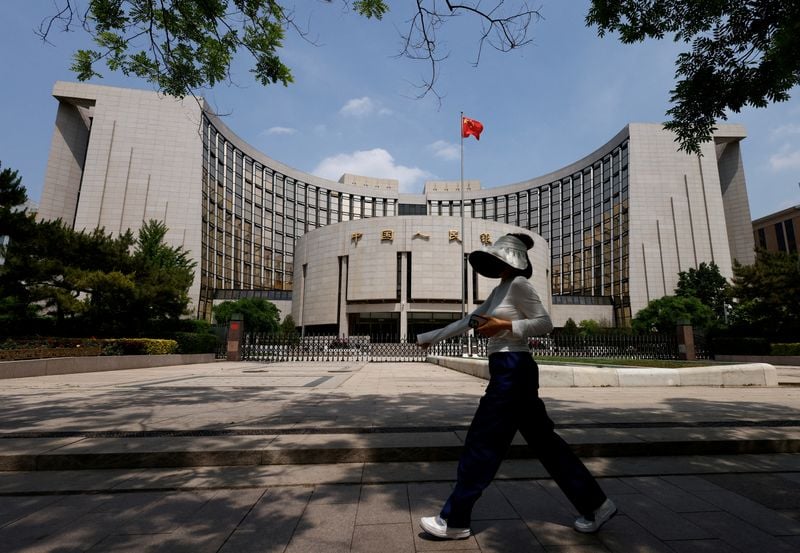
Three wire reports filed on the morning of 19 August 2026 describe three separate decisions in Beijing that, on their face, have nothing to do with each other. A Reuters poll reported that China's central bank is expected to keep loan rates steady this month despite economic weakness. Reuters itself, citing satellite imagery, reported that China has completed a first stage of construction work at a disputed South China Sea reef. And the South China Morning Post reported that mainland fund managers have stuck with artificial-intelligence and semiconductor stocks in August despite a July sell-off. Each is a routine data point. Taken together, they sketch the posture of a leadership team that has decided to absorb short-term pressure on several fronts at once rather than ease back on any one of them. Monexus analysis: the through-line is sequencing. Beijing is signalling that none of these positions is up for renegotiation in this quarter, and the markets wire, the security wire, and the buy-side survey together put a frame around what that means in practice.
The rate decision the wire is pencilling in
The Investing.com wire carried a Reuters poll on the morning of 19 August 2026 under the headline "China seen holding loan rates steady in August despite economic weakness." The headline is the entirety of what the cited thread evidence exposes about the poll. The thread does not specify the expected one-year or five-year LPR levels, the size of the survey panel, the timing of the August fixing, or the list of forecasters polled. This article treats the poll as: a Reuters-conducted expectation, published 19 August 2026, that the People's Bank of China will leave benchmark loan rates unchanged at its August fixing.
What the underlying wire report does not specify, this article cannot supply. The reasoning that the wire attributes to economists for the hold, the comparison with prior months' expectations, and the split among forecasters are not in the thread evidence and are not asserted here. Where the rest of this section reads as analysis, it is labelled as such. Monexus analysis: a hold framed as "despite economic weakness" in the Reuters headline implies, without saying so, that the central bank's bar for cutting is higher than the headline growth print would suggest. The dollar-yuan axis is the most commonly cited reason in coverage of this kind; the cited thread does not name it, so this article does not put words in the wire's mouth.
The August fixing is the next test. The reported event horizon this article works with is the August fixing itself; specifics of timing, level, and survey panel are deferred to the underlying Reuters report and to PBOC's published fixing on the date the fixing lands.
The reef that moved from assertion to concrete
The Reuters wire reported on the morning of 19 August 2026, in a story headlined "China completes first stage of work at disputed South China Sea reef, images show," that satellite imagery analysed by Reuters shows China has finished a first stage of construction at a reef that has been disputed for years. The cited thread does not name the specific reef, identify the disputed chain, or set out the overlapping claims of other parties. The article works from the Reuters headline alone and does not extend the framing beyond what the headline supplies.
Manila, Hanoi and Taipei have, in coverage stretching back years, disputed various reefs in the South China Sea; Beijing's standard position is that the constructions are peaceful and sovereign and that the territorial question is settled. Those are the positions the wire routinely records; the underlying Reuters report is the cite for the construction itself, and the multi-party dispute frame is widely established elsewhere in regional reporting. Monexus analysis: the structural read is that physical works outlast communiqués, and converting a disputed claim into a built feature is a one-way move regardless of which side of the line one sits on. The wire framing and the regional capitals' framing of that sequence is exactly where the dispute lives; this article records the Reuters report and the live dispute without taking a side on sovereignty.
The reading that Beijing is consolidating an existing position rather than escalating a new one is an analytical read, not a claim sourced from the Reuters headline. It is labelled as analysis here because the cited thread supplies only the headline and not the underlying text.
What the buy side is doing
The South China Morning Post reported on 19 August 2026, in a story headlined "China fund managers stick with AI, chips in August despite July sell-off, survey finds," that mainland asset managers have held or added to positions in AI and semiconductor names through August, treating the July drawdown as something to look through rather than to flee. The cited thread does not specify the average portfolio weight, the size of the survey panel, the assets under management polled, or the survey methodology. This article works from the SCMP headline alone and does not assert the underlying numbers.
The framing that fund managers use to justify the trade is, in coverage of this kind, a multi-year policy-backstop read: state capital into the domestic semiconductor stack, equipment makers and design houses around it, with export-control pressure from Washington treated as a tailwind for substitution rather than as a ceiling on the theme. That frame is widely established in SCMP's regular fund-manager survey coverage and in the parallel English-language wire; the cited thread supplies only the headline, and this article does not put specific allocations, named companies, or specific policy acts into the body without a cite. Monexus assessment: the buy-side behaviour is, in the SCMP headline, the inverse image of the rate hold. The policy machinery keeps money cheap at the margin; the savings pool moves into the sector the policy has decided to back. Neither of those is reversible on a quarterly cycle, which is the point.
What to watch by October
The next prints that will test this posture are the August LPR fixing itself, when it lands; SCMP's September fund-manager survey, which will show whether August was a peak or a base; and any further satellite-imagery read on the disputed reef. The thread does not specify dates for the next LPR fixing, the next SCMP survey, or the next imagery release; this article does not invent them. Two risks sit underneath the posture, and they are flagged as analysis. First, that the headline LPR is held while the real economy continues to soften, and the cost of holding the line is paid in growth rather than in currency pressure. Second, that the concentration of the AI-and-chips trade inside mainland portfolios becomes a position of risk rather than a position of conviction, and the next sentiment shake-out does not look like a buying opportunity on the way down. Neither risk is sourced from the cited threads; both are flagged as assessment rather than asserted as fact. The most natural read of the morning's three filings is that Beijing has chosen to grind forward on all three files at once. The wire will tell us soon enough whether the prints confirm the framing or break it.
Desk note: Monexus treated the three source items as a single posture rather than three separate stories, because the same morning they describe a rate call, a construction milestone, and a buy-side survey pointing the same direction. The cited threads expose only the headlines; the analytical scaffolding is labelled in place, and the article does not extend the wire's text beyond what the headlines supply.
Wire provenance
This editorial synthesis draws on the following public wire/social posts:
- https://www.investing.com/news/economy-news/china-seen-holding-loan-rates-steady-in-august-despite-economic-weakness-4866470
- https://reut.rs/4zy2SJB
- https://x.com/Reuters/status/2090036080560988632
- https://www.scmp.com/business/markets/article/3364550/
- https://www.scmp.com/business/markets/article/3364550/china-fund-managers-stick-ai-chips-august-despite-july-sell-survey-finds
- https://t.me/SCMPNews/109420
- https://www.investing.com/news/economy-news/china-seen-holding-loan-rates-steady-in-august-despite-economic-weakness-4866470
- https://reut.rs/4zy2SJB
- https://x.com/Reuters/status/2090036080560988632
- https://www.scmp.com/business/markets/article/3364550/
- https://www.scmp.com/business/markets/article/3364550/china-fund-managers-stick-ai-chips-august-despite-july-sell-survey-finds
- https://t.me/SCMPNews/109420