Fed minutes flag a hawkish-leaning FOMC; CFTC opens door to AI-compute hedging
Fed minutes released 19 August 2026 show several officials backed a July rate hike; separately, the CFTC filed a request for public comment on derivatives tied to AI compute.
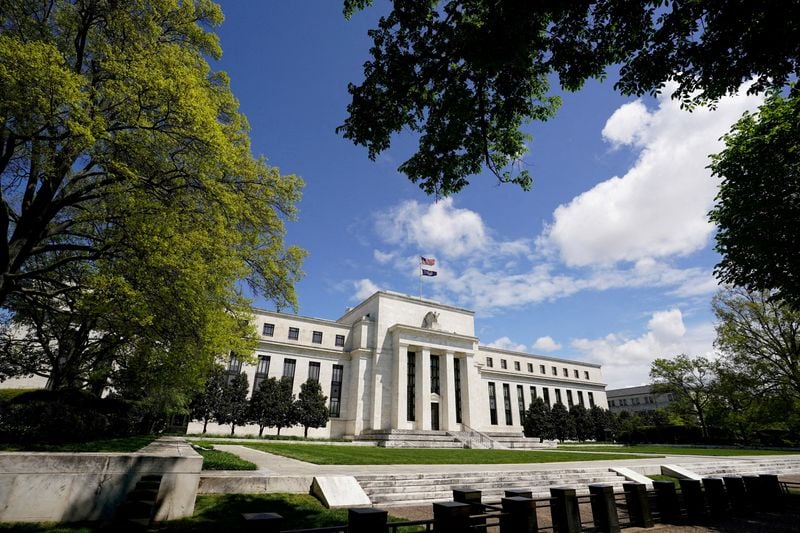
Minutes from the Federal Reserve's July policy meeting, released on 19 August 2026, show a more inflation-wary committee than markets had expected: several officials favoured an outright rate hike, even as the majority held policy steady, with inflation risks described as elevated throughout the discussion. The accounts landed on the same day that the US Commodity Futures Trading Commission filed a public request for comment on whether derivatives markets can be built around AI compute capacity.
The two releases sketch a US policy apparatus pulling in two directions at once: a central bank still treating price stability as unfinished business, and a market regulator moving to formalise the financial plumbing of the AI economy before one builds itself. Read together, they amount to a quiet admission that the late-2026 macro question is no longer whether AI demand is real, but how to price, hedge, and govern it.
What the minutes actually say
The published accounts describe a committee more worried about inflation than the prevailing market narrative had assumed, with several members willing to vote for a rate increase rather than hold, according to Investing.com's summary of the release. CryptoBriefing's wire relay of the same document used identical language: several officials favoured a hike, with inflation risks described as elevated.
The Fed has not, on the record captured in the available source items, named which officials backed a hike; the minutes protect individual voices by long-standing convention, which frustrates any outside attempt to map the committee's distribution. The published documents do not specify which categories of inflation drove the hawkish case, nor whether the labour-market debate centred on rebalancing or outright weakening. The available source items do not specify those details, and this article has not independently established them.
The CFTC's compute question
Earlier the same day, the CFTC filed a request for public comment on derivatives markets tied to AI compute, asking whether standardised contracts could function as legitimate hedges for the hyperscalers, model labs, and enterprise buyers absorbing the build-out's cost. Investing.com's summary and CryptoBriefing's relay both describe the notice as a procedural first step, not a proposed rule.
The timing matters. Compute capacity is being added so quickly that the usual sequence of spot market first, futures market second, regulatory frame third has compressed into a single year. A regulator opening a public docket at this stage is acknowledging, in effect, that the bottleneck in the AI economy is shifting from capital to physical infrastructure at predictable cost. If a Fortune 500 chief financial officer cannot hedge the price of inference capacity a year out, every AI deployment becomes an unpriced option on a single vendor's pricing decisions.
No proposed rule sits behind the filing, no timeline has been published, and the agency has not committed to acting on the responses. The most that can be said is that the question has crossed the threshold from internal staff paper to public docket, which is a meaningful but limited signal.
The structural read
What this publication finds, reading the two filings together, is that two arms of the US government are separately acknowledging that the post-pandemic macro regime has not resolved. The Fed is still fighting the last war, with officials openly divided over how much residual inflationary pressure to tolerate. The CFTC is preparing for a new one, in which a single input, compute, can swing corporate margins by more than a one-standard-deviation move in oil once did for industrial firms.
The coupling is tighter than it appears. If the Fed keeps policy restrictive long enough to grind out the last basis points of services inflation, the cost of capital for AI infrastructure stays high, compressing margins at the labs and hyperscalers and lengthening the payback period on every new data centre. A working compute derivatives market would let those same firms hedge that risk, transferring it to speculators willing to take a view on capacity prices eighteen to thirty-six months out. Monexus analysis: the CFTC's timing is not coincidental. It is the regulation of a problem the Fed is helping to create.
What remains uncertain
The minutes do not name the officials who advocated a hike, and the available source items do not specify the categories of inflation that drove the disagreement. On the CFTC side, the request for comment is genuinely that: a request, with no proposed rule, no deadline, and no commitment to act. The single most consequential unknown, in our assessment, is whether the major cloud providers will treat a CFTC-hosted compute contract as a useful hedge or as an unwelcome disclosure of their own pricing power.
Monexus framed this as a twin-policy story rather than a single central-bank story: the FOMC minutes are the day's headline, but the CFTC filing tells readers where the next round of price discovery is going to be contested.
Wire provenance
This editorial synthesis draws on the following public wire/social posts:
- https://t.me/CryptoBriefing/18785
- https://www.investing.com/news/economy-news/fed-policymakers-inflation-concerns-increased-at-july-meeting-minutes-show-4868029
- https://t.me/CryptoBriefing/18784
- https://www.investing.com/news/stock-market-news/us-cftc-seeks-comment-on-compute-derivatives-as-ai-demand-grows-4867996
- https://t.me/disclosetv/21734
- https://t.me/CryptoBriefing/18785
- https://www.investing.com/news/economy-news/fed-policymakers-inflation-concerns-increased-at-july-meeting-minutes-show-4868029
- https://t.me/CryptoBriefing/18784
- https://www.investing.com/news/stock-market-news/us-cftc-seeks-comment-on-compute-derivatives-as-ai-demand-grows-4867996
- https://t.me/disclosetv/21734