Israel strikes Syrian airport citing Turkish deployment; Ankara publicly rejects Netanyahu's rationale
Israel confirmed overnight airstrikes on a Syrian military airport on 18 August 2026, with Netanyahu's office framing the operation as pre-emption against a planned Turkish deployment. Ankara's presidential office publicly rejected that rationale; Axios, citing senior US officials, offers a third reading built on Israel's electoral calendar.
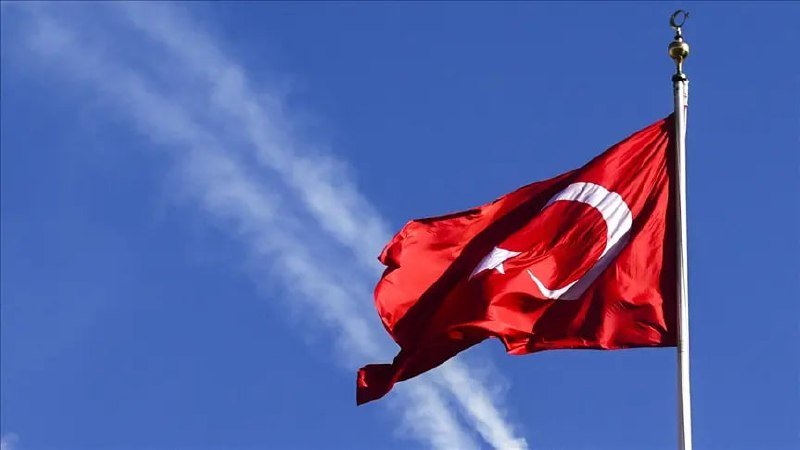
Israel confirmed overnight airstrikes against a Syrian military airport on 18 August 2026, framing the operation as a pre-emptive strike against a planned Turkish deployment on Syrian territory. Reporting carried across Iranian state-linked outlets in the hours after the strikes, and relayed in English by Israeli media, frames the event as a rare public articulation of an Israeli security red line. Ankara, within the same 24-hour window, publicly rejected that rationale.
Three narratives are now in circulation. The first comes from the office of Israeli Prime Minister Benjamin Netanyahu, which cited the prevention of Turkish military presence as the reason for the strikes. The second, carried by Turkish sources and relayed through Iranian state-linked channels, is Ankara's flat rejection of that claim and its characterisation of the strikes as illegal. The third, reported by the US outlet Axios on 19 August 2026, is that senior American officials believe the strike was driven by the calendar of Israel's general election. All three are in the international conversation within hours of each other. The question is which one survives contact with the next round of operational and diplomatic reporting.
What Netanyahu's office actually said
The framing from Jerusalem is the more concrete of the two Israeli-aligned readings. In a statement circulated through the prime minister's office, the Netanyahu government declared that the strikes on the Syrian military airport were intended to prevent a Turkish deployment. The same line appeared in mirrored items across Tasnim News English and the Farsi-language Jahan Tasnim channel within minutes of each other on 18 August 2026 at 23:15 UTC, suggesting an official Israeli readout had been transmitted to wire services and relayed outward through channels that often carry Israeli statements verbatim.
The phrasing matters. "Prevention of Turkish military presence" is operational language: Israel struck the airfield because of what Ankara was about to do there, not because of who used it last week. That distinction carries weight in a region where Israeli strikes on Syrian territory have historically been framed around weapons convoys, Iranian entrenchment, or Hezbollah logistics. A Turkish-pre-emption framing is new; it places a NATO member's deployment posture inside Israel's stated red lines.
Israeli confirmation was carried in English by Times of Israel military correspondent Manniefabian, whose post on X was relayed by the open-source channel Status-6 and surfaced in monitoring feeds on 18 August 2026 at 21:25 UTC. The Israeli statement, as relayed, holds Turkey responsible for the airfield's planned use; it does not characterise the strike as retaliation for an act already carried out by Turkey.
Ankara's record: the rejection Israel did not name
Monexus analysis: the official Turkish response, embedded in the same Tasnim English and Jahan Tasnim items that carried the Israeli readout, is the most consequential piece of context the Israeli framing omits. The Turkish presidential office publicly rejected Netanyahu's claim and called the strikes illegal. That single fact reshapes the field. Israel's stated reason for the operation is now contested, on the record, by the very NATO member the operation was supposedly aimed against. A pre-emption framed around an imminent threat does not look the same once the named target says, in public, that there is no such threat.
Two qualifications apply. First, the Turkish denial is itself reported through channels whose editorial line is broadly adversarial to Israel; the underlying statement is attributed to the Turkish presidency, but its transmission passes through outlets that do not conceal their stance. Second, the available items do not specify the exact text, venue, or signatory of the Turkish statement, only that the presidential office rejected Netanyahu's claim and characterised the strikes as illegal. The structural point holds regardless: Ankara has put itself on the record, and on the opposite side of the Israeli rationale.
The Axios reading: a different clock
Axios, citing senior American officials, offers a third motive, one that does not touch Turkey at all. Per the reporting carried into Farsi wire channels on 19 August 2026 at 00:17 UTC, "general elections were the reason for Israel's attack on Syria." In other words, the strikes were read in Washington not as a Turkish-deployment pre-emption but as a domestic political signal timed to Israel's electoral calendar. The Israeli general election, scheduled for later in 2026, has put the Netanyahu government under the kind of pressure where visible security actions tend to receive amplification.
That reading does not require the official Israeli rationale to be false. A government can believe an action is operationally necessary and still choose the timing of the announcement with an election in mind. The two motives can coexist. What Axios's reporting does, in effect, is reposition the strike inside an Israeli political timeline, away from a regional-security timeline. The framing matters for allies: a strike explained as Turkish pre-emption implies a stable, durable red line; a strike explained as electoral theatre implies a posture that can shift with the news cycle. Neither is necessarily falsified by Ankara's denial, though the Axios motive becomes easier to entertain once the Turkish record is on the table.
What remains contested
Three disputes are now live, and the available items do not resolve any of them. First, did Ankara actually plan to deploy forces at the airfield Israel struck? Israel says yes; the Turkish presidency, as relayed through Tasnim and Jahan Tasnim, says Netanyahu's claim is false. Second, was the strike an act of pre-emption against an imminent deployment, or a signal to a domestic Israeli audience? Axios's reporting makes the second reading live without foreclosing the first. Third, will Ankara escalate diplomatically beyond the rejection already on the record, or treat the public denial as sufficient? The available items do not specify what comes next from the Turkish side.
Monexus finds that the structural frame is straightforward: a public Israeli statement of red line, an immediate public Turkish rejection of the premise, and a US outlet attributing the timing to domestic politics. All three readings are now on the international record within the same news cycle. The strikes have produced not one dispute but three, and each one will be tested in the next round of reporting.
Wire provenance
This editorial synthesis draws on the following public wire/social posts:
- https://t.me/tasnimnews_en/31765
- https://t.me/tasnimnews_en/31764
- https://t.me/JahanTasnim/230639
- https://t.me/FarsNewsInt/259313
- https://t.me/FarsNewsInt/259314
- https://t.me/osintlive/565173