Trump's Iran endgame: a second sanctions spiral, with Asia and the Gulf caught in the seam
Washington is betting economic pressure can finish what the June strikes started. Tehran's past response to coercion, and the diplomatic geography around Hormuz, suggest the bet is closer to a relapse than a resolution.
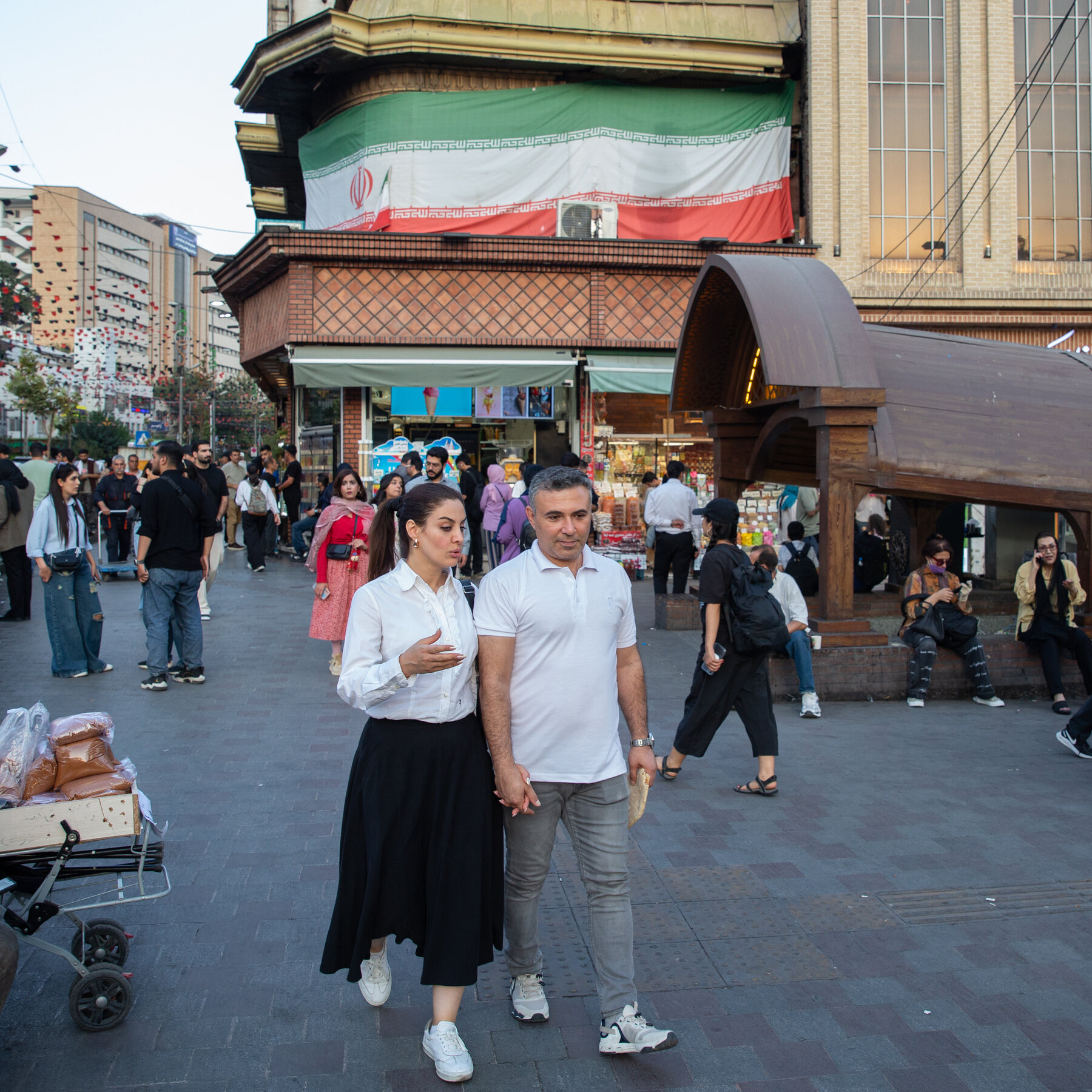
On the morning of 19 August 2026, US President Donald Trump returned to the sanctions lever as his primary instrument against Iran, in a strategy the New York Times described as "economic pressure, again." The article, published the same day, opens with the observation that "Iran has survived decades of sanctions. Faced with more, it is likely to escalate rather than surrender, analysts said." That framing sits at the centre of a quiet but consequential reorientation of US Iran policy, one of which the ripples are now being absorbed far outside the Persian Gulf.
Monexus analysis: the administration's gamble is that post-June 2026, Iran's margin for absorbing economic pain has narrowed enough that another tightening cycle can force a negotiated settlement. The historical record on offer in the Western wire coverage argues the opposite, that coercion, once a habitual tool, tends to harden the target's resistance rather than crack it. What changes now is not Iran's underlying structure but the seam lines between Washington and the states on which the strategy now depends: Oman, the United Arab Emirates, the Gulf tanker corridor, and a nervous set of Asian capitals whose energy security has just become a variable in someone else's negotiation.
A familiar weapon, freshly aimed
The Trump administration's recourse to sanctions as the lead instrument is not novel in itself. The Times assessment of 19 August is explicit on the strategic logic: that economic pressure offers a lower-cost path to Iranian concessions than the kinetic option pursued in June. The choice carries an internal contradiction the wire report does not name but which shapes everything downstream. Sanctions work, when they work, by isolating a target from the international financial and trading system. Iran's currency, banking, and shipping relationships have already been substantially decoupled from Western ones over four decades of intermittent pressure. There is less left to tighten, and the tightening that remains is largely extraterritorial, applied to third-country banks, insurers, and refiners.
This extraterritorial layer is what now places Asia and the Gulf in the crosshairs. The South China Morning Post reports on 19 August that US defence chiefs are touring Asia "to calm fears as Trump's drill remarks sow doubts." The reference is to recent public comments by Trump that appeared to describe joint exercises in terms that Asian capitals read as preparation rather than routine. The tour's function, per the Post, is reassurance: that the United States remains a reliable security partner to Japan, South Korea, the Philippines, and others whose planners had begun to price in a less predictable US posture in the western Pacific and Indian Ocean.
The Oman problem and the Hormuz seam
The most uncomfortable geometry sits in the Gulf itself. The same morning, the South China Morning Post asks why Trump is "threatening to bomb Oman, the Iran mediator trying to clear Hormuz." The framing is sharp and should be quoted directly: Oman has been the principal mediator between Tehran and Washington across multiple administrations, and the Strait of Hormuz remains the conduit through which a meaningful share of seaborne oil reaches Asian markets. A coercive posture toward the mediator narrows the diplomatic channel precisely at the moment the administration needs a workable off-ramp.
The Times analysis from 19 August notes that Iran, when cornered, escalates. The instruments available for escalation are limited but real: harassment of commercial shipping in the Strait of Hormuz, asymmetric action against Gulf state infrastructure, and the leveraging of militia-aligned pressure on US bases across Iraq and Syria. None of these are novel threats; what has changed is the implicit threat to attack Oman's mediation infrastructure. If Muscat reads that posture as a signal that its back-channel role is no longer protected, the most senior diplomatic intermediary on the file has an incentive to step back rather than step forward.
What Beijing and the Asian importers see
Asia's response, captured in the Post's reporting on the US defence tour, is a quiet re-pricing of risk. Japanese and Korean refiners maintain long-standing relationships with Iranian-origin and Iranian-affiliated crude; Indian refiners have historically been a critical off-taker of Iranian exports under sanctions. The implicit threat in the new US posture is that secondary sanctions will be enforced more aggressively against these flows. That pressure runs in two directions: it cuts off Iran's remaining revenue, but it also forces Asian capitals to weigh their energy security against their exposure to US financial infrastructure.
The second-order effect, which the available reporting does not name but which follows from the geometry, is a faster move toward settlement in currencies and shipping routes that bypass the US correspondent banking system. Iran and China have already conducted meaningful volumes of trade in yuan through non-dollar clearing arrangements; the same architecture is being extended, slowly, with Russia and with several Gulf state counterparties. Monexus assessment: each tightening cycle that fails to produce a settlement chips away at the dollar's monopoly on the transactional layer of the oil trade. The cost of failure is not borne primarily by Tehran.
What the next seventy-two hours look like
The forward calendar is dense. Watch for any official statement from the Omani foreign ministry clarifying its posture toward continued mediation; for the first Iranian response to the renewed sanctions framing, which the Times report suggests will privilege escalation language; and for the readout of the US defence chiefs' Asian tour, particularly the joint statements from Tokyo and Seoul. A quieter but consequential tell will be the behaviour of insurance underwriters for tankers transiting Hormuz. Premium movements in the war-risk book register the market's view of likely disruption more honestly than communiqués from either capital.
The structural frame here is plain. A hegemonic power holding a near-monopoly on the financial plumbing of global energy reaches for the same lever it has used for four decades, against a target that has spent those four decades building workarounds. The workarounds are imperfect, but they are no longer nascent, and the cost of new sanctions now spreads more visibly to third countries that were once bystanders. Asia's defence tour and Oman's exposed position are not separate stories; they are the same story told from two ends of the corridor.
The contradiction left standing on 19 August is the one the Times identified in its lead. A policy designed to compel through isolation assumes an isolation that the target has already substantially achieved. The most likely outcome, on the evidence available today, is a slow tightening without a breakthrough, with the diplomatic infrastructure around the file, including the Omani channel, the more visible casualty.
Desk note: the wire coverage led with the economic-pressure framing; Monexus foregrounds the diplomatic and third-country costs that the sanctions strategy now imposes on Oman and on Asian energy importers.
Wire provenance
This editorial synthesis draws on the following public wire/social posts:
- https://www.nytimes.com/2026/08/19/world/europe/iran-trump-economic-sanctions-leverage.html
- https://www.scmp.com/week-asia/politics/article/3364475/us-defence-chiefs-tour-asia-calm-fears-trumps-drill-remarks-sow-doubts
- https://www.scmp.com/news/world/united-states-canada/article/3364501/why-trump-threatening-bomb-oman-iran-mediator-trying-clear-hormuz
- https://t.me/SCMPNews/109411
- https://t.me/SCMPNews/109405
- https://t.me/IRIran_Military/9686
- https://www.nytimes.com/2026/08/19/world/europe/iran-trump-economic-sanctions-leverage.html
- https://www.scmp.com/week-asia/politics/article/3364475/us-defence-chiefs-tour-asia-calm-fears-trumps-drill-remarks-sow-doubts
- https://www.scmp.com/news/world/united-states-canada/article/3364501/why-trump-threatening-bomb-oman-iran-mediator-trying-clear-hormuz
- https://t.me/SCMPNews/109411
- https://t.me/SCMPNews/109405
- https://t.me/IRIran_Military/9686