Trump's Korea reset compresses US exercises, opens Wang Yi room to nudge Seoul toward Beijing's orbit
A 6-day cut to US-ROK drills and a same-day Wang Yi visit to Seoul suggest the Trump administration is trading exercise tempo for diplomatic room, just as a US warship breakdown raises fresh questions about fleet readiness in the Western Pacific.
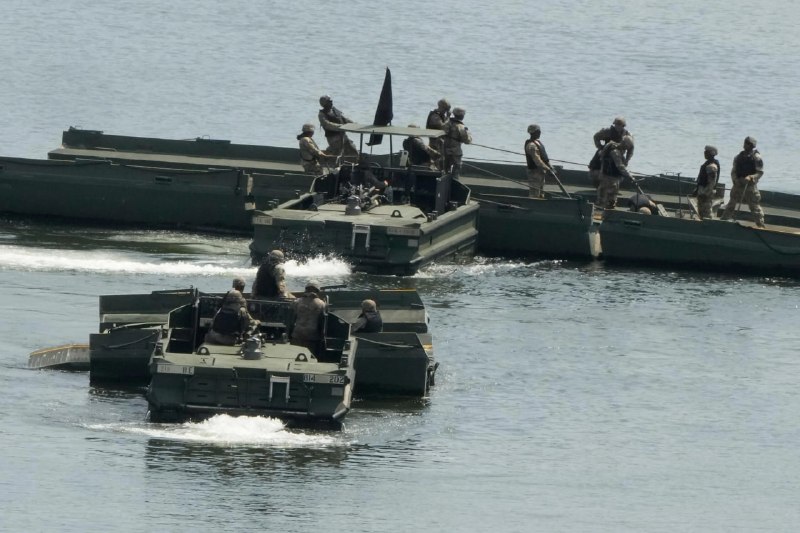
South Korea confirmed on 19 August 2026 that joint military exercises with the United States will wrap up six days earlier than scheduled, a compression that President Donald Trump had publicly framed as a goodwill signal to Pyongyang. Within hours, China's top diplomat Wang Yi was on the ground in Seoul, the highest-profile Chinese visitor to the peninsula since the diplomatic ground shifted earlier this summer. The sequencing, two moves on the same day pointing in opposite directions, captured a question now facing the Pentagon: whether the United States can keep its allied exercise rhythm and its negotiating posture with Kim Jong Un's government on the same dial at the same time.
The early end to the drills is the more concrete of the two events. According to a Polymarket post dated 19 August 2026, citing South Korean confirmation, the exercises will finish six days ahead of plan after Trump called them an "inappropriate and hostile" signal to North Korea. The same day, Reuters reported that Wang Yi was in South Korea for talks, with Trump's push to revive North Korea diplomacy as the backdrop. Read together, the moves sketch an administration gambling that fewer war games and more shuttle diplomacy can pry open a channel to Pyongyang, while accepting that the price of admission is a softer military signature on the peninsula and a wider diplomatic window for Beijing.
Tempo cut, signal kept
The exercises in question have not been publicly named in the source material, and the available reporting does not specify their original end date or the exact number of troops or platforms involved. What is specified is the political content of the cut: Trump has chosen to characterise allied drills, the connective tissue of the US-ROK deterrence posture since the early 1990s, as provocation. The compression buys talking time with Kim Jong Un at the cost of a quieter radar return from the combined command. For Seoul, the early end is a managed disappointment: the alliance is intact on paper, but the demonstration effect, the kind a watching Pyongyang calibrates against, has been shaved.
The Reuters dispatch on Wang Yi's visit frames it as part of Trump's broader effort to revive diplomacy with the North, a notable inversion of the usual framing in which Beijing is the pressure actor and Washington the recipient of its help. If the reporting is right, the roles have at least partially flipped for this episode. Trump is the one trimming exercise tempo to entice Pyongyang, and Wang is the one arriving in Seoul the same day the news lands, with his own agenda in tow.
What Wang Yi is buying in Seoul
The Reuters report does not detail Wang's specific demands in Seoul. That absence matters. Beijing's preferred endgame on the peninsula, visible across a decade of Chinese diplomacy, is a posture in which Pyongyang is stabilised, US troop presence and exercise tempo are reduced, and the four-party framework (North, South, China, US) is the only legitimate negotiating architecture. A Trump administration willing to publicly call its own drills "inappropriate" is, from Beijing's vantage, an unusually accommodating partner. Wang's presence in Seoul is the diplomatic equivalent of a shopper arriving at a going-out-of-business sale.
The Chinese position, when steelmanned, is not unreasonable on its own terms. Beijing has long argued that the cycle of large-scale allied exercises, North Korean test launches, and UN Security Council resolutions is a closed loop that hardens positions on both sides of the DMZ. Chinese analysts have argued for years, in venues including the South China Morning Post and Global Times, that a security regime built on suspending exercises in exchange for test freezes is more durable than one that tries to deter tests with bigger drills. The cost of that argument, when it succeeds, is a measurable relaxation of the US military footprint in the Western Pacific. That is precisely the structural shift now visible, in a compressed form, on the Korean Peninsula.
A warship breakdown in the South China Sea
On the same day the drills were cut and Wang arrived, the South China Morning Post published a separate piece asking whether a US warship breakdown in the South China Sea is a sign that the United States is "taxing reserve capacity." The framing is austere: not a collapse, but a strain. The article, picked up by Monexus via the SCMPNews Telegram channel on 19 August 2026, treats the breakdown as evidence of fleet utilisation running against the limits of what the Navy can keep at sea without more maintenance, more crew, or more hulls.
Monexus analysis: the simultaneous compression of exercise tempo on the Korean Peninsula and the breakdown of a US warship in the South China Sea are not the same event, but they share an operational signature. Both point to a US military that is being asked to do more signalling, in more theatres, with roughly the same inventory. The early end to the drills in Korea is being sold as a diplomatic concession to Pyongyang; in industrial terms, it can also be read as a redistribution of limited hours at sea toward the South China Sea, where the People's Liberation Army Navy has been steadily raising the contact tempo. The diplomatic register and the maintenance register are pointing the same direction, even if no official has said so.
The Chinese counter-read
From Beijing's vantage, the US naval presence in the South China Sea is not a neutral background condition. It is the active instrument of a security order Beijing regards as extraterritorial. Chinese state outlets, including the Global Times, have run sustained coverage characterising US freedom-of-navigation operations as provocations. The structural Chinese position is that the sea disputes are a regional matter to be settled among claimants, with ASEAN in the lead, not a multilateral law-of-the-sea matter to be policed by an external fleet. The early end to US-ROK drills does not move that position, but it does soften the broader impression of an inexorable US military build-up in East Asia, an impression that has been the implicit Chinese counter-argument to Japan's defence budget increases and the AUKUS submarine programme.
The South China Morning Post's question, whether the US is "taxing reserve capacity," is the kind of framing that gives Beijing's position more traction than a simple count of hulls would. A US that is stretching its fleet is a US that has less bandwidth to push back on regional arrangements it does not control. From a Chinese industrial-policy vantage, that is not a crisis to be exploited but a confirmation that the post-2015 pace of US activity in the Western Pacific is not sustainable indefinitely. Wang Yi's arrival in Seoul the same day as the drill-compression news reads, in that light, less like opportunism and more like a routine harvest.
What the next 72 hours are likely to surface
Three things are worth watching. First, whether the South Korean defence ministry publishes a revised exercise end date and a revised force contribution list; the available source material does not specify either, and the difference between a six-day tempo cut and a six-day scope cut is the difference between symbolism and capability. Second, whether Wang Yi emerges from Seoul with a joint statement, a four-party process endorsement, or simply a handshake; the Reuters dispatch does not detail his agenda, and the diplomatic register of the visit will be set by what he is permitted to take home. Third, whether the Pentagon comments on the South China Sea warship breakdown; SCMP's "taxing reserve capacity" framing is the kind of question that usually prompts a Navy readout, and the absence or shape of that response will calibrate how seriously the maintenance story is being taken inside the building.
Stakes, and what remains uncertain
The structural picture is straightforward. The United States is buying diplomatic room on the peninsula by accepting a quieter exercise posture, while continuing to operate at a high tempo in the South China Sea, where its fleet is showing signs of strain. China is the principal external beneficiary of the Korean compression and the principal counter-actor in the South China Sea. South Korea is the ally that absorbs the cost of the compression in deterrence optics and the potential gain in regional standing if the diplomatic track produces anything.
What the sources do not specify is large. The Reuters dispatch on Wang Yi's visit does not name his counterparts in Seoul, does not detail his agenda, and does not record any joint statement. The Polymarket post does not name the exercise, the original end date, or the troop and platform numbers. The SCMP article, available only via a Telegram excerpt in the source material, does not name the warship, the nature of the breakdown, or the theatre segment where it occurred. Those gaps are real, and any further characterisation of who said what to whom, in which venue, would carry less certainty than the framing above implies.
The honest read is that the Trump administration is running two tracks on the peninsula at once, a slowing exercise track and an accelerating diplomatic track, and that the cost of the slowing track is being felt first in Seoul and the second-tier fleets in the South China Sea. Whether that trade produces a deal with Pyongyang, or simply a wider window for Beijing, is the question the next two weeks of reporting will answer.
Monexus framed this story against the Western wire default of "Trump presses North Korea" and instead foregrounded the same-day Wang Yi visit and the SCMP maintenance question, reading the diplomatic compression and the fleet strain as two signals of the same operational constraint.
Wire provenance
This editorial synthesis draws on the following public wire/social posts:
- https://reut.rs/4bXpFEo
- https://x.com/Reuters/status/2090010958227701864
- https://x.com/Polymarket/status/2089932116167729349
- https://t.me/SCMPNews/109418
- https://www.scmp.com/news/china/military/article/3364528/south-china-sea-warship-breakdown-sign-us-taxing-reserve-capacity