Five days, one signal
South Korea and the United States will run their annual joint drills for five days instead of eleven and scale back some field training, after President Trump ordered the change. The order lands the same week a US push for a Kim Jong Un meeting is being reported.
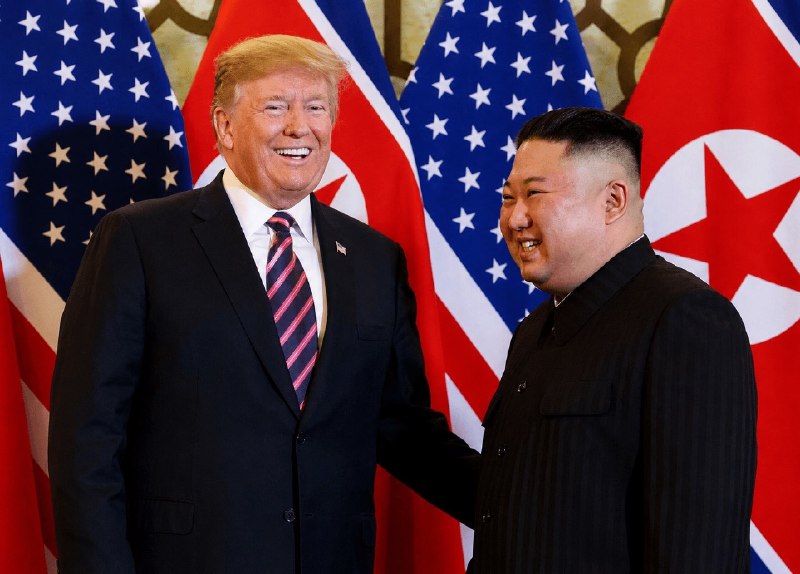
At 03:10 UTC on 19 August 2026, Reuters reported that South Korea and the United States would cut their annual joint military drills from eleven days to five and scale back some field training. The allies said the change came after President Donald Trump ordered a substantial reduction in US participation in the exercises. A second Reuters dispatch at 02:20 UTC framed the same order as a cut to the duration and scope of the drills. The two accounts describe the same announcement but apply different framings: one foregrounds the US participation cut, the other adds scope to the list of elements reduced.
The order arrives in a week in which a Trump-Kim encounter is being reported as a US objective for 2026. At 02:44 UTC on 19 August, BRICS News relayed a Wall Street Journal item saying Trump is pushing to meet Kim Jong Un this year. The reported push and the reported drill cut appeared in the same reporting window. What connects them is not specified in the supplied material; what can be said is that they share a clock.
What the order changes
The clearest measure in the reporting is duration. Reuters reported the exercises will run five days rather than eleven, a six-day reduction in the published schedule. Reuters also reported that some field training will be scaled back, and South Korea's Joint Chiefs of Staff announced the cut-short decision, per Nikkei Asia at 04:31 UTC on 19 August. Polymarket, relaying that announcement, said the exercises would end six days early, a figure that matches the eleven-to-five cut directly: eleven minus six equals five. The earlier draft characterised the two day-counts as unresolved; on the arithmetic available, they are the same cut described two ways.
Reuters described the order as a substantial reduction in US participation in one dispatch and as a reduction in duration and scope in another. The distinction is worth holding. A participation cut changes the US footprint on Korean soil; a scope cut changes the activities conducted. The reporting names field training specifically as the scale-back, and Reuters's wording in the second dispatch adds scope to the list of items Trump ordered reduced. The available source items do not specify which individual field-training activities are being removed, the personnel or unit figures attached to them, or how the five-day schedule was selected.
The two published characterisations of Trump's reported language sit in different items. Polymarket, at 04:27 UTC on 19 August, reported that Trump called the exercises an "inappropriate and hostile" signal to North Korea. Nikkei Asia, at 04:31 UTC, reported Trump condemned them as "costly" and "hostile." The two wordings overlap on hostile and diverge on the second adjective: inappropriate versus costly. Monexus analysis: the hostile framing is consistent across the items; the second term varies, which may reflect different translations of the same remark, different venues, or different reporting moments. The supplied items do not reconcile the wording.
The reported meeting push, in parallel
The BRICS News item on the Kim meeting is short. It relays a Wall Street Journal report that Trump is pushing for an encounter with Kim Jong Un during 2026. It does not name a venue, a date, an agenda, or a confirmation from either government. The item establishes reported US presidential interest in a meeting; it does not establish a scheduled summit or any North Korean acceptance.
The exercise cut and the meeting push sit inside the same 24-hour reporting window. Monexus analysis: that timing is consistent with a single policy frame in which the White House is moving on both the military instrument and the diplomatic track at once, but the supplied items do not establish a causal link between them, only a temporal one. Any reading of one as cause or condition of the other is interpretive.
There is an alternative read the items do not exclude: the drill cut is a stand-alone decision responding to Trump's stated view of the exercises as a hostile and either inappropriate or costly signal to North Korea, and the reported meeting push is a separate development that has not yet produced an agreed encounter. On that account, the two stories share a week but not a plan. Monexus assessment: the supplied evidence supports the existence of both developments and the timing of both, but does not establish a single decision linking them.
What the reporting does not say
The Reuters and Nikkei items describe a change in duration and a reduction in some field training. They do not describe a withdrawal of US forces, a renegotiation of the bilateral alliance, or a change in America's standing defence commitments to South Korea. Reuters's framing of the order as substantial relates to US participation in the drills, not to the alliance itself. The available source items do not say the alliance arrangement is being replaced, scaled down, or put on a different footing; they describe a specific change to one annual exercise.
The items also do not specify the exercise by name. Reuters refers to the allies' annual joint military drills without naming the specific programme; Nikkei Asia's headline refers to joint military exercises with the US in general terms. Monexus analysis: the absence of a programme name in the supplied items means any commentary on what is being trimmed must be hedged, because the public record in the thread does not identify which activities the five days contain.
The Polymarket and Nikkei items report two different wordings for Trump's characterisation of the exercises. The available source items do not include a South Korean government statement on the framing, on the substance of the cut, or on the implications for combined readiness. The Nikkei Asia item relays that South Korea's Joint Chiefs of Staff announced the cut-short decision; it does not relay a Joint Chiefs assessment of the operational consequence.
What can and cannot be read from this
The defensible reading of the supplied items is narrow. Five days replaces eleven, a six-day reduction. Some field training is reduced. The order comes from the US president, framed by Reuters in one dispatch as a substantial reduction in US participation and in a second as a reduction in duration and scope. South Korea's Joint Chiefs of Staff have announced the cut. Trump is reported to be pushing for a meeting with Kim Jong Un during 2026. The available source items do not establish the agenda for any such meeting, the North Korean response, or whether the drill cut is a one-off adjustment or the new template for the annual cycle.
Monexus analysis: the structural question is what the five-day frame preserves inside it. Exercises perform a training function and a signalling function at once, and the reporting identifies the trim on the training side without identifying what is retained. The reporting does not warrant a stronger claim about the alliance's operational readiness, about the credibility of US deterrence on the peninsula, or about the trajectory of any future Kim meeting. It warrants the narrower conclusion that the allies have publicly changed the duration and some field content of an annual drill, on a presidential order, in the same week a meeting push is being reported.
The thing to watch is confirmation in two places. First, an agreed meeting date, venue and agenda, or a North Korean statement that accepts, rejects or conditions the reported US approach. Second, a more detailed description of the five-day programme, from either ally or from the US military, that identifies which combined activities remain and which have been removed. Until those land, the drill cut is a reported change in duration and field training; the meeting push is reported US presidential interest in an encounter during 2026; and the connection between them is timing, not yet established causation.
Desk note: Monexus treated the Reuters reporting on the order as two separate framings of the same announcement, separated the drill cut from the reported Kim meeting push, reconciled the six-day-early figure with the eleven-to-five figure as the same cut, and flagged the wording discrepancy between Polymarket's "inappropriate and hostile" and Nikkei Asia's "costly and hostile" as an open point in the supplied evidence rather than asserting a single quotation.
Wire provenance
This editorial synthesis draws on the following public wire/social posts:
- https://reut.rs/4gE5aiC
- https://x.com/Reuters/status/2089912758691078583
- https://reut.rs/4wyZETm
- https://x.com/Reuters/status/2089900181114224784
- https://t.me/bricsnews/17756
- https://t.me/nikkeiasia/21380
- https://t.me/NikkeiAsia/21380
- https://x.com/Polymarket/status/2089932116167729349