Zelensky's wartime cabinet shuffle draws its first open rebellion
Hours after parliament installed Yevhen Khmara as defence minister, the man he replaced, Mykhailo Fedorov, publicly called for wartime elections. Kyiv's wartime governance is now arguing with itself in the open.
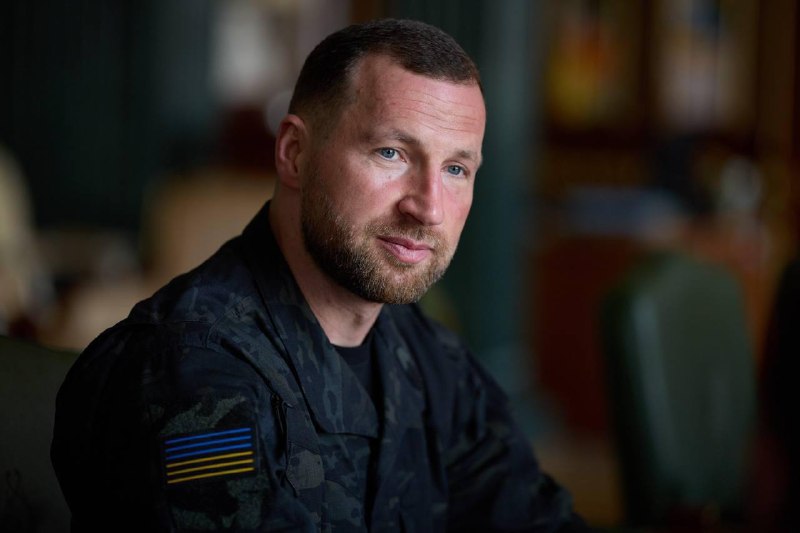
At 10:41 UTC on 19 August 2026, Ukraine's Verkhovna Rada voted 312 in favour of Yevhen Khmara's appointment as defence minister, according to a breaking Telegram post from Kyiv Post's official channel. The arithmetic was comfortable. The politics were not. The man Khmara replaced, Mykhailo Fedorov, had already gone public with the sharpest internal challenge Zelensky has faced from within his wartime political circle: a call, carried by Reuters and France 24 earlier the same morning, for elections to be held while the war with Russia continues.
The sequence is the story. A government at war does not usually change defence ministers twice in a single news cycle, and it does not usually watch its outgoing minister use his first hours outside office to demand a vote of national renewal. Ukraine now has both, within the same Tuesday morning. The question the day's two events actually raise is not whether Khmara is qualified. It is whether Zelensky's wartime compact with the Ukrainian public can absorb a stretch in which its own senior officials publicly disagree about its terms.
A comfortable vote, a noisy day
The Rada's confirmation of Khmara was, by the headline number, a routine affirmation. The Telegram channel of Kyiv Post reported the 312-vote result within minutes of the ballot, framing the appointment as a restoration of formal order after a period in which the ministry had been steered by an acting figure installed by Zelensky. The available source items do not specify the full breakdown of opposing or abstaining votes, nor do they name the parliamentary factions whose defections, if any, produced the margin. What is on the record is the act itself: a parliamentary majority, recorded at a specific timestamp, that puts a new name on the ministry's door.
Khmara arrives at a portfolio that has been a chronic source of trouble for Zelensky. Defence contracting, mobilisation policy, ammunition procurement and the management of Western military assistance have all generated public friction inside Ukraine's wartime coalition. The structural problem is not new: a civilian president running a wartime state has to keep parliament, the armed forces, Western donors and a sceptical public moving in the same direction at once, and the defence ministry sits at the intersection of all four. Replacing one minister with another does not by itself rebalance those forces. It puts a new face on the negotiation.
The counter-narrative from the man who just lost the chair
Fedorov's intervention was something more pointed than a departing official's farewell. Reporting by Reuters and France 24, both carrying the story earlier the same day, framed his video address as the biggest internal challenge Zelensky has yet faced inside his own political circle. Reuters, in its wire and on X, summarised Fedorov as calling for wartime elections and arguing the country faced a crisis of governance. France 24 broadcast the address directly, with its own headline calling it a challenge to Zelensky's leadership.
This is the part of the story that resists a clean read. Wartime elections are a settled taboo in Ukrainian domestic politics. The argument against them is not merely administrative, who staffs polling stations near the front, who counts the votes of soldiers and displaced citizens; it is constitutional and strategic. Holding a vote implies the state believes its institutions can be exposed to the contest of ballots without breaking, a calculation Kyiv has so far declined to make. Fedorov's framing pushes back against that calculation directly. By doing so on a Tuesday morning, before his successor's confirmation vote, he ensured that the Rada's number, 312, would not be the day's only number anyone remembered.
What the parallel moves actually say
Read together, the two acts sketch a system under stress but not under fracture. The parliamentary majority for Khmara shows that Zelensky's working coalition in the Rada still delivers when he needs it. Fedorov's open dissent shows that the same coalition contains figures willing to break with the executive in public and survive the break. Neither fact, on its own, is extraordinary; in a democracy, neither should be. The unusual feature is the simultaneity, and the speed. Wartime governments can absorb a sacked minister. They struggle when the sacked minister refuses to go quietly and uses his visibility to reopen a question, the legitimacy of holding power without a fresh mandate, that the executive has spent years declining to answer.
Monexus analysis: the underlying issue here is not personalities but the durability of the wartime social contract. Zelensky's standing rests on a premise that the defence of the country requires the temporary suspension of normal political contest. Each time a senior figure tests that suspension, the implicit terms of the arrangement are renegotiated, whether or not anyone intended them to be. Fedorov is not the first insider to test it, but the Reuters and France 24 framing, the biggest internal challenge to Zelensky from within his circle, indicates this is the most senior defence-side figure to do so in this register to date, and he has done it on the morning his successor was confirmed, which guarantees the challenge travels with the appointment rather than being smoothed over by it.
The weeks to watch
The immediate calendar offers three tests. The first is whether Fedorov's video address becomes a platform for other senior officials, or whether it remains an isolated protest that Kyiv's political ecosystem treats as such. The second is how Khmara's tenure opens. Defence ministers in wartime are usually measured on what reaches the front in the early weeks, and the available source items do not specify any early procurement or mobilisation decisions that would let a reader judge. The third, and structurally larger, test is whether the question Fedorov raised, elections now, or later, gets picked up by parliamentary blocs that have been disciplined into silence for the duration of the war. The Rada's arithmetic on the Khmara vote suggests there is still a working majority around Zelensky. Whether that majority will hold when the question on the order paper is the president's own mandate is a different, and harder, calculation.
What remains genuinely uncertain, on the available reporting, is the reaction inside Ukraine's armed forces and among Western partners. The cited sources establish that Fedorov's move is being read by Reuters and France 24 as an internal political challenge; they do not establish how the general staff, the Western donor cohort in Kyiv, or the parliamentary opposition intend to respond. Those reactions, once they surface, will determine whether the day is remembered as a noisy footnote or as the moment the post-invasion political order began to renegotiate itself in earnest.
Desk note: Monexus frames this as an internal governance dispute inside a sovereign, invaded state, not as a Western political story. Ukrainian agency is the unit of analysis; the question on the table is whether Kyiv's wartime compact can absorb open dissent from within its own executive, and on what terms.
Wire provenance
This editorial synthesis draws on the following public wire/social posts:
- https://t.me/Kyivpost_official/38763
- https://x.com/Reuters/status/2090015929883324480
- https://reut.rs/4xSowGP
- https://www.france24.com/en/video/20260819-ousted-ukraine-defence-minister-challenges-zelensky-s-leadership