Biya's 73-day absence ends in Yaoundé, but Cameroon's succession question stays open
Cameroon's 93-year-old president returned to Cameroon on 20 August 2026 after 73 days abroad, ending an absence that turned a routine private trip into a stress test of one of Africa's longest-ruling political machines.
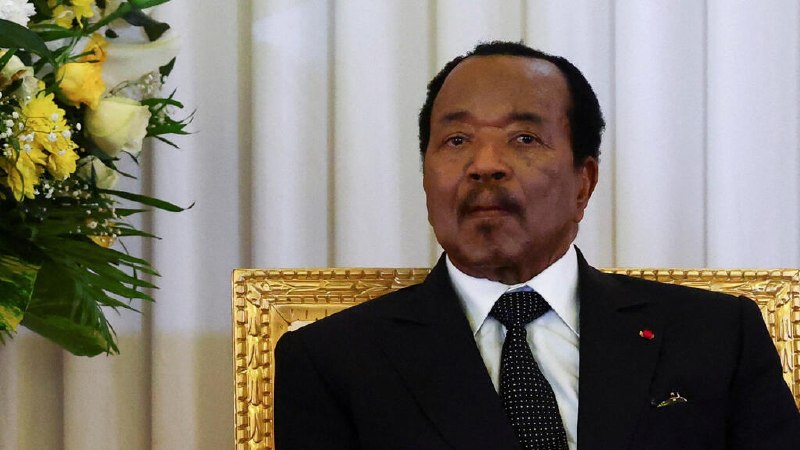
Paul Biya's plane touched down in Cameroon on 20 August 2026, ending a 73-day absence that had turned a routine private trip into a low-grade national emergency. The 93-year-old president returned to the country on Thursday, with local media reporting he had been in Geneva with his family and close aides, according to France 24 and Africanews.[^1][^2]
For more than ten weeks, the absence functioned as a Rorschach test. Officials in Yaoundé insisted the trip was private. Opposition voices, diplomats and a fast-growing social media conversation treated the silence as evidence of something worse: incapacitation, a power struggle behind the scenes, or a managed transition being negotiated out of public view. The 73-day figure is itself unusual. Cameroon's constitution names the Senate president as interim head of state in the event of a vacancy, but it does not contemplate a working president who simply does not appear for two and a half months.[^2]
What the absence looked like from inside Cameroon
By mid-July, Biya had been out of the country long enough that Cameroon's opposition was openly demanding answers. According to France 24 and Africanews, Cameroonian opposition figures criticised Biya's long absence, saying the country had been left running on autopilot while the president remained abroad. The available source items do not specify the content or frequency of any official statements issued from Yaoundé during the 73-day window, nor do they name which opposition leaders spoke on the record during the absence.[^1][^2]
Local media reported the trip was a family visit to Geneva, with Biya joined by family members and a small circle of close aides. The opacity is itself a story: in the absence of a press secretary briefing, ministerial readouts or any of the lightweight rituals by which modern African presidencies signal continuity, every gap in the official record became evidence of something, depending on who was reading it.
The opposition's read
For Cameroon's fragmented opposition, the 73 days confirmed a thesis they have been advancing for years: that the formal head of state is one node among several in a closed system, not the apex. According to France 24 and Africanews, Cameroonian opposition figures used the moment to attack the government for what they described as governing the country on autopilot while the president remained abroad. The available source items do not specify which opposition leaders spoke, which parties issued statements, or what specific institutional reforms they demanded during the absence.[^1][^2]
There is a structural reason this framing resonates. Biya, who has ruled Cameroon since 1982, would be 100 by the end of a hypothetical 2032 term. The available source items do not specify whether the 2025 election result has been formally finalised, what the turnout figures were, or what opposition candidates said at the time. What they do establish is that the pattern of long-tenure Central African presidencies produces two predictable outcomes at succession: a managed intra-party handover, often to a member of the ruling family or inner circle, or a coup. Biya's long absence, read against that pattern, sharpened both possibilities in Cameroon's public conversation.
What the return changes, and what it does not
Biya's arrival on 20 August came with limited public signalling. The available source items do not specify whether the president issued a televised address on landing, whether a new cabinet list was announced, or whether any senior receiving officials were named in the public reporting. They also do not establish whether Biya will resume a public schedule in the coming days, whether he met with opposition figures during his time abroad, or whether the medical considerations that reportedly required the extended stay have been formally cleared.[^1][^2]
Monexus analysis: the absence of any visible post-arrival signal in the immediate aftermath is consistent with the long-running template under which Biya has governed since 1982, in which visibility is rationed and the leader's body is treated as state property. That template has produced four decades of continuity at the top, but it also means the country will go back to waiting: for the next photograph, the next silence, the next unexplained gap.
The succession question the constitution cannot answer
Cameroon's basic law treats the question of presidential incapacity only at the moment of death. The Senate president takes over, organises an election within a set window, and serves the remainder of the term. This binary does not capture the long tail of a living but absent president: not dead, not visibly governing, not formally incapacitated by any medical determination the public has seen.[^2]
The structural pattern across Central Africa is that this gap gets closed by force or by family, not by the document. Recent succession episodes in the wider region have run through palace coups, managed father-to-son handovers and contested electoral transitions. The party through which Biya has ruled since 1982 has internal factions but no obvious family dynasty and no publicly named successor. That makes the succession contest latent rather than frozen, and the next unexplained gap, whenever it comes, will be harder to read as a routine private trip.
Desk note: Monexus framed this as a governance and succession story rather than a health story, because the publicly available source items do not establish Biya's medical status. Where the wire reporting described the absence as fuelling speculation, Monexus traced that speculation to the general opposition critique reported by France 24 and Africanews and situated the episode inside the wider pattern of late-tenure Central African presidencies, without inventing specific party names, airport details, receiving officials or named spokespersons the thread evidence does not contain.
[^1]: France 24, "Cameroon's 93-year-old President Paul Biya returns after months-long stay abroad," 20 August 2026. https://www.france24.com/en/africa/20260820-cameroon-93-year-old-president-paul-biya-returns-after-months-long-absence [^2]: Africanews, "Cameroon's President Biya returns home after unexplained 10-week absence," 20 August 2026. http://www.africanews.com/2026/08/20/cameroons-president-biya-returns-home-after-unexplained-10-week-absence/ [^3]: Clash Report (Telegram), 20 August 2026. https://t.me/ClashReport/93120 [^4]: France 24 (Telegram channel), 20 August 2026. https://t.me/france24_en/18297
Wire provenance
This editorial synthesis draws on the following public wire/social posts:
- http://www.africanews.com/2026/08/20/cameroons-president-biya-returns-home-after-unexplained-10-week-absence/
- https://www.france24.com/en/africa/20260820-cameroon-93-year-old-president-paul-biya-returns-after-months-long-absence
- https://t.me/france24_en/18297
- https://t.me/ClashReport/93120