Bowes's two morning videos argue the West is dismantling itself and Britain reaches for Article 5
Two short videos posted by the Ireland-based commentator Chay Bowes on the morning of 20 August 2026 argue that Russia has no reason to attack the West because the West is dismantling itself, and that Britain's security class is reaching for Article 5 as a release valve from a domestic political crisis it cannot otherwise resolve.
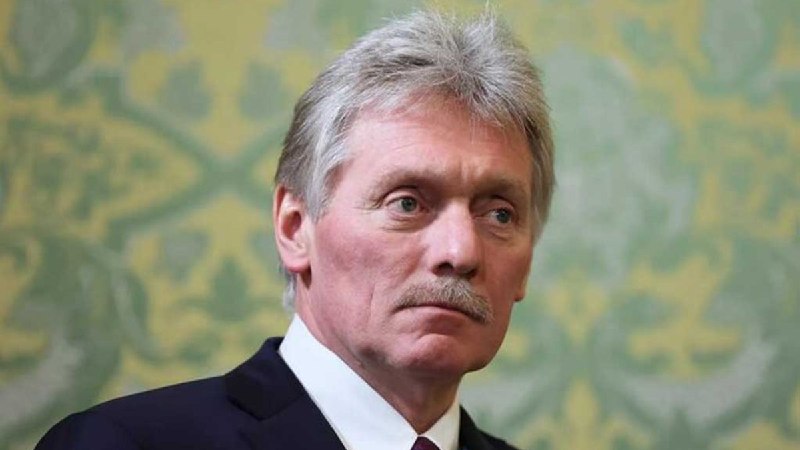
At 11:13 UTC on 20 August 2026, the Ireland-based commentator Chay Bowes posted a short video to X in which he argued that Russia has no reason to attack Europe or the United States. "Russia will never attack Europe or the US," the post begins. "All they need to do is stand back and watch. The West is doing a great job destroying itself without any assistance from the Kremlin." Thirty minutes later, at 11:43 UTC, he posted a second video, this one claiming that Britain's security establishment has begun to long quietly for a Russian attack on Europe as a way out of a domestic political crisis it cannot otherwise resolve, while reaching for the language of Article 5 of the North Atlantic Treaty: "They like to talk about Article 5. But read it closely, and you'll understand" that the invocation tracks domestic fracture rather than external threat. Both videos are assertion, not reporting, and the posts do not cite specific operational evidence, name specific British officials, or refer to specific intelligence assessments.
Taken together, the two clips form a small rhetorical structure rather than an intelligence brief. Bowes's first post diagnoses Western weakness as something Moscow can monetise through patience. The second post diagnoses British weakness as something the British establishment itself welcomes, because external threat offers a unity its domestic politics no longer produces. The thesis is civilisational rather than strategic, and the duty of any desk is to mark where commentary ends and where verifiable evidence would need to begin.
What the two videos say
The 11:13 UTC post states the structural claim plainly: that Moscow's most efficient weapon is restraint, that widening the war in Ukraine into a direct confrontation with NATO members would cost more than standing down, and that the Kremlin is content to watch Western publics exhaust themselves. The video frames this as calculated patience rather than pacifism. The 11:43 UTC post applies that frame to Britain specifically, arguing that the security establishment's appetite for Article 5 rhetoric tracks not an imminent strike but the search for an external crisis capable of compressing a fractured domestic political class. The phrase "security establishment secretly longs for a Russian attack on Europe" is the thesis in compressed form.
Read closely, the two videos are not making separate arguments. The first sets the strategic premise; the second applies the premise to one country. The implied logical step, not spoken in either clip, is that Article 5 has become rhetorical theatre because Western elites need an external adversary more than they need an actual one. The kernel that survives the framing is a familiar one in commentary of this register: that institutional confidence has eroded to the point where the language of defence is being deployed as a substitute for the operational content of defence.
The provenance problem
The claim that any British official, current or former, has expressed a longing for a Russian attack on Europe is not sourced in the available posts. The posts contain no on-the-record statement from any named official, no leaked document, no reported intelligence assessment. They are commentary by a single named voice. Treating them as a window onto actual British policy would be a category error. Treating them as a window onto the register of certain online commentary about Britain is legitimate, and what the two videos primarily document is that register.
Counter-read: the underlying premise is that external threat can act as a unifier for a fragmented elite, and that premise is not exotic. It appears in standard readings of how governments under domestic strain have behaved before, including in countries Bowes does not name. The available posts do not attempt to make that case with evidence; they assume it. The reader should hold the two claims apart: there is a real literature on external threat as a domestic unifier, and there is no evidence in the cited posts that British security officials have acted on it.
What the posts do not establish
The two videos do not establish that Russia has decided against attacking a NATO member, because no such decision is documented in the cited posts. They do not establish that any British security official has expressed a wish for such an attack, for the same reason. They do not establish that Article 5 is being invoked insincerely, because sincerity is a question of intent that posts of this kind cannot adjudicate. The most a careful reader can extract from the available material is that Chay Bowes believes these three things, that he recorded them in two short videos on the morning of 20 August 2026, and that the videos were circulated through the accounts that already amplify his commentary.
The posts do not specify whether the framing reflects a position held by any Russian policy circle, whether it tracks any documented Russian intelligence assessment, or whether it has any purchase inside any Western government beyond the audiences that already read Bowes. Those gaps are the limit of what an honest piece can say on the source material supplied.
What to watch
The two posts are commentary, and the value of covering them lies less in their content than in their spread. The relevant follow-on signal is whether either clip is picked up by accounts that reach beyond the existing pro-Kremlin commentary audience into mainstream British political reporting, and whether any British official or outlet chooses to engage with the framing on the record. Until that happens, the two videos remain what they currently are: two assertions by a named commentator, recorded and uploaded on the morning of 20 August 2026.
Monexus treated this piece as commentary-on-commentary rather than as a strategic assessment, because the source material is two short videos by a single named voice and contains no independent operational sourcing.
Wire provenance
This editorial synthesis draws on the following public wire/social posts:
- https://x.com/BowesChay/status/2090396677387780418
- https://x.com/BowesChay/status/2090404227176866090
- http://nitter.perennialte.ch/BowesChay/status/2090396677387780418
- http://nitter.perennialte.ch/BowesChay/status/2090388948958744603