Trump's Iran Sanctions Push Frames Tehran as a Global Trade Risk
A White House 'economic operation' threatens penalties on any country trading with Tehran, putting buyers of Iranian crude in the crosshairs just as diplomacy is left half-open.
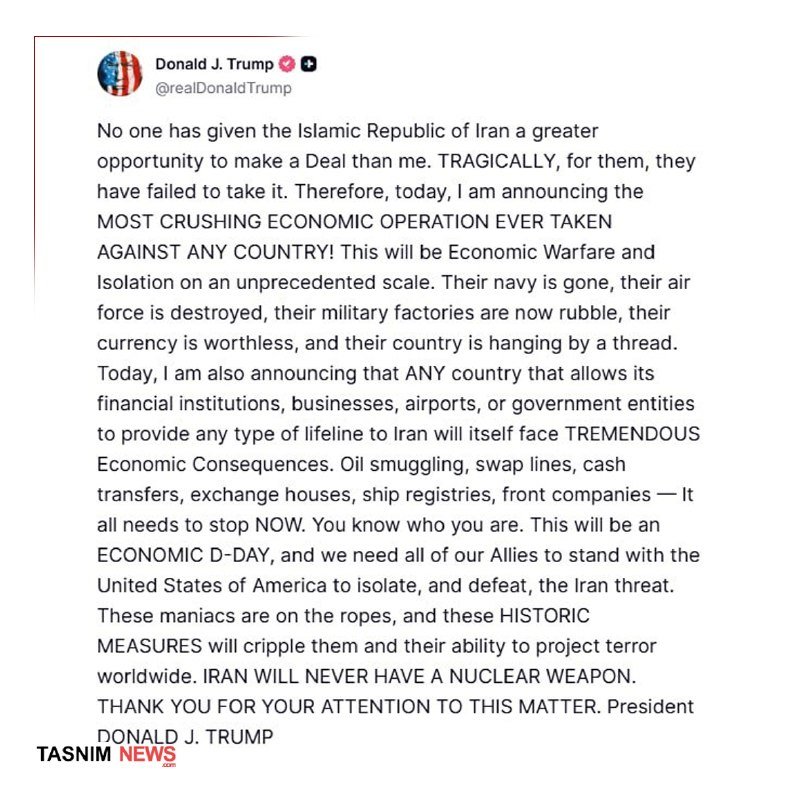
On 20 August 2026, US President Donald Trump used a White House appearance to announce what he called the "most crushing" sanctions package yet against Iran, then widened the warning to any government still trading with Tehran. Al Jazeera's live blog carried the announcement under the headline "Iran war live: Trump announces 'most crushing' Iran sanctions," with Trump's separate line that Washington may resume talks with Tehran "at some point." France 24 reported the same day that Trump warned of economic consequences against any country that supported Tehran, a formulation designed to put the cost calculation in front of every customs ministry and refiner still doing business with the Islamic Republic.
The packaging of the announcement matters more than the legal text visible so far. Monexus analysis: what looks like a fresh "economic operation" is best read as the relabelling of an existing toolkit, paired with public naming of third-country buyers. The earlier rounds relied on quiet enforcement against named banks, refiners and shipping companies. This round is oriented toward maximum visibility, and the diplomatic channel is being kept half-open as cover. Reuters, in a story published the same day, framed Trump around his domestic "builder" legacy; Mideast-focused outlets put the Iran announcement at the top of their live coverage. Both framings are accurate to the material in front of them. The policy actually operates through the sanctions mechanism.
The toolkit, renamed
What is genuinely new, on the evidence in circulation today, is the explicit threat to third countries. France 24's report is explicit on a key detail: the president "did not list any country by name" in his warning. The cited posts describe the package in general terms and do not specify which Iranian sectors the new measures will hit beyond the headline reference to a "crushing" effect. The article's own assessment is that the administration is signalling to foreign buyers that the political cost of compliance with US sanctions is being made deliberately public, and that the diplomatic channel is being kept partially open as cover for that signal. Naming of jurisdictions, if it comes, will follow the announcement rather than precede it.
That reading is consistent with how the same White House has handled past Iran episodes. Maximum public pressure, minimum public detail on what would be enough to lift it. The risk for Tehran, on this read, is that any movement the Iranian side makes to open the channel can be used to soften the secondary-sanctions coalition before a final deal is reached.
The third-country warning
France 24's third-country formulation is aimed at the refiners and political leadership that have historically absorbed Iranian crude that escaped Western compliance, and at the governments that back them. Monexus analysis: the operation's near-term bite depends less on the legal text of the new measures and more on whether the named third countries treat the threat as credible. If even one large buyer publicly redirects volumes away from Tehran, the signalling effect on the rest of the market is immediate.
The signal has to travel faster than the designations, because the designations themselves are still in motion. The cited posts do not specify which jurisdictions Washington expects to be most responsive to the warning, or whether the threat extends to non-oil trade, banking services or shipping insurance. What is on the public record for now is the verbal warning, not the legal architecture underneath it.
The half-open diplomatic door
What complicates the picture is that Trump, in the same appearance carried by Al Jazeera, said Washington may resume talks with Tehran "at some point." The phrasing is deliberately vague. It functions as a standing offer that can be picked up or left on the table, depending on which way the domestic political wind blows in Washington and which way the security situation moves in the Gulf. The offer also serves as a price tag on the sanctions themselves: the implicit message to Tehran is that the pressure is reversible in exchange for concessions.
Monexus assessment: that ambiguity is the point. A negotiating window that is narrower than it looks gives Tehran an incentive to make concessions without giving Washington the cost of publicly standing down. The diplomatic channel is left half-open precisely so that the pressure can be turned on and off without an obvious inflection point.
What to watch next
This publication's expectation, framed as a desk forecast rather than a confirmed outcome, is that three markers will tell whether the "economic operation" is a genuine escalation or a relabelling exercise. First, whether the Office of Foreign Assets Control publishes new Specially Designated Nationals listings within the next 48 to 72 hours, naming not just Iranian entities but third-country trading partners. Second, whether any major buyer of Iranian crude, including China's Ministry of Commerce, issues a public statement, which would signal that buyer has decided to treat the threat as a precedent worth resisting. Third, whether Iran's currency breaks a psychological barrier in street trading; that move would tell us the announcement has been priced in by domestic markets faster than by foreign buyers.
What remains genuinely uncertain is the sequencing with the military track. The cited posts describe the sanctions announcement in isolation; they do not specify whether the package is tied to a specific escalation in the Gulf, a stalled round of talks, or a domestic political calendar. The cited posts also do not detail which Iranian sectors the new measures will hit beyond the general reference to a "crushing" effect, and explicitly note that Trump did not name any third country in his warning. This article has not independently established the legal text of any forthcoming designations. The picture will sharpen in the next 48 hours as wire reporting catches up to the White House announcement.
Desk note: Where Western wires framed Trump's day as a domestic legacy story (Reuters), Mideast-focused outlets (Al Jazeera, France 24) put the Iran announcement at the top of the cycle. Monexus leads with the sanctions mechanism because that is where the policy actually operates, and treats the "talks at some point" line as a price tag rather than as the news.
Wire provenance
This editorial synthesis draws on the following public wire/social posts:
- https://t.me/DDGeopolitics/191483
- https://reut.rs/4xQqsQ3
- https://x.com/Reuters/status/2090229886086447290
- https://www.aljazeera.com/news/liveblog/2026/8/20/iran-war-live-trump-announces-most-crushing-iran-sanctions?traffic_source=rss
- https://f24.my/C76E.g
- https://t.me/france24_en/18288