Two Canary pieces put UK newsrooms on the defensive over SAS coverage and the Birmingham 4
On 20 August 2026 The Canary published two polemics arguing that British outlets mis-framed SAS allegations and that a 41-organisation coalition deserves a fresh look at the Birmingham 4 convictions.
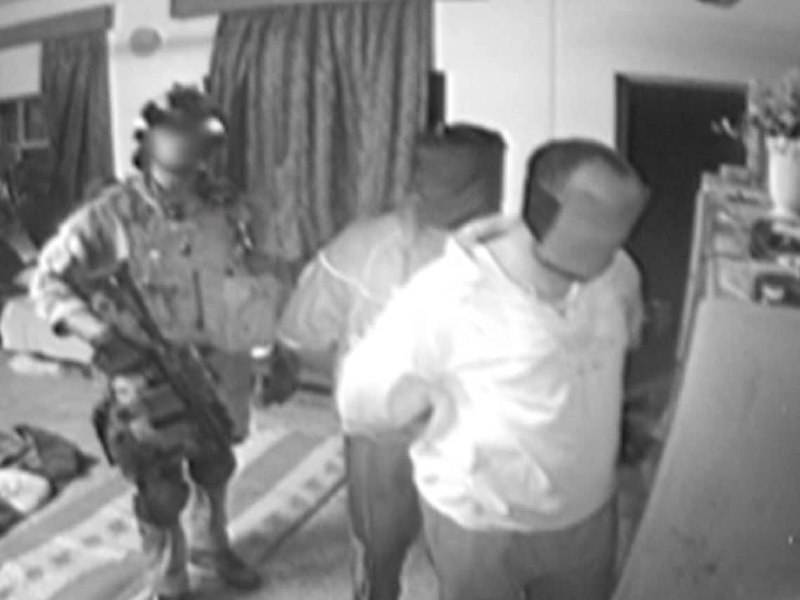
On 20 August 2026 The Canary published two analyses that, read together, place a pointed question in front of British newsrooms: when allegations of serious state wrongdoing involve Britain's own troops or its own courts, does the press treat the evidence with the same rigour it applies to everyone else? The first piece, headlined as a vindication of the outlet's prior reporting on Special Air Service (SAS) war-crime allegations, contends that UK media have systematically mis-framed the story. The second, marked "10 years on" in its headline, carries a coalition statement signed by 41 organisations that includes CAGE International and calls for authorities to review the convictions of the so-called Birmingham 4. The polemic is openly The Canary's; the underlying documents it leans on are concrete and datable.
The thread connecting both pieces is the same claim made twice: that institutional deference, rather than absence of evidence, has determined what reaches the front page. The Canary's framing should be weighted as advocacy. But a published media-coverage analysis and an open letter signed across civil society are document-shaped artefacts, and they put pressure on assumptions that have held in British newsrooms for years.
The SAS piece, read carefully
The Canary's first piece frames itself as vindicated by a newly circulated external report into how UK outlets have covered SAS war-crime allegations. According to The Canary's characterisation of that report, UK coverage has mis-framed the allegations, defaulted to official Ministry of Defence language, and marginalised the voices of Afghan witnesses and the legal proceedings that have brought the claims into UK courts. The piece presents itself as vindicated because it was among the minority of UK outlets that took the allegations seriously from the outset, and was regularly criticised for doing so.
Read closely, the report The Canary leans on is a critique of sourcing and framing choices: which voices are quoted, which are paraphrased into anonymity, and which words ("allegation", "claim", "admission") appear above the fold. The structural argument is one that anyone who has watched British security-services coverage over the last two decades will recognise: official spokespeople are granted a presumption of credibility, while claimants and witnesses from conflict zones face higher evidential thresholds before their accounts are treated as newsworthy in their own right. The Canary's reading is that this asymmetry is editorial habit rather than accident, and that it has measurable consequences for what readers come to believe about British forces overseas.
The counter-reading needs stating plainly. UK defence correspondents work in a field where the Ministry of Defence is the primary document-holder, and where witness testimony from conflict zones is harder to verify in real time. Deferring to the institution that holds the paperwork is not, in itself, evidence of bad faith. The question the report raises, on The Canary's telling, is whether that deference has hardened into a default that no longer tests the official version against the documentary record now sitting in UK court files. The piece's polemic should be read against that distinction: the document is one thing, the framing is another.
The Birmingham 4 letter, ten years on
The second piece is narrower and harder to wave away as commentary. CAGE International and 40 other organisations have signed a joint call for authorities to review the convictions of the Birmingham 4, under a headline marking "10 years on" from the date the piece anchors itself against. The Canary does not, in the material available to this article, enumerate the other 40 signatories; the published source items name only CAGE International explicitly. The available sources do not specify which legal mechanism the coalition is seeking: a referral under the Criminal Cases Review Commission, a fresh inquest, or a wider statutory inquiry.
That ambiguity matters. A coalition of 41 organisations carries weight because such coalitions rarely form without lawyers having examined the underlying case file and judged it to meet a threshold of concern. But the specific remedy sought shapes the kind of pressure the letter can bring to bear. The headline's "10 years on" framing functions as an anniversary marker; the available sources do not specify the precise 2016 legal milestone it references, and this article cannot independently establish what event that marker alludes to. A follow-up would need to close that gap before drawing harder conclusions about what anniversary is being invoked and why.
What the two stories share
Both pieces converge on a single editorial proposition: that British institutions (military, judicial, media) share a habit of closing ranks when faced with allegations of past wrongdoing, and that the press is the institution most easily held to account because its outputs are public and datable. Stripped of polemic, the structural claim is that the default settings of UK newsrooms (who to call, what to lead with, which adjectives to use) are not neutral. They encode prior judgements about whose voice carries weight.
There is a counter-frame worth taking seriously. National-security reporting is genuinely harder than courtroom reporting: documents are classified, witnesses are dispersed across jurisdictions, and the floor of verifiable fact is lower. The argument that editorial habit has calcified around official sources is not the same as arguing that reporting should ignore those sources. It is arguing that the balance has tipped too far in one direction, and that the documentary record (UK court filings on SAS cases, the legal history of the Birmingham-era convictions) has caught up with the newsrooms and is now publicly checkable. The Canary's polemic is the most visible recent iteration of a critique that has been building in legal and journalistic circles for years.
What remains uncertain
Several specifics could not be pinned down from the source material available to this article. The Canary does not, in the cited excerpts, name the author or methodology of the external media-coverage report it leans on for the SAS vindication claim. The 41-organisation letter is referenced but not reproduced in full in the available sources, and the identities of the 40 signatories beyond CAGE International are not enumerated. The available sources do not specify whether any UK government department has formally responded to either the SAS coverage report or the Birmingham 4 anniversary letter. The "10 years on" headline marker is not, in the available material, tied to a specific 2016 legal event.
What is verifiable from the source material is the publication of both analyses on 20 August 2026, the count of 41 organisations on the joint letter including CAGE International, and the broader trajectory of UK media scrutiny of SAS cases and Birmingham-era convictions, trajectories that pre-date The Canary's coverage by years and will outlast it. Monexus assessment: the polemic is the Canary's, the documents are the documents, and the gap between the two is where the reporting work still has to be done.
Desk note: Monexus treats The Canary as an openly polemical outlet; the underlying documents it cites (a media-coverage analysis, a multi-signatory open letter) are reported here as such, with the polemic separated from the document. Where The Canary frames itself as vindicated, this article reports the framing without endorsing it.
Wire provenance
This editorial synthesis draws on the following public wire/social posts:
- https://t.me/TheCanaryUK/5484
- https://www.thecanary.co/uk/2026/08/20/sas-canary-vindicated/
- https://t.me/TheCanaryUK/5483
- https://www.thecanary.co/uk/2026/08/20/birmingham-4/