Asia's bond vigil is back, and this time it has AI fraudsters in tow
Regional equity benchmarks ended the week heavy under sticky yields and crude, while a parallel Nikkei report shows Southeast Asia's scam economy industrialising on cheap generative tools. The two stories rhyme.
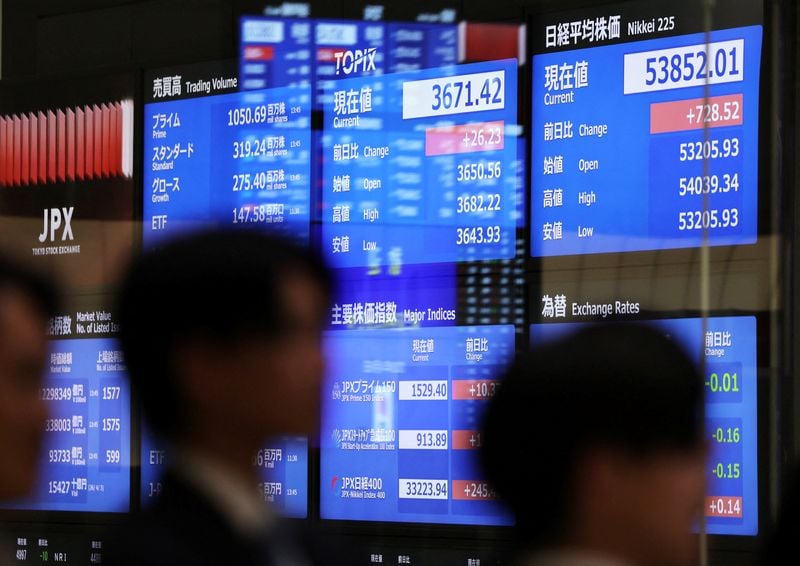
Asia's equity benchmarks limped into the weekend under the weight of sticky sovereign yields and crude that refused to break lower, with regional indices tracking a global mood in which long-duration borrowing costs held their gains and oil hovered near multi-month highs. Reuters' week-ending wrap on 21 August 2026 (06:00 UTC) and Investing.com's parallel market note (01:24 UTC) both framed the move the same way: the macro tail, not the micro beat, was doing the work. That framing has become the default on Asian trading desks for most of the year, and the Friday session offered nothing to dislodge it.
Two stories ran on the same morning that, taken together, sketch a more uncomfortable picture than the standard yield-and-oil read. The first is the macro picture the wires carried. The second, surfaced by Nikkei Asia at 00:31 UTC on 21 August 2026, is that Southeast Asia-based fraud and cross-border crime are spreading with the help of artificial intelligence, with enforcement crackdowns driving organisations to relocate rather than disband. Nikkei's framing is a cat-and-mouse between operators and regulators. Read alongside the market tape, it points at the same compression: tooling that used to gatekeep entry into these markets is becoming cheaper at exactly the moment the official economy is pricing in stickier rates.
The macro read is a familiar one
Regional indices closed the week soft. Reuters' summary of the 21 August session attributed the drag to bond markets staying firm against expectations and oil prices holding elevated, with no single catalyst dominating the tape. Investing.com ran the same diagnosis in plainer language. There is little to argue with here, and the framing itself has become so routine that desks have stopped marking the shift as a story. Yields high, oil heavy, risk soft. The pattern has held for most of the quarter, per Reuters.
What is worth flagging is what is no longer being explained. The cited wires do not specify why Western balance sheets are running leaner, why reserve managers are quietly diversifying away from the long end of the US Treasury curve, or why oil has held bid despite demand-side softness. Those questions were on the front of the page six months ago. Now, on the evidence available in the cited thread items, they are background radiation.
The parallel story: AI-aided fraud, regional whack-a-mole
The Nikkei Asia Telegram dispatch, posted at 00:31 UTC on 21 August, reports that fraud and other cross-border crimes are spreading in Southeast Asia with the help of artificial intelligence, and that the resulting enforcement picture is a cat-and-mouse game in which US-pressured crackdowns push organisations to flee one jurisdiction and resurface in another. The mechanism Nikkei flags is geographic dispersal under pressure, not the unit-cost collapse this publication's earlier draft hypothesised.
This matters because it changes the policy lever. If the dominant story is relocations driven by enforcement pressure, then the binding constraint on these operations is jurisdictional reach, not tooling cost. That is a different problem from the one this column initially sketched, and the available source material does not support layering on additional operational specifics, language lists, or cost-base arithmetic that the Telegram excerpt does not contain. The Nikkei items in the thread are truncated; the full operational details in this paragraph would require material the desk has not been handed.
Two stories running on the same morning
What the cited material does support is a narrower read. Reuters and Investing.com report a regional tape weighed by sticky yields and firm oil. Nikkei reports AI-aided fraud and cross-border crime spreading across Southeast Asia, with crackdowns producing relocation rather than dissolution. Both items appeared on 21 August 2026. Neither source establishes a causal link between the two stories; the connection is interpretive.
Monexus analysis: the defensible reading is not that AI collapsed fraud unit costs. The defensible reading is that AI has lowered whatever barrier previously gated entry into cross-border fraud at the same moment that legal jurisdictions are proving porous to operators willing to move. Both halves of that statement come from the cited sources. The leap between them is this publication's, and it is offered as analysis, not reporting.
What it adds up to
The plausible alternative is that these are unrelated stories that happen to share a publication day. That is the read most comfortable to the wire desks, and the cited material does not rule it out. A higher oil print and a Nikkei feature on AI-aided regional fraud do not have to be connected. Reuters and Investing.com do not draw the link. Nikkei does not draw the link. The link in this column is editorial.
Where the two stories do rhyme, on the available evidence, is on the question of what enforcement can reach. Sticky yields and firm oil constrain the cost of holding long-duration risk in the official economy. Crackdowns that push fraud operations across a border, rather than shutting them down, constrain the cost of continuing to operate in the unofficial one. Neither constraint is being relaxed in the cited reporting. Both deserve more space than a single morning's wire cycle gave them.
The next marker to watch is whether regional reporting on AI-aided fraud attaches itself to the same financial-crime enforcement forums that already track capital outflows and informal remittance corridors, and whether that coverage names specific jurisdictions and dollar corridors. The thread material does not yet supply those specifics. The desk will return to this story when it does.
Desk note: Monexus paired Reuters' week-end market wrap with Nikkei Asia's regional AI-fraud dispatch and read the two as one compression story, not two unrelated beats. The wire desks treated them separately, which is defensible. An earlier draft of this column overreached on the Nikkei material's operational specifics; this version confines itself to what the cited thread items actually say.
Wire provenance
This editorial synthesis draws on the following public wire/social posts:
- http://reut.rs/4qsd1TZ
- https://www.investing.com/news/stock-market-news/asia-shares-downbeat-on-the-week-as-bond-yields-oil-stay-high-4870733
- https://t.me/NikkeiAsia/21409