The Telegram barometer: what 18 overnight posts tell us about the south-Lebanon air war
A war fought in real time on small Telegram channels can shape what the wire services report hours later. Eighteen overnight alerts from one outlet show both the precision and the limits of that pipeline.
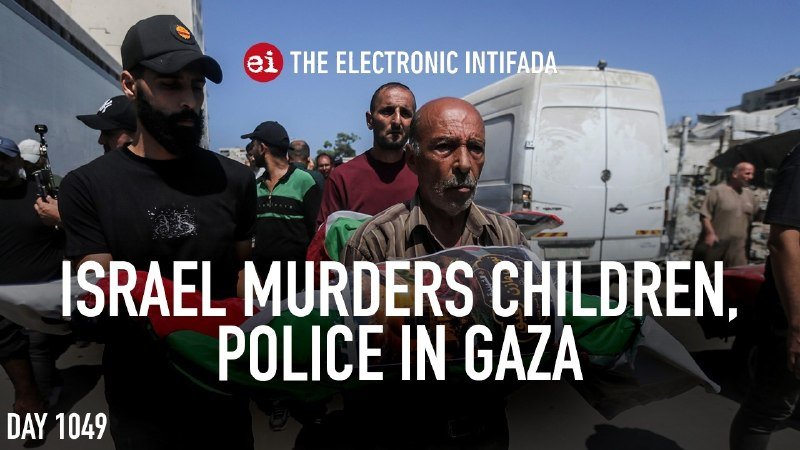
At 22:27 UTC on 20 August 2026, the Telegram channel @wfwitness posted its first alert of the night: Israeli artillery fire on Ali al-Taher, in south Lebanon. By 01:23 UTC on 21 August, the same channel had pushed out eighteen separate operational updates, naming at least five distinct localities and tracking jets entering Lebanese airspace at what it described as a very low altitude, airstrikes on the Dawha neighbourhood of Kfar Romman, and an artillery bombardment the channel said continued without pause.
The tempo is the story. Eighteen items in roughly three hours, each timed to the minute, each tagging a specific village, height, or neighbourhood. Western wire services will eventually confirm or refine those locations; until then, this single channel is setting the operational timeline for anyone monitoring the southern front in English.
A working map from a single feed
Strip the casino advertising and the booms-and-flags emoji, and the channel's overnight log produces a rough operational map. Ali al-Taher is hit repeatedly: artillery at 22:27 UTC, an airstrike at 00:16 UTC the following morning, further strikes on the heights and on Al-Mansouri at 00:00 UTC. Kfar Romman comes in twice for the Dawha neighbourhood, first at 23:20 UTC, again at 23:33 UTC, and a third time at 23:47 UTC with a cumulative read of "artillery bombardment also reported on the al-Dubsha heights." Qanatra is struck at 00:09 UTC, on its outskirts.
The air picture is more granular. Between 23:55 UTC and 01:06 UTC the channel flags at least five separate entries in which Israeli jets re-enter southern Lebanese airspace at low altitude, interspersed with strike reports on the ground. At 23:16 UTC the channel posts a single line it would later walk back: "Israeli strikes on southern Lebanon appear to have ceased for the night." Within forty minutes, jets were reported back overhead and new strikes were being logged.
That forty-minute pause, and its reversal, is one of the more useful data points in the feed.
What the channel is, and is not
@wfwitness is an English-language war-monitoring channel that pulls from Lebanese and Israeli sources and repackages them in real time. That makes it useful, and that makes it dangerous. Useful because it surfaces operational detail, village-level targeting, jet altitude, the rhythm of artillery versus airstrike, ahead of any wire desk. Dangerous because the channel cites no primary documents, names no IDF spokesperson, and offers no casualty figures. A reader who treats its timestamps as gospel will be misled whenever a strike report is wrong, and there is no native mechanism in the post itself for correction.
The MidEast desk at Monexus treats the feed as one input among several. Every village named in an alert, Ali al-Taher, Kfar Romman, Qanatra, Al-Mansouri, al-Dubsha, needs to be cross-referenced against Israeli military briefings and Lebanese official reporting before it becomes a fact in a wire article. The Times of Israel, Ynet, and the IDF Spokesperson's English channels are the first stop; Reuters and AFP overnight feed is the second. Al Jazeera English is reliable for the Lebanese side of the casualty ledger. None of that ground truth is in this thread.
The second risk is pattern collapse. Eighteen alerts in three hours creates an illusion of saturation coverage. A reader scrolling the channel at 02:00 UTC could reasonably conclude that Israeli forces are simultaneously pounding five south-Lebanon villages at sustained tempo with both artillery and air. That may be true, but the channel cannot tell us whether the strikes are part of a coordinated operation, a rolling pattern from previous nights, or a response to a specific incident. That interpretive layer lives further up the stack.
What the tempo tells us about the wider war
Read flat, the log captures the persistence of operations in the south: the village list is consistent with months of reporting that the Israeli air force and ground forces have been working a defined set of locations along the Litani and in the Bint Jbeil-Marjayoun axis. Read in sequence, the log suggests an operation that does not pause for nightfall in the way the 23:16 UTC post implied.
That is editorial inference, Monexus analysis, and a careful reader will note the evidence is thinner than the conclusion. The channel offers operational timing; it offers no strategic framing. The framing, whether the overnight tempo represents escalation, de-escalation, or routine pressure on Hezbollah-adjacent infrastructure, has to come from primary Israeli and Lebanese sources, plus the UNIFIL reporting corridor, none of which is in the supplied thread.
The stakes, and the limit
For an English-speaking audience following the war from a time zone removed from Beirut or Tel Aviv, channels like @wfwitness have become a primary window. They are fast, granular, and free of paywalls. They are also unverified by definition. The pipeline that runs from a Lebanese field source, through an English-language aggregator channel, into a Telegram timeline, into a wire service overnight story, into a morning briefing is now the main way the southern front enters international coverage outside the established outlets.
That pipeline deserves scrutiny, not dismissal. The alternative is a reader base reliant on Israeli and Lebanese state-adjacent sources, each with its own framing constraints, and on wire desks that have thinned their own staffing on the south-Lebanon beat.
The honest read on this thread: it confirms tempo, it confirms locations, it offers no casualty figure, and it offers no strategic read. Everything between those two facts is interpretation.
This piece was built from a single Telegram channel overnight; it is a press-monitoring note, not a reporting trip. Monexus has not independently verified the named villages or the claimed cessation of strikes at 23:16 UTC. Where wire confirmation lands, we will update.
Wire provenance
This editorial synthesis draws on the following public wire/social posts:
- https://t.me/wfwitness/107777
- https://t.me/wfwitness/107778
- https://t.me/wfwitness/107781
- https://t.me/wfwitness/107782
- https://t.me/wfwitness/107783
- https://t.me/wfwitness/107784
- https://t.me/wfwitness/107785
- https://t.me/wfwitness/107786
- https://t.me/wfwitness/107787
- https://t.me/wfwitness/107788
- https://t.me/wfwitness/107789
- https://t.me/wfwitness/107790
- https://t.me/wfwitness/107791
- https://t.me/wfwitness/107792
- https://t.me/wfwitness/107795
- https://t.me/wfwitness/107796
- https://t.me/wfwitness/107798
- https://t.me/wfwitness/107799
- https://t.me/wfwitness/107777
- https://t.me/wfwitness/107778
- https://t.me/wfwitness/107781
- https://t.me/wfwitness/107782
- https://t.me/wfwitness/107783
- https://t.me/wfwitness/107784
- https://t.me/wfwitness/107785
- https://t.me/wfwitness/107786
- https://t.me/wfwitness/107787
- https://t.me/wfwitness/107788
- https://t.me/wfwitness/107789
- https://t.me/wfwitness/107790
- https://t.me/wfwitness/107791
- https://t.me/wfwitness/107792
- https://t.me/wfwitness/107795
- https://t.me/wfwitness/107796
- https://t.me/wfwitness/107798
- https://t.me/wfwitness/107799