Two wires, one clock: sticky yields and AI-assisted fraud in the same Asia week
Two Reuters and Investing.com items on 21 August flag a downbeat Asia equities tape under sticky yields and dear oil. A separate Nikkei Asia thread the same day reports AI is lowering the cost of running Southeast Asia-based scam operations. Read together, the staff writer argues, they describe the same macro pressure on different payers.
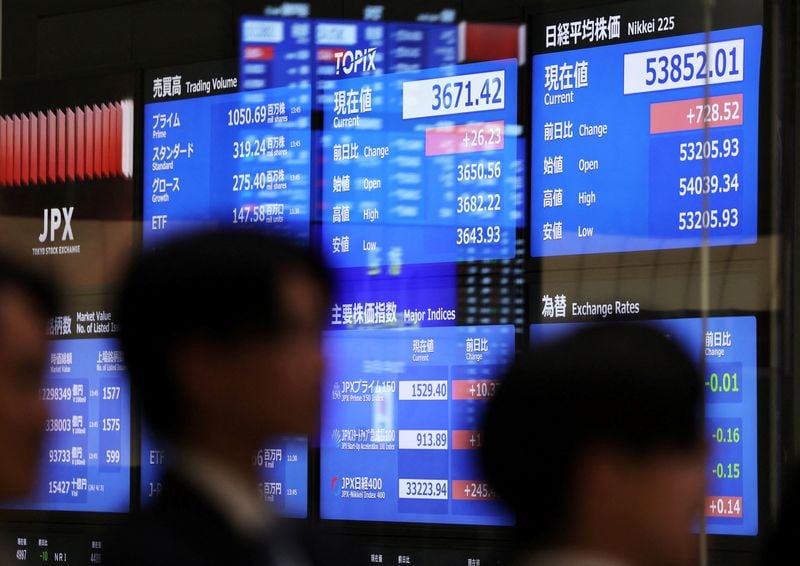
A 21 August 2026 wire item filed under Reuters' account and republished by Investing.com carried the same headline: "Asia shares downbeat on the week as bond yields, oil stay high." That is the entire visible sentence the two threads give us. The Investing.com republication is timestamped 01:24 UTC; the Reuters account post carrying the same line is timestamped 01:50 UTC. The order on the public record places Investing.com's republication ahead of the Reuters posting in the thread evidence, not behind it; this article does not infer which feed originated the item.
Two hours earlier on the same day, Nikkei Asia's Telegram channel filed a separate item headlined "AI cuts costs for Southeast Asia-based scammers," reporting that fraud and other cross-border crimes are spreading in the region with the help of artificial intelligence and describing the dynamic, in the headline language, as "a cat-and-mouse game as crackdowns" continue. The available thread text does not specify the substance of the Nikkei piece beyond that headline and lead framing.
The dominant wire framing treats these as two unrelated items: a regional markets round-up and a regional crime round-up. The reading worth pushing is that the two share a publication date, and that under any honest reading the cost of money and the cost of reaching a victim move on the same macro clock.
What the headline says, and what it does not
The Reuters and Investing.com line is genuinely thin. "Asia shares downbeat on the week as bond yields, oil stay high" tells a reader two things: equities ended the week lower, and yields and crude did not ease enough to relieve them. It does not specify which yields, which curves, which oil benchmark, or which sessions did the damage. It does not specify whether the move was concentrated in a single index or spread across the region. Any description of long-end stickiness, services-inflation transmission, or equity-multiple compression in this article is reading on the staff writer's part, not what the thread evidence states. Readers who want the granular picture should treat the headline as a pointer to the underlying Reuters markets report, which is not in the thread evidence here.
What the Nikkei headline says, and what it does not
The Nikkei Asia Telegram headline and the available lead phrase tell a reader three things: artificial intelligence is being used by scam operators, the operations are based in Southeast Asia, and the relationship between operators and law enforcement is a continuing cycle rather than a settled fight. The thread evidence does not specify the size of the affected victim pool, the dollar value of losses, the jurisdictions named, the AI tools referenced, or the enforcement agencies quoted. Any specific framing of how AI lowers marginal operator cost is reading on the staff writer's part; the available thread text supports only the general claim that AI is cutting costs for these operations and that crackdowns continue alongside them. The thread evidence also does not specify whether US pressure is currently a driver of geographic shifts among scam compounds; that element is not entailed by the headline and lead language we have.
Why the two threads rhyme, and why that rhyme is analysis
Monexus analysis: read together, the two items describe the same week from opposite ends of the income ladder. The markets line says risk assets did not get relief. The crime line says the operators targeting retail victims got cheaper to run. Both statements are consistent with a world in which the marginal saver and the marginal fraud target are squeezed by the same backdrop: a yield environment that punishes duration-holders, and a tooling environment that lowers the cost of reaching a stressed household. The connection between the two is an interpretive claim by this publication, not a fact stated by either thread. It is offered as analysis, with the caveat that the underlying reporting behind both headlines is not in the evidence here, and the rhyme holds only at the level of macro direction.
The alternative reading is straightforward: equities move on liquidity, fiscal paths and earnings; fraud moves on tooling, enforcement and victim psychology. They share a calendar week. The split between them is the more parsimonious read, and the staff writer's joined-up framing should be treated as a hypothesis, not a finding.
Stakes and what to watch next
If the joined-up reading holds, three indicators will do the diagnostic work over the next quarter. The first is the trajectory of long-end Asian sovereign yields and the level of services inflation, both of which the Reuters and Investing.com headline implies were a drag in the week ending 21 August 2026 and which only the underlying report, not the thread, would specify in detail. The second is the publicly reported incident volume from regional law-enforcement and consumer-protection agencies on Southeast Asia-originating fraud, measured against the Nikkei Asia headline's claim of accelerating operational scale. The third, harder to measure but worth watching, is the household precautionary savings rate across the most-targeted diaspora corridors. A falling savings buffer alongside rising fraud losses would close the loop this article has only sketched. None of the three is in the available thread evidence; all three would need the underlying reports behind the two headlines to be verified.
The available reporting does not specify whether regional regulators are coordinating across cross-border cash-out rails, whether the AI-assisted scaling on the criminal side is currently outrunning detection tooling on the enforcement side, or whether US pressure is reshaping where scam compounds relocate. These are open questions underneath the two stories the wire carried this week, and the thread evidence does not answer any of them.
Desk note: Monexus treats the Reuters and Investing.com markets thread and the Nikkei Asia crime thread as adjacent items, same day, and flags their possible macro alignment as analysis, not as a finding carried by either source. The wire carries them apart. We carried them together, with the join labelled.
Wire provenance
This editorial synthesis draws on the following public wire/social posts:
- https://reut.rs/4c3NAlH
- https://x.com/Reuters/status/2090617429390995575
- https://www.investing.com/news/stock-market-news/asia-shares-downbeat-on-the-week-as-bond-yields-oil-stay-high-4870733
- https://t.me/NikkeiAsia/21409
- https://t.me/nikkeiasia/21409