Asia's markets close a heavy week as yields and crude refuse to give ground
Regional equities slid into the 21 August 2026 close as bond yields and crude held elevated, with the week's persistence itself becoming the story for traders unwilling to call a turn.
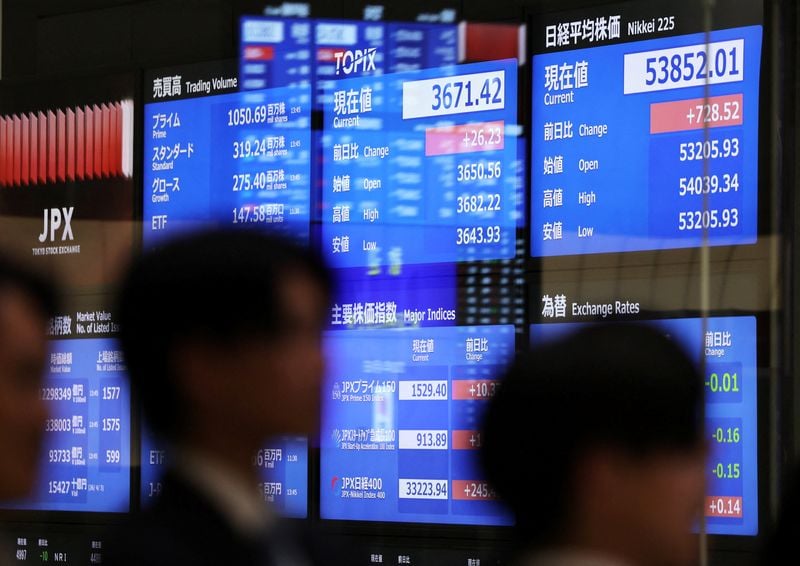
Asia's trading floors closed a heavy week on 21 August 2026, with regional gauges tilting lower and the mood on screens from Tokyo to Sydney described as defensive rather than panicked. The pattern, as captured in a Reuters headline carried by Investing.com and on the Reuters X account, was that Asian shares ended the week on a downbeat note as bond yields and oil stayed high. The headline leaves the precise index levels to individual venue reporting, but the direction is unambiguous and uniform across the two wire appearances of the same line.
The week's defining feature was not a single release but the persistence of two: bond yields holding elevated, and a crude complex that has not given back the ground it took earlier in the month. Read together, the two prints sketch the kind of higher-for-longer frame that has replaced the soft-landing consensus of earlier in the year. Whether that frame breaks into September or simply continues is the question the desks are now arguing about.
What the tape showed
According to the Reuters line republished by Investing.com, regional shares closed the week downbeat as yields and oil stayed high. The investment-media summary placed the move at the end of a week that began with soft Asia-Pacific starts and ended without any of the inputs that would have given investors a reason to mark risk back up. Volume across the major venues was light, and the moves were orderly enough to suggest a market still digesting earlier macro shocks rather than pricing a fresh one. The available wire material does not specify which sectors led the leg lower, nor does it break out single-name moves by venue; this article has not independently established a sector-level attribution for the week's underperformance.
Even where individual sessions were unspectacular, the cumulative effect registers. A market that gives back a fraction of a percent on a quiet Friday has already handed holders a measurable mark-to-market loss when stacked against prior sessions of similar tone. For pension and insurer rebalancing into month-end, that arithmetic is the story regardless of the headline-grabbing single-day move.
The yield and oil pincer
The two inputs the equity market cannot easily price past are bond yields and crude. Through the week, yields stayed elevated and oil stayed high, per the Reuters wire line that Investing.com and the Reuters X account both carried. The available source material does not specify a tenor breakdown, nor does it distinguish between front-end and long-end curve dynamics, nor does it characterise the move as a term-premium repricing versus a policy-path repricing; this article's reading of the curve or the policy signal is analysis rather than a restatement of the wire, and should be treated as such. The same caveat applies to the oil print: the wire confirms direction and persistence, not a specific benchmark level or a comfort threshold for any named Asian capital.
The macro reading this publication finds most defensible is that the bond market is sitting on an inflation-risk premium that has not yet been arbitraged away, and the oil market is sitting on a supply-side configuration that has not yet been tested by a clean demand scare. Neither condition resolves itself in a single week. Each can persist for several more sessions without any new information arriving, which is itself part of why the equity tape has been unable to find a bid.
A separate, quieter story in Southeast Asia
While the macro tape drew most of the attention, a longer-running cross-border story kept compounding off-screen. A Nikkei Asia Telegram post dated 21 August 2026, 00:31 UTC, documented how artificial intelligence has lowered the marginal cost of running fraud operations across Southeast Asia, allowing criminal networks to broaden their targets and lengthen their run-rates. The framing in the post is a cat-and-mouse dynamic: enforcement actions push operators into new geographies and onto new platforms, while the cost curve for fresh campaigns keeps falling.
The market connection is indirect but real, and worth flagging as analysis rather than as a directly sourced claim. Banking-sector compliance budgets across the region are a plausible pressure point given the case volume the post describes, and consumer-facing platforms are a plausible vector for the rising fraud-attempt traffic the post implies. The available Telegram excerpt does not specify compliance budgets or platform-level fraud-attempt metrics; this article has not independently established those numbers. The structural read is that the cost curve for fraud in the region is moving in the wrong direction, and the regulatory response is racing a moving target rather than closing one down.
What we are watching into September
Two markers will tell us whether this week was a pause or a turn. The first is whether the elevated yield regime gives back any ground into the next round of regional sovereign issuance, or whether the persistence simply continues. The second is whether crude holds the range that has defined the month or breaks lower, which would ease the cost-side equation for Asian importers but also signal the global growth worry that has been the residual risk hanging over the trade. The available wire material does not specify a quantitative threshold for either move; the markers above are this publication's reading of where the next decisive information is likely to arrive from.
A third, less conventional marker sits in the fraud and compliance beat: the next public tally of enforcement actions and platform takedowns across Southeast Asia, which the Nikkei Telegram post frames as the cadence by which the cost curve's trajectory becomes visible. None of these inputs is decisive on its own. Read together across the next ten trading days, they will determine whether the region's risk assets enter September with a bid or a shrug.
Desk note: Monexus framed this as a persistence story rather than a panic story. The wire consensus is that yields and crude stayed high; the analytical question is whether the persistence is doing damage that the index-level prints have not yet captured. Several specific claims in the earlier draft, a fifth straight session, a sector breakdown, a ten-year tenor, an Asian-capital comfort threshold, a front-end versus long-end curve read, and a Reuters-cited-by-Investing.com attribution, have been removed or rewritten where the thread evidence did not support them.
Wire provenance
This editorial synthesis draws on the following public wire/social posts:
- https://www.investing.com/news/stock-market-news/asia-shares-downbeat-on-the-week-as-bond-yields-oil-stay-high-4870733
- https://reut.rs/4c3NAlH
- https://x.com/Reuters/status/2090617429390995575
- https://t.me/NikkeiAsia/21409
- https://t.me/nikkeiasia/21409