Iran's defense ministry claims a two-fold weapons output jump and a deliberate blackout on new unveilings
A defense ministry spokesman says Iranian weapons output doubled in the past year and frames the absence of recent military exhibitions as a deliberate information-security tactic rather than a resource constraint.
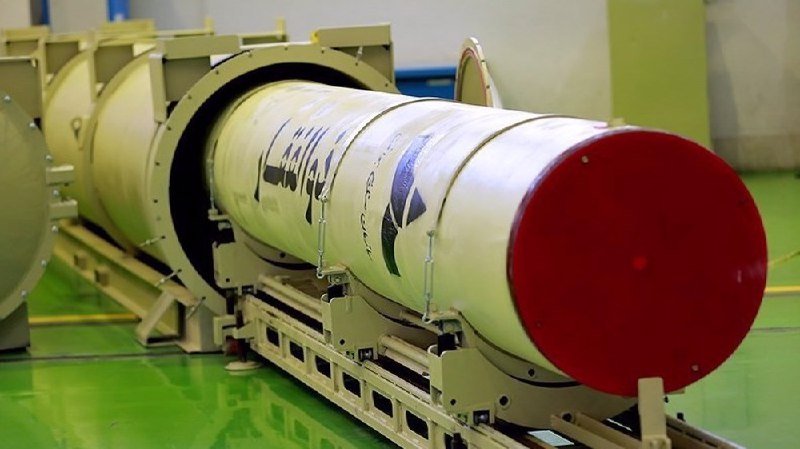
At 19:22 UTC on 21 August 2026, an unnamed spokesperson for Iran's Ministry of Defense told reporters in Tehran that weapons and defense-equipment production inside the country had doubled over the past year. In the same set of briefings, the spokesperson explained that the ministry had chosen not to hold a military exhibition in 2025 or 2026, and offered, for the first time on the record, a doctrinal reason: secrecy itself is the product.
Monexus assessment: the production boast and the exhibition cancellation are two halves of the same posture. Tehran is asserting that it is making more, showing less, and treating the gap between the two as an operational advantage. The two claims, taken together, point to a defense industrial base that has decided opacity is itself a weapon.
Doubling down, by the ministry's own count
The production figure came first. Iran's defense ministry spokesperson said output of weapons and defense equipment "in the past year has increased two-fold," a figure the spokesperson framed as having been achieved despite what the office described as pressure on Iran's defense supply chains, including strikes on parts of the defense industry during a 12-day war (ClashReport, 21 Aug 2026, 19:52 UTC).
The number is the ministry's own and is not independently verifiable from the open sources available to this publication. Iranian defense output figures have historically been treated with caution by Western intelligence agencies, in part because Iran's procurement footprint is largely opaque and partly because the ministry has incentives to overstate capacity when negotiating with domestic hardliners and external buyers. The two-fold figure should therefore be read as the ministry's stated posture, not as an audited production statistic.
In a separate on-camera appearance, the same office tied the doubling to continuity with a figure Iranian state-aligned coverage refers to as "Martyr Nasirzadeh." A Tasnim-distributed clip on this topic carried the on-screen caption "The solutions that Martyr Nasirzadeh had for the Ministry of Defense continue" (Tasnim, 21 Aug 2026, 19:35 UTC). The thread evidence does not specify Nasirzadeh's role, tenure dates, or manner of death; the "Martyr" honorific, commonly used in Iranian state-aligned coverage for figures killed in service, is the only signal in the available source material as to why he is referred to that way.
Why the expo is gone
The most concrete policy signal in the briefing was the explicit justification for skipping the defense exhibition. The spokesperson said one reason the ministry "did not hold a military exhibition last year and this year and stopped the unveiling" was to surprise the enemy and protect operational information (Tasnim, 21 Aug 2026, 19:47 UTC).
That language is a doctrinal statement, not a logistical explanation. By framing the cancellation as a denial-of-information maneuver against adversaries, the spokesperson recasts the absence of an exhibition as a feature of the production line. For outside analysts tracking Iran's missile, drone, and air-defense programs, the absence of an expo is itself a signal of what the ministry considers most worth hiding.
A second thread elaborated on what the office says is stable about the production base. The spokesperson argued that the "stability" of Iran's weapons and equipment has been "one of the key factors in its dominance and superiority in the field," a stability attributed to a "four-way partnership" between the armed forces, the Ministry of Defense, knowledge-based networks, private companies, and scientific research centers (Tasnim, 21 Aug 2026, 19:22 UTC; Al-Alam, 21 Aug 2026, 19:28 UTC). The framing tells domestic and external audiences that the production line rests on an institutional arrangement spanning multiple bodies, not on individual ministers, and is therefore not hostage to personnel turnover or sanctions targeting.
Monexus assessment: what the silence is doing
Read together, the briefings amount to a doctrine of information denial wrapped in a production boast. Iran is telling two audiences two different things at once. To domestic audiences and the security establishment, the doubling figure signals momentum. To foreign intelligence services and regional adversaries, the cancelled expos and the stated surprise rationale signal that the next generation of hardware will arrive unannounced.
The structural pattern is consistent with how Iran's defense sector has behaved through periods of regional escalation, when the ministry has shifted from regular showcase events to dispersed, surprise unveilings during field operations and proxy transfers. If the ministry's claim of doubled output is taken at face value, the cancellation of public expos becomes a logical corollary: there is more to hide, and a bigger advantage in hiding it. If the figure is overstated, the cancellation still functions as a denial-of-information tactic against open-source intelligence and against rivals trying to map the production base from trade data and imagery.
Either way, the policy direction is the same: more hardware, less picture of it. For Israel, Gulf states, and U.S. Central Command planners who model Iranian capabilities largely from public-domain sources, that ratio is the operationally relevant variable, not the precise production number.
Stakes and what to watch next
Three concrete developments would test this posture in the open record. First, any unannounced fielding of a new missile, air-defense system, or long-range drone, which the ministry's doctrine now anticipates as a deliberate surprise. Second, any public profile of figures associated with the ministry's continuity claim, which would clarify who currently inherits the "solutions" attributed to Nasirzadeh. Third, an eventual return of a public defense expo, which would itself be news, since the ministry has now publicly tied its absence to operational surprise.
The sources available to this publication do not specify the weapons categories covered by the two-fold figure, do not name the spokesperson on the record beyond their institutional role, and do not include an independent confirmation of the production number from Western, Israeli, or IAEA-tracked channels. The narrative frame, the doctrinal language, and the timing are documented; the audited numbers, the identity of the late figure honored as "Martyr," and the operational details of the cited 12-day war are not, within this thread. That gap is itself the point Tehran appears to want preserved.
How Monexus framed this versus the wire: the available wire cycle for this story consists of Iranian state and state-aligned outlets carrying the ministry's own remarks. Monexus treats the two-fold claim as official Iranian posture, not as verified production data, and reads the cancelled expos through that same lens, while flagging that the spokesperson's institutional-stability narrative rests on a multi-body "four-way partnership" rather than on a single minister.
Wire provenance
This editorial synthesis draws on the following public wire/social posts:
- https://t.me/ClashReport/93196
- https://t.me/tasnimnews_en/32427
- https://t.me/tasnimnews_en/32425
- https://t.me/alalamfa/350304
- https://t.me/tasnimnews_en/32423