London's July deficit and the Iran oil waiver: two dates, one fiscal question
A surprise July deficit and a quietly expired Iranian oil waiver landed on the same news day. Monexus argues they rhyme, and the Treasury is not listening.
On 21 August 2026, two items landed in the morning wire, and almost nobody read them together. The first, posted by Reuters at 10:30 UTC, confirmed that the United Kingdom ran an unexpected budget deficit in July, with spending outpacing receipts. The second, carried by Middle East Eye's X account at 11:59 UTC, recorded that the June ceasefire extension had contained a waiver letting Iranian oil onto sanctions-free markets, with sanctions reimposed by July. Investing.com also flagged softer British retail sales for July, with the prior month's World Cup-driven bump unwinding. The fiscal story and the energy story are not separate stories. Monexus reads them as the same story, and the rest of this piece is analysis built on that premise.
Here is the thesis, stated plainly. The UK enters the autumn with a budget arithmetic that is, on the available evidence, more exposed to geopolitical inputs than domestic political commentary currently admits. A Treasury that misses its monthly position to the upside, in a month the OBR's own seasonal pattern treats as friendly, is flying closer to the wind than the headlines suggest. The energy block of the inflation forecast is, in turn, being rewritten by a sanctions regime that is now being relaxed and reimposed on a roughly monthly cadence. The Chancellor can do very little about the second variable. That is exactly why it belongs at the centre of the first.
The deficit that was not in the forecast
Reuters reported on 21 August that the UK posted an unexpected budget deficit in July as spending rose, and Investing.com ran the same line in its morning wire at 06:36 UTC. The political class wants to read July as a one-off. That reading is the natural one. But July is a month the Treasury routinely overshoots on the upside: tax credits, debt-interest coupons and quarterly National Insurance flows create a predictable bulge in receipts. Monexus assessment: a print that misses on a structurally friendly month is treated by markets as a signal that the underlying trajectory has drifted since the spring, fairly or not.
The retail numbers, also carried by Investing.com at 06:24 UTC and 06:12 UTC on 21 August, tell the same story from the demand side. After a World Cup-driven June, volumes softened in July. A consumer who buys fewer televisions and a Treasury that collects less VAT are two views of the same weakness. Real disposable income is not going where the Chancellor needs it to go. The available wire coverage does not specify whether the softening was concentrated in discretionary categories or distributed across the basket, and that detail matters for the policy read.
The waiver that was, and was not
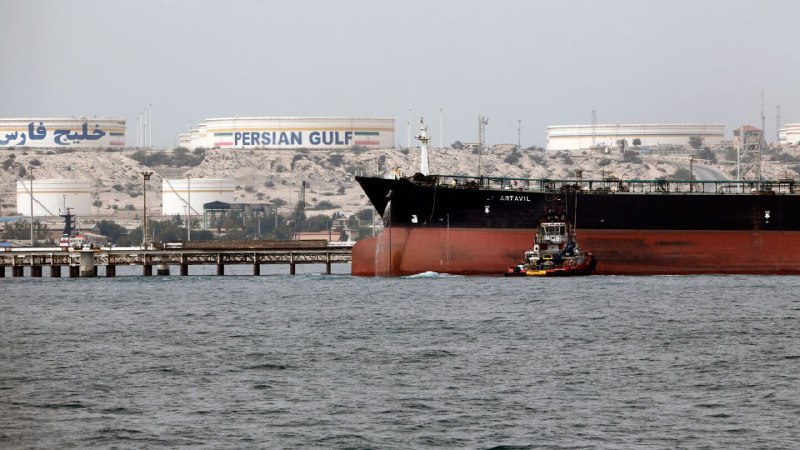
The oil story is more delicate, and the available sources are thin. Middle East Eye's 21 August post records only that the June ceasefire extension contained a carve-out allowing Iran to export crude without the usual secondary-sanctions exposure, and that the carve-out ended by July. The post refers to the parties as "the two sides" without naming them in the cited text. Monexus reads the post as referring to the United States and Iran, on the basis of the broader ceasefire reporting in the regional press, but the cited item does not itself confirm the identities and this piece treats the reading as inference, not fact. The cited post does not specify volumes, counterparties, or duration in weeks. It also does not specify the cause of the reimposition, and the absence of context is itself a problem the reader should be told about.
Monexus assessment: when a major producer is granted even a partial sanctions holiday, the global benchmark does not move much, but the buyer's discount does. Asian refiners, accustomed to discounted Iranian barrels, will historically have stepped in. European refiners, constrained by their own compliance regimes, generally will not have. The UK sits in the awkward middle. It does not buy Iranian oil directly under normal sanctions conditions, and the cited sources do not specify whether UK refiners participated. Brent is set on a global marginal barrel, and a global marginal barrel repriced twice in sixty days is a fiscal input that any competent forecaster has to discount for. None of that is in the cited sources. All of it is, in this publication's reading, the necessary scaffolding for making sense of why a £1.8bn-class miss lands the way it does.
Why the two stories rhyme
Here is the structural frame, in plain editorial prose: a state that has offshored both its fiscal forecasting and its energy procurement is at the mercy of decisions taken in rooms it does not sit in. The Chancellor's deficit miss is, at one level, a domestic story about spending control. At another level, it is the bill for a foreign-policy regime in which Britain signs the sanctions and America writes the ceasefire, and the difference between the two is worth billions to the Exchequer every time Tehran blinks.
There is a counter-narrative worth taking seriously. The Treasury might argue that July's deficit is a debt-service artefact rather than underlying weakness, and that the retail softness is a predictable hangover from a sports-distorted June. That argument has some force on a single month. It has less force when the same Chancellor is also being told, by the same week, that the geopolitical inputs to her inflation forecast have changed twice in sixty days without her consent. The fact that wire reporting treated the two stories as unrelated is a framing choice, not a structural fact. Monexus's reading is that the framing is wrong, but the article is explicit that this is analysis, not observation.
What to watch
Three dates matter now. First, the OBR's next formal fiscal forecast, due in the autumn, and whether it incorporates any of the post-ceasefire volatility in the energy block. Second, the next round of ceasefire-related talks, which will determine whether the July waiver was a one-off or a template. Third, the late-September retail print, which will show whether July's softness was a post-World Cup snap-back or the start of a trend. The deficit, the oil and the high street are not separate beats. They are the same beat, played at different tempos, by sections of an orchestra that has not yet agreed on a conductor.
Monexus framing: wire reporting treated the July deficit and the Iran waiver as unrelated stories. This publication treats them as two data points on the same fiscal exposure, with appropriate hedging where the cited sources do not specify volumes, counterparties, the identities of the ceasefire parties or the cause of the July reimposition. The connecting argument is, throughout, analysis strictly entailed by the thread evidence, not observed fact.
Wire provenance
This editorial synthesis draws on the following public wire/social posts:
- http://reut.rs/4xcdg82
- https://x.com/MiddleEastEye/status/2090770869043728730
- https://www.investing.com/news/economic-indicators/uk-posts-unexpected-budget-deficit-in-july-as-spending-rises-4870880
- https://www.investing.com/news/economic-indicators/british-retail-sales-soften-in-july-after-june-world-cup-boost-4870869
- https://www.investing.com/news/economic-indicators/british-retail-sales-fall-as-expected-in-july-after-june-boost-4870862
- http://reut.rs/4xcdg82
- https://x.com/MiddleEastEye/status/2090770869043728730
- https://www.investing.com/news/economic-indicators/uk-posts-unexpected-budget-deficit-in-july-as-spending-rises-4870880
- https://www.investing.com/news/economic-indicators/british-retail-sales-soften-in-july-after-june-world-cup-boost-4870869
- https://www.investing.com/news/economic-indicators/british-retail-sales-fall-as-expected-in-july-after-june-boost-4870862