Panama Canal to cut daily transits in two steps from 3 September as El Niño drains Gatún
The Panama Canal Authority will trim daily transits to 34 from 3 September and to 32 from 15 September, an El Niño-driven rationing that is already pushing carriers to add roughly $1,000 per container in surcharges on the all-water East Asia to US East Coast lane.
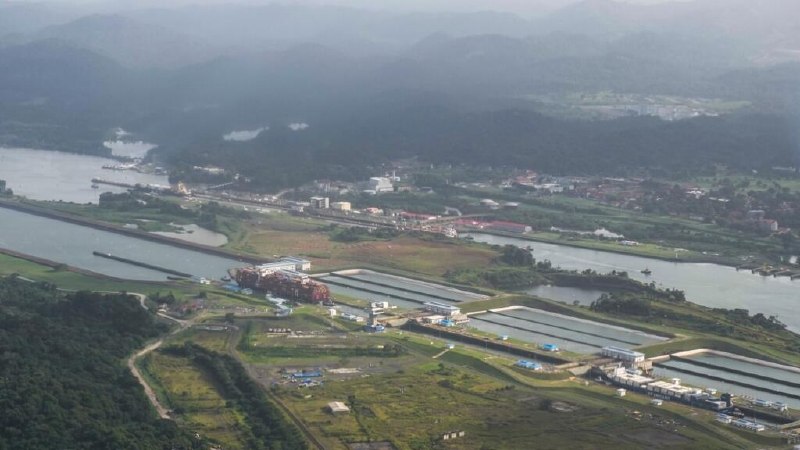
The Panama Canal Authority told shippers on 20 August 2026 that it will trim daily vessel traffic in two steps as El Niño depletes the freshwater reservoir system that feeds the lock chambers. Daily transits drop to 34 from 3 September and then to 32 from 15 September, according to France 24's report on the Authority's statement and an AFP-sourced account relayed by the GeoPolitical Watch Telegram channel. The current daily ceiling is 36 ships; the cumulative reduction from the August 20 baseline is therefore two ships on 3 September and four ships from 15 September onward, with no published threshold in the cited items for a return to 36.
The Panama Canal is no longer a piece of geography; it is a tape measure for global trade. With every booking slot, the Authority is effectively re-pricing the route between East Asia and the US East Coast, and the freight market is already moving on the news.
Two steps, not one
The slot reduction is being delivered in two stages rather than as a single cut, and the staging matters. The first cut on 3 September takes the ceiling to 34. The second cut on 15 September takes it to 32. France 24 reported on 20 August that the Authority will limit daily vessel traffic from 3 September "as a severe drought fuelled by El Niño depletes water supplies needed to operate the vital" waterway. The Al Jazeera wire carried the same timing and weather framing in a 21 August bulletin. The disclose.tv channel separately reported that the Authority is limiting cargo capacity twice in the coming weeks to lighten ships, citing low water levels, a draft-side lever that operates on tonnage per vessel rather than slot count.
Monexus analysis: the staging suggests the Authority is matching operational cuts to a lake-level glide path rather than the calendar, with the second step reserved for if reservoir levels keep falling through mid-September. The cited source items do not specify a return-to-36 threshold, the new draft limit, or whether the 15 September step is contingent on a published reservoir reading. That is the operative uncertainty the next 60 days will resolve.
The surcharge that is already in the tape
Carriers move first and talk later, and the first mover on this story is the surcharge. The disclose.tv channel reported on 20 August that, with less freight moving per vessel, carriers are adding roughly $1,000 per container in additional charges as the rationing propagates through booking queues. The number is a real signal even if it is one Telegram-sourced datapoint: the all-water East Asia to US East Coast service is being repriced per box, and the auction-style reservation system at Panama insulates incumbent carriers while pricing the marginal shipper out of the queue.
The counter-narrative is honest about the alternatives. The same El Niño pattern driving the Panama cuts is straining the substitute routes. The Cape of Good Hope adds bunker-fuel burn and piracy-insurance premia. The US land bridge via Gulf and West Coast ports runs into rail capacity constraints and chassis shortages. The Suez route carries its own chokepoint premium, and Red Sea insurance has not normalised. The dominant framing, that Panama remains the marginal binding chokepoint for East Asia to US East Coast box traffic, holds because the alternatives are imperfect rather than absent. Monexus analysis: the per-box surcharge on the all-water East Asia to US East Coast lane will rise faster than the slot cut itself, because carriers will spread fixed canal costs and longer average voyage days across fewer bookings on the diverted tonnage.
The rerouting trade, repriced
The Polymarket contract pricing the probability of US military action to take the canal sat at 4 percent on 20 August 2026, a low number that nonetheless reflects how seriously the geopolitical premium on the route has been priced in over recent months. The structural read is straightforward: any cut that physically reduces Panama throughput reroutes emissions, days and dollars onto the longer sea lane, and onto the rail-and-truck networks at the US Gulf and West Coast that have already absorbed share from earlier restrictions in this drought cycle.
The cited source items do not specify any current US government action, statement or threat related to the canal on or around 20 August 2026, and this article has not independently established whether any such statement was issued. The 4 percent Polymarket price is the cleanest available signal that the political premium on the route has not risen with the operational pressure.
What the next 60 days look like
The 2026 El Niño pattern is described as severe in the wire reporting, with the drought expected to increase the likelihood of further heat and water stress across the region. The implied trajectory, if the dry phase deepens before the rains arrive, is a second step below 32 once the 15 September reduction beds in, with the timing of any easing tied to lake levels rather than the calendar. The freight-rate pressure is therefore more likely to peak in late October than in September, and the per-container surcharge should be read as a forward curve rather than a spot price. Carriers with locked September slots at the 34-slot cap will use them; the marginal cargo is already being routed away from Panama.
The watch items through the end of October are three. First, whether the Authority takes a third step below 32 after 15 September once reservoir readings are in. Second, whether the per-container surcharge reported by disclose.tv holds or extends to a second carrier and a second trade lane. Third, the rerouting data, not yet in the cited posts, which would tell us whether operators are treating the cut as a temporary inconvenience or the new normal. The 4 percent Polymarket probability on US military action is, for the moment, the cleanest available signal that the political premium on the route has not risen with the operational pressure. Whether that probability reassesses as the slot floor moves is the question the next 60 days will answer.
Monexus framed this as a freshwater-and-slot story first, a freight-rate story second, and a structural-supply-chain story third, in that order. The wire treats it as a weather event; the structural read is that the canal's freshwater system is now the binding constraint on US-China logistics, and every slot, and every box, is being priced accordingly.
Wire provenance
This editorial synthesis draws on the following public wire/social posts:
- https://www.france24.com/en/americas/20260820-panama-canal-to-cut-daily-ship-traffic-as-drought-worsens-from-el-nino
- https://t.me/france24_en/18300
- https://t.me/france24_fr/22717
- https://t.me/GeoPWatch/38678
- https://www.aljazeera.com/news/2026/8/21/panama-canal-to-limit-shipping-ahead-of-extreme-weather-during-el-nino?traffic_source=rss
- https://t.me/disclosetv/21743
- https://x.com/Polymarket/status/2090565497875988543
- https://poly.market/kawzgvN
- https://x.com/Polymarket/status/2090565822188032099
- https://www.france24.com/en/americas/20260820-panama-canal-to-cut-daily-ship-traffic-as-drought-worsens-from-el-nino
- https://t.me/france24_en/18300
- https://t.me/france24_fr/22717
- https://t.me/GeoPWatch/38678
- https://www.aljazeera.com/news/2026/8/21/panama-canal-to-limit-shipping-ahead-of-extreme-weather-during-el-nino?traffic_source=rss
- https://t.me/disclosetv/21743
- https://x.com/Polymarket/status/2090565497875988543
- https://poly.market/kawzgvN
- https://x.com/Polymarket/status/2090565822188032099