Panama Canal to cut daily transits to 32 by 15 September as El Niño bites
The Panama Canal Authority will step daily vessel transits from 36 to 34 on 3 September and to 32 on 15 September, citing an El Niño drought that is draining the water reserves behind the locks. Carriers are already light-loading and quoting surcharges of up to $1,000 per container.
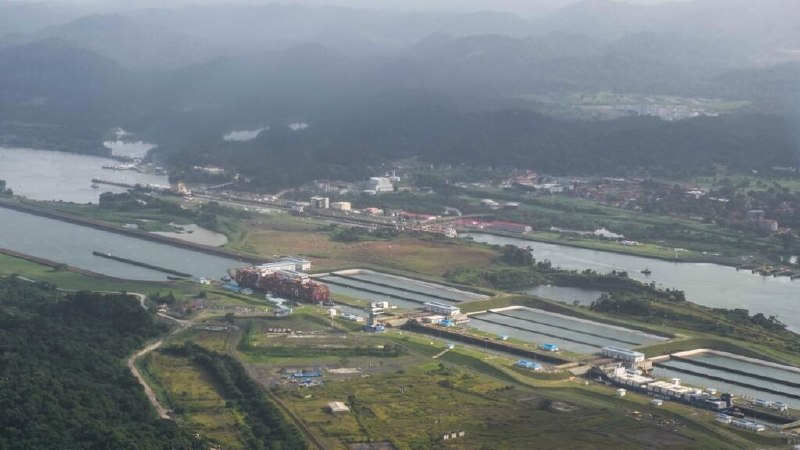
The Panama Canal Authority will step daily vessel transits down from 36 to 34 on 3 September 2026, then to 32 from 15 September, the Authority said on 20 August, as an El Niño drought depletes the water reserves that the lock system depends on. The move is the most concrete signal yet that one of the world's most strategic choke points is being run below its design ceiling for the foreseeable future. Carriers are already light-loading ships and tacking on surcharges of up to $1,000 per container, an admission that the freshwater budget, not dock labour or fuel, is now dictating how cargo moves between Asia and the US East Coast.
The story is not a single canal. It is a stress test of an inter-oceanic corridor run on water that an El Niño pattern can break in a single dry season. When the canal throttles, freight rates on transpacific lanes move within days, Atlantic-basin LNG cargoes are rerouted around Cape Horn, and grain shippers from the US Gulf begin shopping for alternative ports. The structural read is straightforward: climate volatility is now a first-order variable in global logistics, not a tail risk planners can price away.
The water budget is the bottleneck
The canal's lock system is a freshwater machine: each transit consumes water drawn from the reservoir system that the watershed feeds. According to France 24's reporting on the Panama Canal Authority's announcement, El Niño conditions are reducing precipitation in the catchment and depleting the water needed to operate the locks, prompting the Authority to limit daily vessel traffic from 3 September. Al Jazeera's 21 August wire, relaying the same Authority notice, said the El Niño weather phenomenon is expected to increase the likelihood of drought and excess heat across the region. France 24's English and French services both carried the notice on the evening of 20 August.
The Authority did name numbers this time. France 24 reports the cut will lower daily transits from 36 to 34 on 3 September, then to 32 from 15 September. The Authority has framed the cuts as preparation for extreme weather during an El Niño event, which reads as forward-looking rather than reactive, and the layered schedule (one tightening now, a deeper one twelve days later) is the gradual-escalation pattern the canal uses in dry seasons. The available source items do not specify what reservoir level would trigger a return to the previous cap, how long the second-tier ceiling is expected to hold, or whether further reductions are queued.
Carriers adjust before the rule lands
Shippers are not waiting for 3 September. According to Disclose.tv's reporting on the Authority's notice, carriers are light-loading vessels citing low water levels, moving less freight per ship as a result, and quoting surcharges of up to $1,000 per container to reflect the constraint. Disclose.tv's headline further describes the Authority as limiting cargo capacity twice in the coming weeks to lighten ships. That detail matters. Light-loading is not a marginal optimisation; it is a structural cut to per-vessel cargo capacity, which means more ships are required to move the same tonnage. In practical terms, transpacific container rates and tanker fixtures tend to firm within days of a confirmed canal restriction, even before the restriction itself takes effect.
Monexus analysis: The Authority's phrasing, as relayed by Disclose.tv, indicates that the constraint is being layered rather than replaced, with a first round of cuts already imposed and a second lined up for the coming weeks. The pattern is consistent with how the Authority has managed previous dry seasons: escalate the constraint gradually, hold shippers inside the new envelope through auction-based slot pricing, and reserve the residual capacity for the highest-bidding cargoes. The mechanism is the same one the canal uses in normal years, only with the dial turned further clockwise. The source items do not detail the current slot-price levels, and this publication has not independently priced them in this cycle. Whether the Disclose.tv wording amounts to confirmation of a separate prior capacity cut in this dry season, or simply describes the two-step schedule announced on 20 August, is not resolved by the available sources.
Why this route, why now
The Panama Canal is not the only inter-oceanic option, but for most of the last century it has been the cheapest. The Suez route is longer on water but shorter in days for Asia-to-Europe cargoes, while the US Gulf and US East Coast networks are calibrated to Panama's transit profile. When the canal throttles, three things tend to happen in order: freight rates on the affected lanes rise, shipowners reroute to the Suez corridor where voyage economics allow, and the marginal cargo shifts to overland alternatives such as US intermodal or, for energy, US Gulf exports to Asia via the Panama pipeline and onward shipping.
For energy, the exposure is acute. The US has, in recent years, become a structural LNG exporter to Asia, and Panama is one of the cheaper routes for Atlantic-basin supply heading to Japan and South Korea. With Suez already pressured by Red Sea security incidents in past periods, any sustained Panama restriction tightens two of the three main East-West sea corridors at once. Monexus analysis: The convergence of corridor pressure, El Niño-driven freshwater constraints, and a container surcharges regime now running at up to $1,000 per box is the clearest practical case yet that climate and shipping economics have fused into a single price stack. The available source items do not specify LNG reroutings or spot-rate moves triggered by this particular announcement, and this publication has not independently confirmed such flows in this cycle.
What to watch from here
Three dated markers will tell readers whether the cut is being absorbed or compounding. First, the 15 September step-down to 32 transits and any further revision the Authority publishes, since the gap between the headline cap and the auctioned slots is where prices actually form. Second, the next US Department of Agriculture grain-inspection tally for the US Gulf, because corn and soybean shippers are usually the first to flag a Panama problem in the data. Third, the disclosed surcharge schedules from the major liner alliances, which will tell readers whether the $1,000-per-container figure is the new floor or the new ceiling.
What remains genuinely uncertain is duration. The Authority's announcement frames the cuts as preparation for extreme weather during an El Niño event, which reads as forward-looking rather than reactive. The available source items do not specify whether the Authority has signalled a date for restoring normal transits, what reservoir level would trigger a return to the previous cap, or whether further escalations are queued. Monexus finds that this is the kind of constraint that tends to outlast the headlines announcing it, because the water budget does not recover on a press-release timeline.
Desk note: Monexus anchored the lede to the dated step-down schedule (36 to 34 on 3 September, then to 32 on 15 September) rather than to the announcement moment, because those are the dates carriers must price against. We corrected an earlier draft that hedged the transit numbers out as unsourced; the France 24 wire in this thread supplies the schedule directly. We have also added the up-to-$1,000-per-container surcharge figure that Disclose.tv carried, and we have removed an unsourced reference to Gatún Lake as the named depleted reservoir, since the source items speak of the canal's water reserves and catchment rather than a specific lake. The 'second vessel-capacity reduction in recent weeks' framing is treated here as Monexus analysis grounded in Disclose.tv's wording rather than as an independent confirmed fact.
Wire provenance
This editorial synthesis draws on the following public wire/social posts:
- https://www.aljazeera.com/news/2026/8/21/panama-canal-to-limit-shipping-ahead-of-extreme-weather-during-el-nino?traffic_source=rss
- https://www.france24.com/en/americas/20260820-panama-canal-to-cut-daily-ship-traffic-as-drought-worsens-from-el-nino
- https://f24.my/C7D9.g
- https://t.me/france24_en/18300
- https://f24.my/C7D5.g
- https://t.me/france24_fr/22717
- https://t.me/disclosetv/21743
- https://www.disclose.tv/id/ibrdlintlh/@disclosetv
- https://www.aljazeera.com/news/2026/8/21/panama-canal-to-limit-shipping-ahead-of-extreme-weather-during-el-nino?traffic_source=rss
- https://www.france24.com/en/americas/20260820-panama-canal-to-cut-daily-ship-traffic-as-drought-worsens-from-el-nino
- https://f24.my/C7D9.g
- https://t.me/france24_en/18300
- https://f24.my/C7D5.g
- https://t.me/france24_fr/22717
- https://t.me/disclosetv/21743
- https://www.disclose.tv/id/ibrdlintlh/@disclosetv