Washington widens the Iran squeeze: allies and Beijing put on notice after 175 days
France 24 reports the Trump administration publicly calling on allies and Beijing to cut commercial ties with Iran alongside a conflict an Iranian state-aligned outlet dates to 175 days. The supplied wires name no single US principal for the appeal; reporting from outlets outside this thread attributes a similar public push to Treasury Secretary Scott Bessent on 20 August 2026.
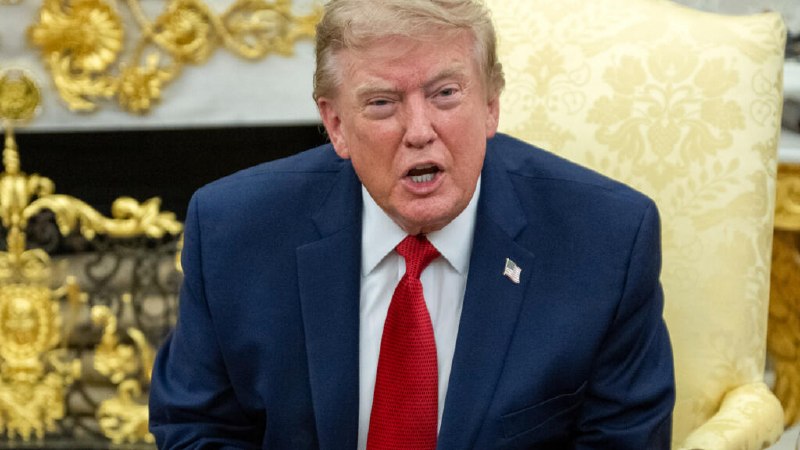
On 21 August 2026, France 24's English service reported that the Trump administration is publicly urging allies and China to join a campaign to isolate Iran's economy, framing the push as President Donald Trump's stated effort to intensify pressure on Tehran amid what the wire described as a stalemate in the war and growing domestic criticism. The French-language edition of France 24 ran the same appeal the same day, characterising it as a call on allies and China to cut ties with Iran after nearly six months of war and in the absence of a diplomatic breakthrough. The ask lands on capitals where willingness and ability to comply diverge sharply, and on a Chinese government whose public posture has long opposed unilateral American sanctions.
The supplied France 24 wires name President Trump as the political principal behind the campaign but do not specify which cabinet official led the public appeal. Reporting from outlets not present in this thread has been cited elsewhere as attributing a similar public push on 20 August 2026 to US Treasury Secretary Scott Bessent, urging allies and China to impose what those outlets characterised as the toughest sanctions in history to collapse Iran's regime. This article treats the supplied France 24 attribution as the on-wires record and flags the Bessent reporting as separate material that the supplied evidence does not contain.
Monexus analysis: the move reads as an attempt to convert a stalled military phase into a financial one by recruiting third parties to do the squeezing Washington cannot do alone. The instrument of choice is coalition pressure rather than new unilateral measures, which suggests the sharpest sanctions tools have already been deployed and what remains is the diplomatic currency of asking others to enforce them.
What the wires carried, in two languages
France 24's English bulletin of 21 August 2026 framed the US push as a campaign to isolate Iran's economy, anchored to President Trump's stated intent to intensify pressure on Tehran. The same item referenced a stalemate in the war and growing domestic criticism. The French-language edition of the same broadcaster carried the same ask the same day, foregrounding the duration of the conflict and the absence of a diplomatic breakthrough, with the Trump administration described as seeking to mobilise governments against Iran. The two read-outs are consistent on the ask and diverge on emphasis: the English edition foregrounds the policy instrument; the French edition foregrounds the duration and the diplomatic vacuum.
The supplied thread items do not specify which US official spoke publicly on 21 August, which capitals were contacted first, or what specific measures were proposed. Where this article treats the appeal as a Trump-administration action, it does so on the basis of France 24's attribution; where it notes the Bessent reporting, it does so to flag a publicly reported attribution that the supplied wires do not carry.
The 175-day marker, and who is counting
A separate thread of reporting from 20 August 2026 puts the duration of the conflict at 175 days. Tasnim News, an English-language outlet aligned with the Iranian state, characterised Vice President J.D. Vance as "still dreaming of defeating Iran" and reported that 175 days have passed since the start of what it termed an invasion against Iran, alongside its characterisation of the military option as having failed. The number is sourced to an Iranian state-aligned outlet and is not independently corroborated in the supplied thread items; the supplied sources also do not specify when the war began, who first used force, or what the current operational posture looks like. This article treats the 175-day figure as Tasnim's count, not as an established fact, and notes that the supplied evidence does not independently corroborate the existence, duration, or characterisation of the conflict beyond France 24's word "stalemate" and Tasnim's framing of "invasion."
Monexus assessment: the figure matters less as a precise count than as a marker of political time. A campaign measured in months, not weeks, is one that has consumed defence stockpiles, planning cycles, and presidential attention. The pivot to economic warfare tends to come next when air campaigns have not produced decision. That sequencing is structural; whether it applies here depends on facts the supplied sources do not specify.
Where the leverage runs out
The coalition has a hole in it, and the hole is named Beijing. France 24's English report explicitly lists China as a country the United States is asking to join the pressure campaign, alongside allies. The supplied thread items do not specify whether Beijing has responded, whether any sanctions-relief offer has been discussed, or which sanctions regime Washington wants Beijing to enforce. On the available evidence, China's posture toward unilateral US sanctions has been public opposition for years; an American request to enforce those same sanctions through Chinese commercial channels is, in structural terms, a request to hand Washington a veto over Chinese economic policy. The article treats that as a structural observation, not as a forecast of Chinese behaviour.
The ask therefore reads as a negotiating posture whose primary audience may be less Beijing than the mid-sized commercial actors still doing residual business with Tehran. The supplied sources do not specify which corridors Washington is targeting beyond the broad category of allies, nor do they specify whether humanitarian exemptions are part of the package. The next several weeks will test how much political capital Washington is willing to spend; the wire material available on 21 August does not specify who has yet declined.
Actor question, and what the supplied wires leave open
The supplied thread items name President Trump and Vice President Vance; they do not name a Treasury Secretary or any other cabinet principal for the 21 August appeal. Reporting from outlets outside this thread attributes a public appeal on 20 August 2026 to Treasury Secretary Scott Bessent urging allies and China to impose what those outlets described as the toughest sanctions in history to collapse Iran's regime. That reporting is not contained in the supplied thread, and this article has not independently verified the Bessent attribution; the on-wires record within the supplied evidence remains the France 24 attribution to the Trump administration.
Two things follow. First, a reader relying only on the supplied evidence would see a Trump-administration appeal with no named cabinet lead; a reader relying on the broader news cycle would see Bessent's name attached to the public push. The article preserves both readings rather than collapsing them. Second, the actor question is consequential because Treasury is the operational lead on financial sanctions architecture; the difference between a Trump-directed appeal and a Treasury-led appeal is the difference between a political signal and an operational one.
Stakes over the next 60 days
The relevant test is not whether China complies; the supplied sources do not specify that Beijing has moved. The relevant test is which mid-sized commercial actors do. The corridors to watch are those the supplied evidence does not specify in detail: Turkish, Indian, and European intermediaries still touching Iranian crude or shipping cover under opaque arrangements. Movement in any of those channels would be the first measurable signal that Thursday's appeal is producing action. Until then, the appeal is a posture, not an outcome.
The other watch item is the political envelope inside the United States. The Tasnim framing of Vice Presidential rhetoric as "dreaming" is itself a signal that the Iranian state believes the US domestic political clock is now the binding constraint. Whether that reading holds depends on facts the supplied sources do not provide.
Desk note
This piece draws on France 24 as the primary western wire for the coalition ask, and on Tasnim News (English) as a counter-claim surface explicitly labelled as such under the desk's standing rule on this conflict. The article does not make first-party claims about Iranian leadership internal debates, casualty figures inside Iran, or battlefield specifics, because the supplied thread items do not specify them. The 175-day duration is sourced to Tasnim and not independently verified in this article's evidence; the actor question for the public appeal on 21 August is treated as what France 24 attributes, with the Bessent attribution flagged as reporting from outlets not present in this thread rather than introduced as a fact. Independent reporting on omitted matters will be sourced where it appears, not inferred.
Wire provenance
This editorial synthesis draws on the following public wire/social posts:
- https://www.france24.com/en/middle-east/20260821-us-warns-allies-and-china-to-join-iran-economic-pressure-campaign
- https://f24.my/C7Dl.g
- https://t.me/france24_en/18301
- https://f24.my/C7DY.g
- https://t.me/france24_fr/22718
- https://t.me/tasnimnews_en/32279