Seoul threads a needle between a chip dividend and a rate-cut bet
A planned chip windfall fund for youth and AI collides with a Bank of Korea deputy chief's warning that rate decisions will be made 'very carefully.'
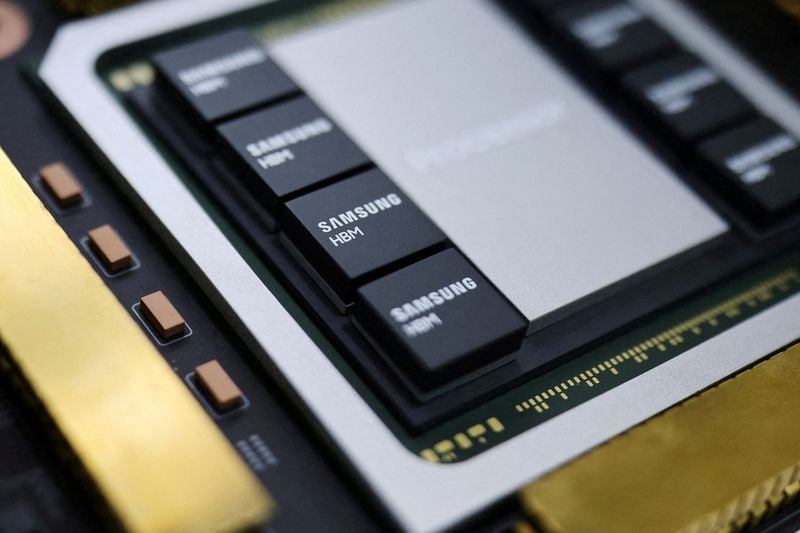
Seoul is staring at two policy tracks at once, and on 21 August 2026 they appear to be pulling in opposite directions. On one rail, the government is sketching a fund that would convert a slice of South Korea's semiconductor windfall into long-horizon capital for young people and artificial-intelligence investment. On the other, the central bank's deputy chief has used a public appearance to signal that the next rate decision will be made "very carefully," according to a Reuters post timestamped 2026-08-21T06:45 UTC.
The pairing is the story. South Korea's fiscal wing wants to weaponise its chip export earnings at home; its monetary wing is signalling caution at exactly the moment household debt and a freshly euphoric equity market have started to look, to outside investors, like the kind of setup that ends in a rate hike. Read together, the two threads describe a state trying to convert a one-off industrial windfall into a permanent growth instrument without burning the financial stability that the windfall itself was built on.
The dividend question
The fiscal proposal, as reported by Investing.com on 2026-08-21T04:12 UTC, would direct chip-related revenues into a fund backing youth assets and AI investment. The architecture is significant: rather than a one-off stimulus cheque, the design treats semiconductor exports as a recurring royalty to be captured for domestic re-investment. The political signal is the legible part of the story: a state that has spent two decades subsidising its chip industry is now asking that industry, in effect, to subsidise the state.
The market question is whether the fund is sized large enough to matter. The cited report does not specify the capitalisation, the funding mechanism, or the off-ramp between the chip sector's profits and the new vehicle, and the available source items do not specify those details either. Until a cabinet-level document lands, the dividend is a promise rather than a vehicle. The political claim, not the balance sheet, is what moves on this news.
The central bank's warning
The Bank of Korea's message, delivered the same morning and relayed by Reuters and Investing.com, is a pointedly non-committal one. A deputy chief told reporters that monetary policy will be made "very carefully," without committing to a direction. Investing.com carried the same quotes in a separate 2026-08-21T02:24 UTC post. The phrasing is the kind that Korean desks read as deliberate: a central bank that is confident in a cut would say so, and one that is about to hike would frame it as a continuation of an existing tightening bias. "Very carefully" is the verbal posture of a board sitting on a knife edge.
What is on the edge is household credit. Monexus analysis: the deputy chief's framing reads less about inflation and more about balance-sheet timing, given that any loosening decision lands directly on a mortgage book that successive Seoul governments have tried, and largely failed, to bring under control. That read is consistent with the wording but not stated by it; the available source items do not specify what the deputy chief named as the principal concern.
The retail euphoria in the rear-view
The third source item, also from Investing.com at 2026-08-21T01:48 UTC, supplies the backdrop against which both announcements land. Korean retail investors spent the prior quarter swinging between euphoria and despair on the back of a stock-market run concentrated in AI-exposed and semiconductor-adjacent names, with enough second-derivative casualties that the country's financial press has begun cataloguing the emotional toll. A central bank that cuts into that mood risks being accused of validating late-cycle risk-taking; a central bank that holds or hikes risks being accused of crushing the very retail cohort the fiscal dividend is trying to empower.
This is the trap the two policy tracks are walking into simultaneously. The fiscal side wants to lock in the chip cycle's gains and socialise them; the monetary side is staring at the asset-price inflation that the same chip cycle has produced, and at the credit underneath it. Each track, taken alone, looks sensible. Taken together, they imply that the state's industrial-policy success is becoming its monetary-policy problem.
What to watch next
Two dates matter more than the speeches. The Bank of Korea's next scheduled rate decision is the obvious fulcrum, and the deputy chief's "very carefully" line will be reread as either a soft cut signal or a hawkish hold depending on which way the data break between now and then. The second date is whatever cabinet-level document sets the size, funding source and governance of the chip windfall fund.
What remains genuinely uncertain is whether the two tracks will be coordinated at all. The available source items do not specify any formal linkage between the fiscal dividend design and the Bank of Korea's reaction function, and the cited posts contain no joint statement from the finance ministry and the central bank. Monexus assessment: that absence is the most important thing on the page, and the next credible test of coordination will be the Bank of Korea's rate decision, not any single speech.
This piece leans on Reuters for the rate-signal wording and on Investing.com's three same-day posts for the fiscal-fund proposal and the retail-investor backdrop. The wire line on the Bank of Korea read as a soft caution; the fiscal-fund line read as a policy declaration. Monexus's read is that those two messages are aimed at two different audiences, and the market has to price both.
Wire provenance
This editorial synthesis draws on the following public wire/social posts:
- https://x.com/Reuters/status/2090691675483935213
- http://reut.rs/4wB9ioB
- https://www.investing.com/news/economy-news/south-korea-plans-chip-windfall-fund-to-back-youth-ai-investment-4870819
- https://www.investing.com/news/economy-news/bank-of-korea-deputy-chief-says-monetary-policy-to-be-made-very-carefully-4870781
- https://www.investing.com/news/economy-news/from-euphoria-to-despair-korea-reckons-with-stock-manias-emotional-toll-4870752
- https://x.com/Reuters/status/2090691675483935213
- http://reut.rs/4wB9ioB
- https://www.investing.com/news/economy-news/south-korea-plans-chip-windfall-fund-to-back-youth-ai-investment-4870819
- https://www.investing.com/news/economy-news/bank-of-korea-deputy-chief-says-monetary-policy-to-be-made-very-carefully-4870781
- https://www.investing.com/news/economy-news/from-euphoria-to-despair-korea-reckons-with-stock-manias-emotional-toll-4870752