Shelling resumes across south Lebanon as Beirut says no new negotiation date is set
Israeli artillery fire struck Al Mansuri and a major explosion was reported between Arnoun and Kfar Tebnit on 21 August, hours after Lebanese Prime Minister Nawaf Salam confirmed there are no set dates for another round of Lebanon–Israel talks.
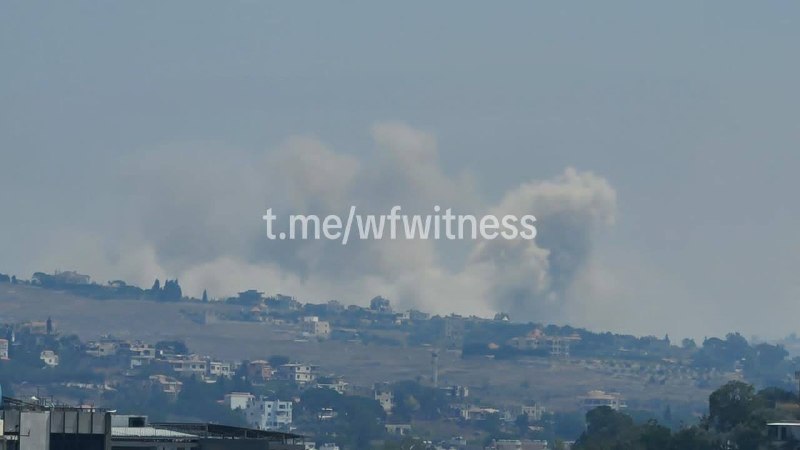
At 10:17 UTC on 21 August 2026, the Beirut-based outlet The Cradle Media logged a major explosion between the southern Lebanese towns of Arnoun and Kfar Tebnit. Less than an hour later, at 11:13 UTC, the frontline channel wfwitness reported Israeli artillery fire in the border village of Al Mansuri, in a separate post that also flagged two Israeli detonations inside the town of Kfar Tebnit. The two reports describe two distinct impact zones, not a single chain of fire, and the available posts do not specify whether the incidents are connected.
The shelling lands on the same day that Lebanese Prime Minister Nawaf Salam told local broadcaster Al Jadeed that no dates have been set for a further round of Lebanon–Israel negotiations, a public posture that freezes the diplomatic track while the military one intensifies. The contradiction is the story: a prime minister who cannot promise a table, and a frontier where guns speak louder than communiqués.
What the cited reports actually say
The two Telegram clusters differ in geography and in what they attribute. The Cradle Media, which has covered the south-Lebanon frontier through the war, reported a major explosion between Arnoun and Kfar Tebnit at 10:17 UTC on 21 August, without specifying ordnance, units, or casualties. The wfwitness post at 11:13 UTC reported Israeli artillery fire in Al Mansuri and, in a separate item within the same post, two Israeli detonations in the town of Kfar Tebnit, described as within the security zone. The Cradle post and the wfwitness post therefore describe two named impact areas, Al Mansuri and the Arnoun–Kfar Tebnit corridor, with the follow-on detonations attributed by wfwitness to Kfar Tebnit itself, not to territory adjacent to Al Mansuri.
The cited posts contain no casualty figures, no identification of the units firing, and no characterisation of the targets. This article has not independently established what ordnance was used, what was struck, or whether any of the impacts produced ground casualties. The available source items do not specify the strategic significance of the named villages beyond the names themselves.
The diplomatic track, frozen
The military action reads differently once Salam's comments are placed beside it. According to Al Jadeed, as relayed by wfwitness at 09:55 UTC on 21 August, the Lebanese prime minister confirmed that there are no set dates for another round of negotiations between Lebanon and Israel. Salam's framing signals Beirut's reading of the moment: the channel exists, but the parties have not agreed on a next meeting, and there is no publicly announced venue or agenda.
That posture is itself a statement. Lebanon has spent the past year pressing for a ceasefire architecture that constrains Israeli overflights and operations inside Lebanese territory, and for a prisoner-and-body exchange framework mediated by third parties. Salam's confirmation that no date is set tells external mediators, and the Israeli negotiating team, that Beirut will not be rushed into a session framed on terms it has not agreed to. The available source items do not specify which Israeli actions Salam is conditioning talks against, nor whether Washington or Paris have proposed a venue. This publication has not independently established the content of any pending back-channel exchange.
How to read the timing
The pairing is hard to miss. Strikes on the frontier in the morning, a prime minister on national television earlier in the morning confirming that diplomacy is paused. Two interpretations are available, and the evidence does not yet choose between them.
The first reading is that the escalation is being used as leverage. On this account, the Israeli strikes are intended to harden Lebanon's negotiating posture in the direction of whatever Israel wants on the table, while Salam's statement gives Beirut political cover to refuse a session it would lose. The second reading is the inverse: the strikes are an operational response to specific activity in the south, and the diplomatic freeze is a consequence, not a cause. Both accounts are consistent with the surface facts. Monexus assessment: the simultaneous occurrence of public strikes and public non-engagement is, on its own, too thin a base to attribute motive. What can be said is that the pattern of fire and the absence of a calendar are not independent events, and that mediators will read them together.
What the gap between the two tells us
What is striking is not the shelling, which The Cradle and wfwitness have regularly reported from the south-Lebanon frontier, but the explicit naming of the diplomatic gap by a sitting prime minister. Lebanon's leaders have, at earlier points in the war, declined to characterise the state of negotiations at all, leaving the framing to intermediaries. Salam choosing to put a flat statement on the record, on the same day artillery is landing in border villages, is a different kind of move.
For Israel, the message is that Beirut will not be available for a photo-op session while villages are being struck. For Beirut's parliamentary coalition, the message is that the prime minister's government is willing to be publicly seen as the side that said no. For external mediators, the message is that the calendar will not move until at least one of two things changes: the kinetic picture on the ground, or the Israeli offer on the table. The available source items do not specify whether either side has made a public proposal in the past 48 hours that would shift that calculation.
The forward question is whether the pattern tightens or loosens. If the next 72 hours bring a confirmed casualty figure from Al Mansuri, Arnoun or Kfar Tebnit, the diplomatic posture Salam described will harden rather than soften. If, by contrast, a third-party mediator produces a draft date, the same posture could pivot overnight. As of 11:13 UTC on 21 August, neither the cited reports nor any public statement from the Israeli prime minister's office, the IDF, or the US State Department in the supplied material indicates that a draft date is imminent. The available source items do not specify whether any of those institutions have commented on the 21 August strikes.
Desk note: Monexus framed this as a paired event, kinetic and diplomatic on the same clock, rather than as a single headline incident. The wire tends to lead with either the shelling or the statement, not both. Holding them together is, in our assessment, the more honest read of what is happening on the south-Lebanon frontier.
Wire provenance
This editorial synthesis draws on the following public wire/social posts:
- https://t.me/wfwitness/107832
- https://t.me/TheCradleMedia/66574
- https://t.me/thecradlemedia/66574
- https://t.me/wfwitness/107830