Hormuz is becoming a permission system, not a blockade
Iran's reported decision to let some Iraqi oil tankers transit Hormuz turns a nominal closure into a selective permit regime. The practical risk is that access to one of the world's central energy corridors increasingly depends on political clearance.
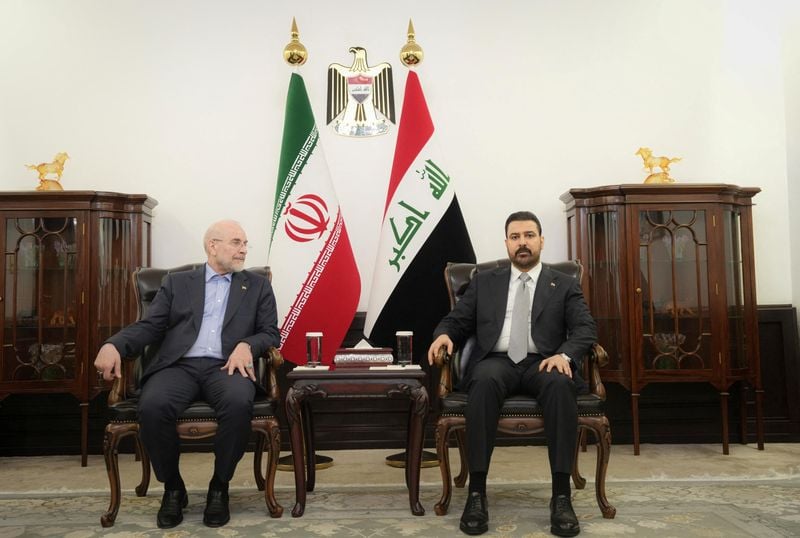
On 22 August 2026, Iran granted special permission for a number of Iraqi oil tankers to pass through the Strait of Hormuz, according to an Investing.com report carried in the available source material. The concession was narrow. It did not restore normal shipping. It made the terms on which energy can move through the waterway explicit: access depends, at least in some cases, on Iranian approval.
That distinction matters more than the familiar description of Hormuz as closed. A total closure would be a blunt instrument. A selective passage regime can be managed day by day, granted to governments seen as compliant and withheld from those deemed obstructive. The result is not merely disruption. It is political control over transit, with tanker movements serving as both an economic lever and a visible sign of who retains access.
The available reports also point to the wider contest behind the shipping news. A Polymarket post relayed an Iranian accusation that the United States is pursuing "full-scale classic colonialism," while another item described a US blockade as rapidly choking off Iranian oil supplies to China. These are competing claims carried through social-media and prediction-market posts rather than independently documented findings in the supplied material. Read together, however, they describe a conflict in which oil, sanctions, transit rights and diplomatic recognition are being collapsed into a single struggle over leverage.
The corridor is not simply shut
The strongest evidence in the supplied reports concerns Iraqi tankers, not the entire global fleet. Investing.com reported on 22 August that Iran had granted permission for a number of Iraqi oil tankers to pass through Hormuz. A Polymarket post relayed the same development in more compressed form, saying Iran had granted special permission for Iraqi oil tankers. A separate Sprinter Press post described the strait as practically closed except with Iranian permission, while also saying ships from some countries, including Iraq, had been allowed through.
Those formulations can coexist, but they should not be treated as interchangeable. "Practically closed" describes the operating environment for vessels that lack permission. The tanker permission describes a particular exception. The narrowest defensible conclusion is that passage has become conditional for at least some Iraqi oil shipments, not that every ship is being admitted or that the strait has been transformed into a fully formal licensing system.
The distinction carries a practical implication. Energy traders and shipping companies do not need a universal prohibition to reprice risk. They need uncertainty about whether a cargo will be accepted, when permission may be granted and whether the political relationship behind one approval will survive the next voyage. A partial exception can therefore transmit the same economic message as a broader closure: transit is no longer routine.
There is also a question of scale. The source items do not specify the number of Iraqi tankers, the dates of their passage, the quantity of oil involved, the conditions attached to permission or the route by which the vessels travelled. They also do not specify whether other countries have received comparable treatment. Those omissions limit the certainty of any claim about the total volume affected. The available evidence establishes a reported exception, not the size of the exemption.
Oil access becomes diplomatic currency
The immediate story is about passage. The more consequential story is about bargaining. If Iran can decide which national cargoes move, permission becomes a form of economic statecraft. A government may receive access because it has maintained workable relations with Tehran, because its tankers are judged non-threatening or because the shipment serves a political objective. The source material does not identify the reason in this instance, so the motive should not be asserted.
The mechanism nevertheless resembles a sanctions regime operating in reverse. Traditional sanctions seek to restrict a target's access to markets, finance or goods. Here, selective passage can reward or deny movement according to political alignment, while preserving the appearance of controlled pragmatism. The strategic value lies in ambiguity. Governments and companies can be told that the waterway is not categorically sealed, yet still face the prospect that ordinary commercial transit may be delayed or refused.
This is where the reported US blockade and Iran's accusations belong in the same frame. A Polymarket post said on 21 August that a US blockade was reportedly rapidly choking off Iran's oil supply to China. On 22 August, another Polymarket post said Iran accused the US of pursuing "full-scale classic colonialism". The reports are not sufficient to establish the effectiveness of the blockade or the accuracy of the accusation. They do, however, show how each side can portray the other's economic pressure as coercion rather than security policy.
The Chinese dimension deserves particular care. The source material identifies China as the destination of Iranian oil supplies described as being choked by the blockade, but it supplies no Chinese government statement, company filing or independently reported shipment data. It would be wrong to convert that claim into a finding that China has endorsed Iran's position, opposed the US measure or suffered a quantified supply loss. The defensible point is narrower: the reported blockade is being framed as pressure on a China-bound oil channel, making the dispute relevant to Beijing's energy and trade interests without establishing Beijing's response.
Monexus analysis: the important change is not that Hormuz has become a legal customs line, but that ordinary passage is being replaced by discretionary access. The strait is moving from infrastructure, in the sense of a waterway used by commercial traffic, toward a bargaining instrument. That transition increases the value of political relationships and makes non-market clearance a central part of the oil business.
A market in probabilities, not settlement
The supplied material also includes a Polymarket contract, surfaced through a 22 August Polymarket post, assigning a 13% chance that the United States and Iran reach a Hormuz deal by the end of next month. The percentage is a market estimate, not an official forecast and not evidence that negotiations are under way in a particular format. Its value here is as a signal of how the public market is pricing the likelihood of a negotiated settlement.
A 13% estimate indicates that the market, as represented by that contract, sees a deal as possible but unlikely by the stated deadline. It does not establish when talks began, who is participating, what terms are under discussion or whether the contract's definition of a deal is limited to a formal agreement. The available source items do not specify those details.
The distinction is important because prediction markets compress complex events into a tradable question. They can reveal a collective estimate, but they do not substitute for reporting on the underlying diplomacy. In this case, the low probability also makes the tanker exception more revealing. The reported permission is not a settlement, yet it may function as a limited operational accommodation. A country can allow a cargo to pass without accepting the other's broader demands.
There is another possible reading. The permission could be a technical adjustment to a blockade, intended to protect a neighbouring state's energy flows while maintaining pressure on Iran. The source items do not provide Iran's explanation, the Iraqi government's response or an account of the negotiations surrounding the decision. On the available evidence, a limited humanitarian or economic accommodation is therefore at least as plausible as a deliberate diplomatic concession, though the two purposes are not mutually exclusive.
What the exception does not do is resolve the central dispute. It may reduce the immediate risk for Iraqi shipments while leaving US-Iran tensions intact. It may also make the system more difficult to navigate, because each exception raises questions about who else can obtain one.
The structural risk is managed uncertainty
Corridor politics is less dramatic than a declared closure, but often more durable. A permanent closure would invite an immediate international response, including efforts to challenge the physical restriction. A selective permission regime spreads the burden across shipping decisions. One tanker proceeds, another waits, and a third is asked to provide information before entering. The source material does not document those administrative steps, but the reported permission itself demonstrates that transit status can be differentiated.
This creates a form of managed uncertainty. The strait remains open to some traffic, which limits the claim that all energy trade has stopped. At the same time, reliance on permission makes access vulnerable to political change. Shipping companies must treat transit not as a predictable service but as a conditional outcome. Insurers, traders and governments then face a common problem: no single operator can know with confidence how long today's permission will last.
The economic consequences are therefore likely to be uneven before they become universal. Iraqi tankers reportedly benefit from the exception. Other governments and operators cannot assume they will receive equivalent treatment. China-linked oil flows, if the reported US blockade is affecting them as claimed, face a different kind of pressure from Iran's ability to control passage through the strait. The source material does not quantify any of these effects, so claims about prices, freight costs or supply volumes would be unsupported.
Monexus assessment: the deeper risk is institutional. If commercial transit is repeatedly allocated through political permits, the strait's role as dependable infrastructure erodes even when some ships continue to move. The incentive structure changes for exporters and importers. Governments may seek bilateral assurances, while private operators may avoid voyages that depend on uncertain consent. None of that requires a formal declaration of closure.
There is also a danger in reading every exception as a sign of de-escalation. A narrow passage decision can be operationally necessary, commercially useful and strategically coercive at the same time. It can lower risk for one cargo while demonstrating Iran's capacity to withhold access from others.
What to watch by 30 September
The next meaningful evidence will not necessarily be a summit, a treaty or another prediction-market move. It will be the pattern of passage. The available reports do not specify whether the Iraqi permission was a one-off decision, a standing arrangement or part of a broader policy. The distinction will determine whether Hormuz is becoming a managed exception for selected cargoes or a general permit regime.
Watch for four indicators, all grounded in unanswered questions raised by the source material. First, whether more Iraqi tankers are identified as having passed, and whether the permission applies to subsequent voyages. Second, whether other governments receive comparable access and on what stated terms. Third, whether Washington changes its blockade-related posture or makes a formal statement defining the measure's scope. Fourth, whether Beijing or Chinese oil-market participants provide a verifiable account of the reported effect on China-bound Iranian crude.
The stakes are concrete. Iraqi oil exports may gain continuity if the exception becomes dependable. Other exporters may face higher political and commercial risk if access is selective. The United States and Iran are contesting not only sanctions and transit, but the rules that determine which energy flows are permitted. The 13% market estimate for a deal by the end of September 2026, as carried in the Polymarket post, suggests that a negotiated framework is not the base case in the supplied market signal, while the reported Iraqi permission shows that limited cooperation remains possible.
The contradiction is the point. Hormuz does not need to be fully closed to become a coercive instrument. It only needs shipowners and governments to believe that passage may be granted to one state and denied to another.
Desk note: Monexus treated the reported Iraqi tanker permission as a narrow, conditional exception rather than evidence of a universal closure, and distinguished prediction-market probabilities from confirmed diplomatic or shipping facts. The 13% probability is sourced to a Polymarket post that surfaced the market contract; the prediction-market URL itself is included for reference but was not used as the direct citation for the figure.
Wire provenance
This editorial synthesis draws on the following public wire/social posts:
- https://www.investing.com/news/commodities-news/iran-grants-permission-for-a-number-of-iraqi-oil-tankers-to-pass-through-hormuz-4872318
- https://x.com/Polymarket/status/2091213056563122642
- https://x.com/SprinterPress/status/2091203384913150215
- https://poly.market/ZwLS431
- https://x.com/Polymarket/status/2091212379979669583
- https://x.com/Polymarket/status/2091200725367812098
- https://x.com/Polymarket/status/2090921773285945363
- https://www.investing.com/news/commodities-news/iran-grants-permission-for-a-number-of-iraqi-oil-tankers-to-pass-through-hormuz-4872318
- https://x.com/Polymarket/status/2091213056563122642
- https://x.com/SprinterPress/status/2091203384913150215
- https://poly.market/ZwLS431
- https://x.com/Polymarket/status/2091212379979669583
- https://x.com/Polymarket/status/2091200725367812098
- https://x.com/Polymarket/status/2090921773285945363