Trump's 50% Canada tariff lands after talks collapse, Ottawa vows dollar-for-dollar retaliation
A 50% US tariff on Canadian imports took effect on 22 August 2026 after bilateral talks collapsed, with Prime Minister Mark Carney pledging matching countermeasures and Canada suspending the negotiations.
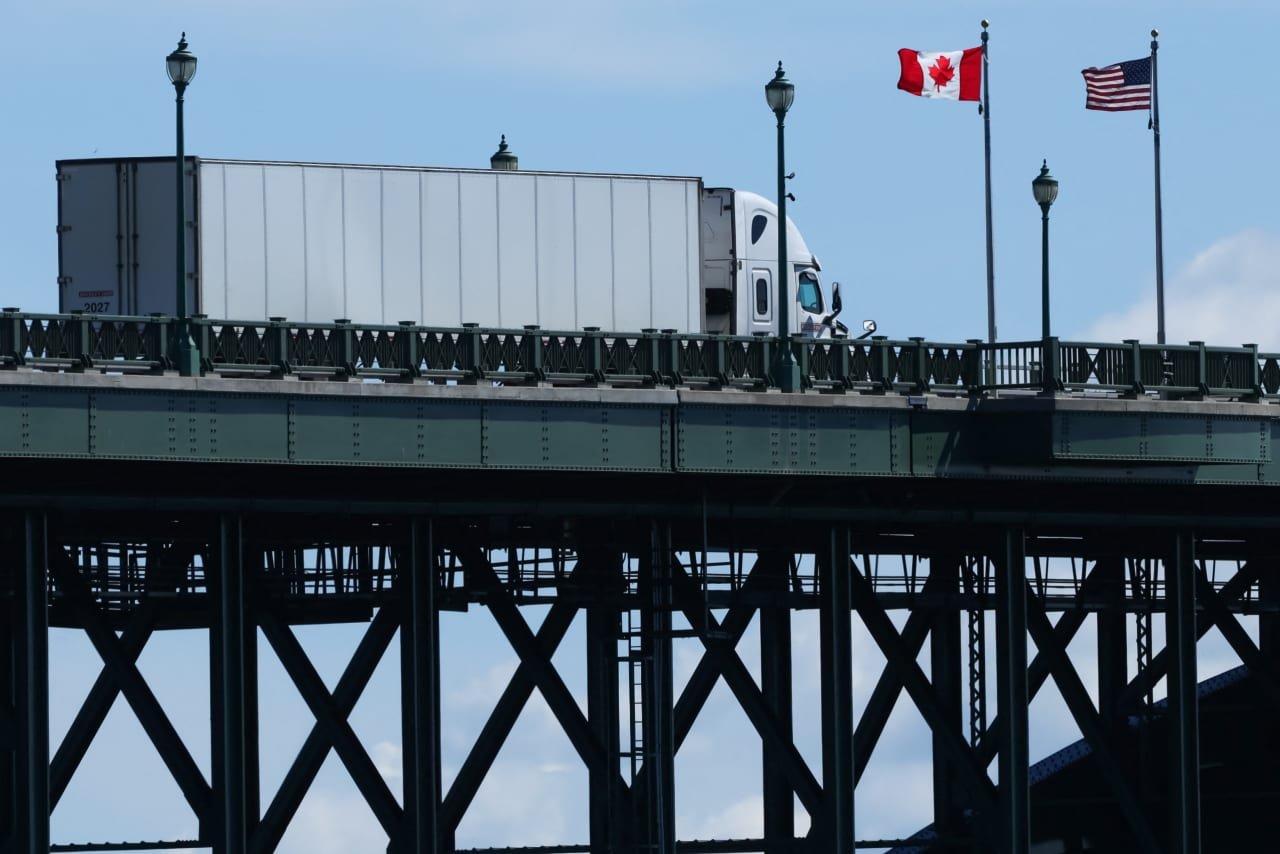
A 50% US tariff on Canadian imports took effect on 22 August 2026, and within hours Canadian Prime Minister Mark Carney had pledged dollar-for-dollar retaliation and Canada announced it was suspending the trade negotiations that had run alongside the threat. The confrontation, reported by Indian Express and relayed across the wires via Telegram on 22 August 2026, is the sharpest escalation of bilateral trade frictions since the original 2025 tariff cycle and lands as investors were already pricing in steady earnings from Canada's largest banks.
The immediate question is whether this is the opening shot of a sustained trade war or a high-stakes negotiation that pulls back before the damage compounds. The available evidence supports both readings, which is itself the story: a US president publicly signalling that a deal is close while a tariff this large is already on the books, and a Canadian prime minister matching the blow and walking away from the table rather than seeking a face-saving climbdown. Monexus analysis: the simultaneous imposition of the duty and the suspension of talks is the operative signal. Tariffs are reversible. Walkouts change the duration clock.
The tariff, the retaliation, and the walkout
Trump's 50% Canada tariff took effect on 22 August 2026 with no carve-outs visible in the public reporting carried by the Indian Express Telegram channel that day. The headline frames Carney's vow of "dollar for dollar" retaliation as a direct mechanical response to the US action. The mechanism matters: dollar-for-dollar retaliation means Ottawa intends to impose an equivalent volume of new duties on US exports, rather than a symbolic gesture. The accompanying Canadian decision to suspend the trade talks removes the negotiating off-ramp that had been keeping the rate speculative. Whether the retaliation hits the same sectors the US tariff targets, or whether it spreads across US exports Canada can credibly substitute, is the operational question that will determine whether consumers see price effects in the first weeks.
Trump, for his part, told reporters on 21 August 2026 that he expects the US to reach a trade deal with Canada, suggesting a willingness to negotiate from a position of maximum leverage. The Investing.com account of his comments, timestamped 21 August 2026 at 21:09 UTC, gives the line as delivered: the president expects an agreement, not concedes one is imminent. The same day, a separate Investing.com dispatch at 23:58 UTC reported the US and Canada were seeking an arrangement to avert the 50% tariff outright, indicating active back-channel talks even as the levy came due. Monexus analysis: the gap between the headline tariff and the negotiating posture is now the most important variable for North American markets, because it determines whether corporate planning assumes a temporary shock or a multi-quarter cost line. With Ottawa now publicly out of those talks, that variable has tightened rather than opened.
The market backdrop
Canadian equities closed higher on 21 August 2026 even with the tariff news on the wires. The S&P/TSX Composite rose 0.70% on the day, per Investing.com's market wrap at 20:30 UTC. That move is consistent with the prevailing pattern in tariff episodes: domestic-facing sectors tend to outperform on the assumption that any retaliation will be selective, while export-heavy sectors are punished. The Composite's gain suggests investors did not, on that session, treat the tariff as a base-case shock to Canadian corporate earnings, though the close preceded both the formal imposition of the duty on 22 August and Canada's decision to suspend negotiations.
A separate Investing.com thread, timestamped 18:11 UTC on 21 August 2026, framed the moment as earnings-positive for Canada's Big Six banks heading into Q3 2026 results, noting that the group was working off a four-quarter beat streak. That framing will be tested when the banks report. Loan-loss provisions, mortgage origination volume and capital-markets revenue are the items most exposed to a tariff-driven slowdown; net interest margins, by contrast, are more insulated. Monexus assessment: the four-quarter beat streak is a momentum story, and tariff episodes break momentum by forcing reserve builds and slowing origination. The thesis holds if the tariff is rolled back within the reporting window, and breaks if it survives into Q4. Canada's decision to suspend the talks raises the probability that the streak is interrupted.
Where the leverage actually sits
The structural read on this episode is straightforward, even if it sits awkwardly with the rhetoric. Canada is the smaller partner in the bilateral goods trade by sheer exposure: a much larger share of Canadian merchandise crosses into the United States than the reverse. That asymmetry is the leverage Trump is using. A 50% tariff on Canadian imports raises revenue for the US Treasury and forces Canadian exporters to absorb the cost or lose share, while dollar-for-dollar retaliation hurts Canadian consumers and a narrower set of US exporters. The contest is not symmetric and was never going to be.
The Carney response is calibrated accordingly. By matching dollar for dollar and not escalating, Ottawa signals willingness to absorb the first round of pain without conceding the frame. The implicit bet is that US consumers and US import-dependent manufacturers will lobby Washington to reverse course once the prices register. That is a plausible bet; it is also a slow one, because tariff costs compound through inventories and contracts, not through spot prices alone. Suspending the talks is the unusual move: it converts a tariff threat into a tariff regime by removing the political cover for a quiet reversal.
The inversion to watch is whether Trump treats the tariff as a tool to extract concessions or as a baseline to be defended. His comments reported by Euronews via Telegram at 06:30 UTC on 22 August 2026, indicating he would love to compete for the presidency again and that "if they want to cancel this, I would be very happy," suggest the tariff is, in his telling, contingent on Canadian behaviour. That language is consistent with a bargaining posture rather than a permanent policy, though the same statement also reminds readers that the domestic political incentive to keep the tariff in place is real. The Canadian walkout complicates that posture by removing the immediate pretext for a climbdown.
What the next two weeks hold
Three dates will tell. First, the first round of Canadian bank earnings in early September will reveal whether lenders are provisioning for a sustained shock or treating the tariff as transitory. Second, any bilateral announcement from Ottawa or Washington in the run-up to the UN General Assembly window in late September will signal whether the suspension of talks reported on 22 August 2026 was a negotiating tactic or a genuine break. Third, the next Canadian and US retail-sales prints, due in the back half of September, will show whether the tariff is being absorbed by importers or passed through to consumers.
The deeper uncertainty is whether this episode becomes a template. A 50% rate, applied to a G7 neighbour and a fellow NAFTA successor, sets a precedent that other US trading partners are watching closely. The available source items do not specify whether Trump has framed the measure as part of a wider pattern of action against other countries; the Indian Express coverage names Canada as the target of this specific tariff and Carney's response as Canada-only. The same source items do not specify the dollar value of Canadian exports covered by the new rate; reporting external to this thread has referenced a $20 billion figure for the affected trade volume, but this article has not independently verified that number against the sources provided.
Desk note: Monexus framed this around the simultaneous imposition of the tariff and Canada's decision to suspend the trade talks, rather than around either pole of the Canadian or US wire line. The Investing.com and Indian Express reporting provides the action; the analysis sits in the leverage section. The $20 billion figure circulating in other coverage is flagged but not asserted, because the thread sources do not contain it.
Wire provenance
This editorial synthesis draws on the following public wire/social posts:
- https://ift.tt/F9que46
- https://www.investing.com/news/economy-news/trump-expects-us-to-reach-trade-deal-with-canada-93CH-4872164
- https://www.investing.com/news/economy-news/us-and-canada-seek-agreement-to-avert-50-tariffs-on-imports-4872227
- https://www.investing.com/news/stock-market-news/canada-stocks-higher-at-close-of-trade-sptsx-composite-up-070-4872113
- https://www.investing.com/news/stock-market-news/canadas-big-six-banks-head-into-q3-2026-earnings-on-fourquarter-beat-streaks-93CH-4872021
- https://t.me/euronews/20349
- https://ift.tt/F9que46
- https://www.investing.com/news/economy-news/trump-expects-us-to-reach-trade-deal-with-canada-93CH-4872164
- https://www.investing.com/news/economy-news/us-and-canada-seek-agreement-to-avert-50-tariffs-on-imports-4872227
- https://www.investing.com/news/stock-market-news/canada-stocks-higher-at-close-of-trade-sptsx-composite-up-070-4872113
- https://www.investing.com/news/stock-market-news/canadas-big-six-banks-head-into-q3-2026-earnings-on-fourquarter-beat-streaks-93CH-4872021
- https://t.me/euronews/20349