Rezaei warns of strategic shift as Tehran signals a new doctrine for the next war
Iran's security council secretary says the country's war management and diplomatic posture must change, and frames US pressure as accelerating global nuclear ambitions.
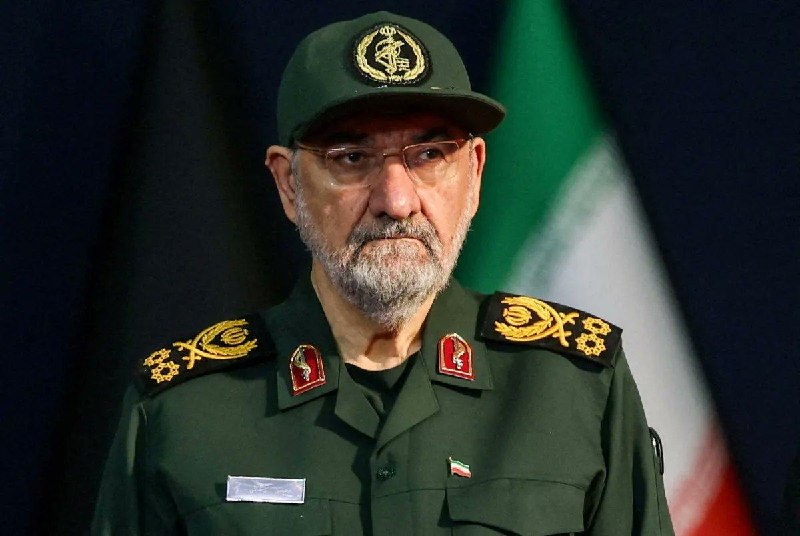
On 22 August 2026, Iran's Secretary of the Supreme National Security Council, Mohsen Rezaei, used a televised address to argue that the country's management of war and its diplomatic behaviour must both change. The remarks, carried live by Iranian state outlets Fars News and Tasnim, came in a single sitting and laid out three interlocking claims: that Iran's defence strategies have been evolving since the Iran–Iraq war of the 1980s, that the United States under President Donald Trump has accelerated global interest in nuclear weapons, and that an economic blockade alone cannot rescue an American position that, in Rezaei's reading, has already lost the military argument.
The framing matters. Tehran is not a marginal voice in this debate. It sits on the board of a confrontation whose escalation arc the White House is trying to slow, and Rezaei's statements arrived within hours of the same diplomatic calendar that produced the latest US-Iran exchanges. What the secretary is signalling is less a tactical pivot than a doctrinal claim about who holds the initiative, and about what costs the next round of confrontation will carry for the parties that try to impose them.
What Rezaei actually said
In remarks broadcast by Fars and Tasnim between 18:39 and 19:06 UTC, Rezaei framed his argument in three steps. First, he said Iran's defence strategies have evolved continuously since the second imposed war, the Iranian shorthand for the 1980–88 Iran–Iraq conflict, and that the country will draw on those experiences in any future war. Second, he said Iran's diplomatic behaviour must be reformed, and that there would be changes in how Iran manages war. Third, he characterised Washington's strategy as having shifted entirely from the military to the economic track, and described that shift as a sign that the United States had given up hope of a successful military attack on Iran.
Rezaei also accused Trump of having pushed the world toward acquiring atomic weapons through his decision to attack Iran, a comment that places the United States at the centre of a global non-proliferation narrative it is trying to lead. The argument is not subtle: if the hegemon's own behaviour drives proliferation, the case for sanctions and pressure collapses into its own contradiction. Iranian state media broadcast the remarks as headline material, with Fars and Tasnim each posting clips and bullet-point summaries within minutes of the original delivery.
Reading the language
Rezaei's choice of words reflects a deliberate diplomatic register, not a careless one. The phrase "there will be changes in Iran's diplomatic behaviour" is the kind of formulation governments issue when they want to signal recalibration without committing to a specific concession or provocation. The simultaneous claim that "Americans have completely lost hope in military attacks" performs a similar function on the other side of the negotiation: it reassures a domestic audience that the pressure campaign is failing, while leaving room for Tehran to test whether a face-saving arrangement is possible.
The economic argument is the strongest, on its own terms. Rezaei's contention that an economic blockade cannot substitute for the military option the United States has, in his reading, abandoned is consistent with a wider Iranian critique of maximum pressure as a tool that has exhausted itself. That critique has been building inside Iran's policy class for months; what is new is the official endorsement of it from the security council secretary, who sits closer to the supreme leader's office than any cabinet minister does.
What this is, in short, is Tehran publishing a negotiating position before negotiations have formally resumed. The pieces are arranged so that any future deal is described as something the United States was forced into, not something Tehran sought.
The proliferation claim
The most consequential line is the accusation that Trump's attack on Iran has increased enthusiasm for nuclear weapons among other states. It is also the easiest to test against the available evidence. Monexus analysis: if the claim were merely rhetorical, it would have been delivered as a passing line. Rezaei instead opened it with the word "stupidity," a pointed register in Iranian political discourse, and used it to frame a structural argument about American credibility. The implication is that Iran is not asking for sanctions relief alone; it is asking for the United States to recognise that its own behaviour has made the world more dangerous, and that the price of that recognition should be visible in any settlement.
That is a much harder ask than the usual Iranian demands on the nuclear file, and it raises the cost of any deal that does not address it. It also hands a talking point to every non-aligned government that has argued, for two decades, that sanctions without a credible disarmament track simply delay proliferation rather than prevent it.
Where this leaves the next round
The short-term effect is rhetorical positioning. The medium-term effect depends on whether Iran's allies inside the regional security architecture absorb the message and adjust their own posture, and whether the United States reads the remarks as a prelude to talks or as a prelude to escalation. Rezaei's reference to "all the experiences of the past year" suggests that Tehran is treating the last twelve months of confrontation as a discrete case study, one whose lessons are meant to feed into the next phase rather than be repeated in it.
The practical question, which the available materials do not specify, is whether Iran's diplomatic recalibration will include any movement on the nuclear file itself, or whether it will be confined to questions of sanctions architecture, sanctions enforcement, and the management of regional armed groups. Rezaei's remarks do not resolve that question. What they do, with unusual clarity, is put it on the table as a question Tehran is willing to keep asking out loud.
For Washington, the calculation is the inverse. If the Iranian reading of American weakness is even partly correct, the next round of pressure will cost more per unit of effect than the last. If it is wrong, the cost of dismissing Rezaei's framing publicly is that Tehran will be able to claim, after the next round of talks, that it warned everyone and was ignored.
Desk note: Monexus framed this against Iranian state media as the primary source for the remarks themselves, with Fars News and Tasnim as the broadcasting outlets. Where Rezaei's framing collides with the Western wire line, particularly on the question of US military intent, both readings appear in the body. The proliferation claim is treated as a political claim, not a documented finding, because the Iranian sources cited here do not provide independent evidence for it.
Wire provenance
This editorial synthesis draws on the following public wire/social posts:
- https://t.me/tasnimnews_en/32624
- https://t.me/farsna/457606
- https://t.me/farsna/457603
- https://t.me/farsna/457602
- https://t.me/ClashReport/93318
- https://t.me/farsna/457601
- https://t.me/ClashReport/93317
- https://t.me/tasnimnews_en/32619
- https://t.me/tasnimnews_en/32616
- https://t.me/farsna/457596