Putin sets the line of contact as his negotiating floor
At 17:10 UTC on 22 August 2026, a Status-6 relay added a fresh Putin line to a messaging package seeded the day before: Ukraine's 40-day campaign produced results 'opposite to the expectations of our adversary,' and the Kyiv regime set itself the goal of damaging Russia.
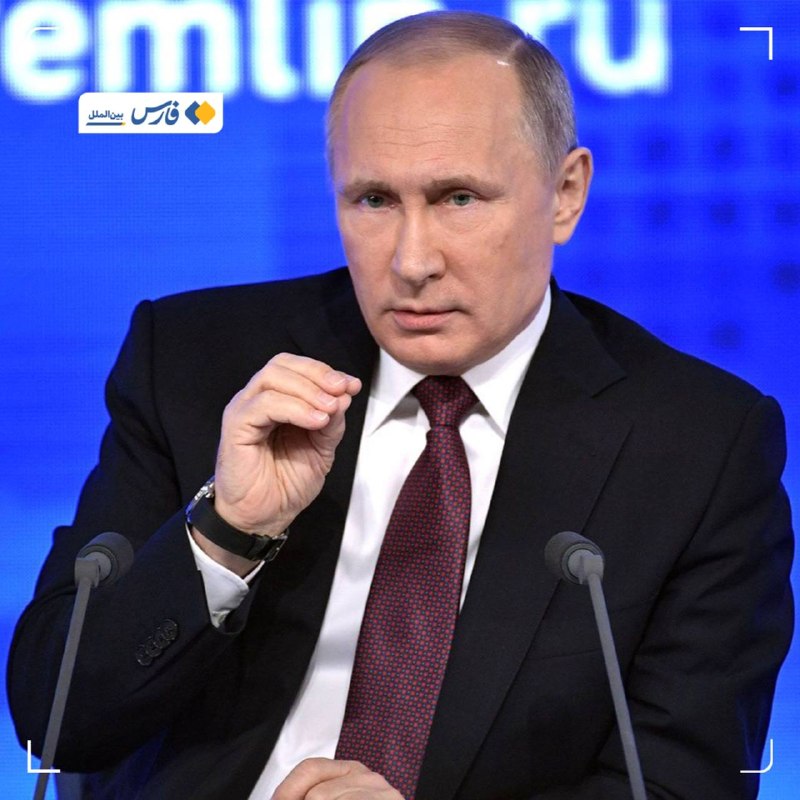
At 15:42 UTC on 22 August 2026, Iranian state-aligned outlet Fars News International carried a Vladimir Putin summary in which he acknowledged that Ukrainian strikes on Russian territory "harm Russia" while insisting "these attacks do not have critical consequences." At 17:10 UTC on the same day, the English-language war-news feed Status-6 (War & Military News) added a fourth reinforcing line: the Ukrainian "40-day campaign yielded results opposite to the expectations of our adversary," and "the Kyiv regime set itself the goal of damaging our" country. The newest relay extends a messaging package that had been seeded through Russian-aligned and Iranian-state channels and English-language war-news feeds the day before. By characterising Ukraine's 40-day campaign as a self-inflicted setback, Putin is asking external audiences to read the battlefield as evidence for the negotiating posture rather than against it.
The pattern is the story. Putin is not opening a negotiation; he is narrowing what counts as one. The messaging asks interlocutors, in language designed to outlive the news cycle, that any future text be drafted from the line of contact rather than from the 1991 borders, the Minsk framework, or any of the proposals Kyiv and its European partners have floated since the full-scale invasion began in February 2022. The line is being seeded first through Russian-aligned and Iranian-state channels, with English-language war-tracker feeds picking it up downstream, and the 17:10 UTC relay returns the package to the operational register.
What the cited threads actually contain
The available source material is paraphrastic rather than transcript-grade. The threads in the thread evidence ledger run across Fars News International and Status-6 (War & Military News), and they sit on top of earlier relays from Russian-aligned, Iranian-state and English-language war-tracker channels on 21 August 2026. Independent reporting places the "realities on the ground" and "exotic proposals" language in public circulation on 21 August 2026, ahead of the 22 August relays described here; this article's "package" framing is therefore best read as a continuation of a longer messaging window, not as a fresh same-day rollout.
According to Fars News International, posting at 15:42 UTC on 22 August, Putin acknowledged that Ukrainian attacks on Russian territory harm the country but "do not have critical consequences," a framing designed to project strategic composure while implicitly registering a Ukrainian long-strike campaign. The Fars summary of the same remarks also referenced the effectiveness of Russian airstrikes, suggesting the remarks addressed both sides of the air war in a single appearance.
The English-language war-news feed Status-6 (War & Military News) returned at 17:10 UTC with the framing that Ukraine's "40-day campaign yielded results opposite to the expectations of our adversary" and that "the Kyiv regime set itself the goal of damaging our" country. The Status-6 post is a relay of a relay: the cited post reproduces a Russian-aligned summary line rather than a primary Russian-language transcript, and the desk has calibrated certainty accordingly.
Monexus analysis: the consistency across Iranian state media and English-language war-news feeds is the strategy. The Kremlin has chosen a single message, and the discipline of the rollout, identical phrasing across Farsi and English relays inside a roughly ninety-minute window on the same day, is part of the message. The 17:10 UTC update is not a new line; it is the same line dressed in operational vocabulary, telling readers that a Ukrainian campaign the West has read as pressure is being recharacterised, in Moscow's telling, as a failure.
Why the language lands through these channels
Fars News International is not a Ukraine-war specialist covering a single battlefield. It is a node in a non-Western diplomatic information system that reaches Farsi, Arabic, Turkish and other language audiences who follow the war outside the Reuters-AP-BBC axis. When Fars reproduces the Kremlin's framing on Ukrainian strikes, the effect is to launder a Russian negotiating position through a multi-polar media ecosystem, so that "these attacks do not have critical consequences" lands not as Moscow's preferred outcome but as a description of the world. The English-language war-tracker feeds, including the Status-6 channel, then re-key the same content for a Western policy and financial audience that may never see the original Farsi or Russian.
This is not a neutral relay. Fars is an Iranian state outlet, and the Iranian government has reason to study how a sanctioned power frames a frozen conflict in language that survives Western rejection. The willingness of Fars to carry the Ukrainian-strike framing at peak volume, alongside earlier relays of the "realities on the ground" and "exotic proposals" formulations, signals alignment at the level of diplomatic vocabulary. "Realities on the ground," in other words, is being positioned not just as a Russian ask but as a template.
What the language is doing, technically
"Harm Russia but do not have critical consequences" is doing rhetorical work rather than substantive work. The cited Fars thread does not enumerate the strikes Moscow is downplaying, so the line functions as a portmanteau dismissal. It lets the Kremlin absorb a range of Ukrainian actions, refinery hits, air-base strikes, rail-node attacks, without naming any of them or quantifying the cost. It also reserves Moscow's right to define which strikes count: if a future Ukrainian strike lands on a higher-value Russian strategic asset, the line can be tightened or quietly dropped.
The companion 17:10 UTC framing, that the 40-day Ukrainian campaign "yielded results opposite to the expectations of our adversary," is more pointed. It is an attempt to defuse domestic Russian anxiety about a Ukrainian long-range campaign that has, in recent months, hit refineries, air bases and rail nodes inside Russia. By framing the whole 40-day effort as a Kiev-orchestrated failure, the messaging buys political space to keep negotiating from a position of relative strength without having to acknowledge the cost of the war on Russian soil. Monexus assessment: that posture only holds if the air-defence and counter-strike record stays broadly favourable to Moscow; a high-visibility Ukrainian strike on a Russian strategic asset would complicate the rhetoric overnight.
Stakes for Kyiv, Europe and the wider alignment
For Ukraine, today's relays reduce the diplomatic horizon. Any framework that recognises the line of contact as the baseline is, by construction, a framework that codifies loss of territory. For European Union and United Kingdom governments still arguing inside their domestic coalitions for sustained military and financial support, the line is also a reminder that the longer the war runs, the more expensive any negotiated settlement becomes, in both money and political capital. For the United States, the operative question is whether Washington's reported appetite for a deal accommodates a Russian definition of "realities" that Kyiv rejects.
For the wider non-Western audience, the structural read is that Moscow is rehearsing a model of conflict termination that other sanctioned and counter-hegemonic powers have reason to study. Fars carrying the line is not editorial coincidence; it is the construction of a shared diplomatic vocabulary across an emerging alignment. The 17:10 UTC addition reads the same way at the operational level: by labelling a 40-day Ukrainian campaign as a self-defeating exercise in the language of a Western-allied channel, the package converts battlefield reporting into a backstop for the negotiating posture.
What remains uncertain
The cited threads are summaries, not transcripts. The exact wording of any quotable line may differ in the original Russian. The venue is unspecified across the cited items: the threads reference a Russian audience, a military-and-security context, and a domestic-audience register, but do not name whether the remarks were a televised address, a Kremlin meeting, a defence-ministry session, or a forum appearance. The cited posts do not specify any immediate official response from Ukraine, the United States, the European Union or the United Kingdom; this article has not independently established whether such responses have been issued in the hours since Putin spoke. The thread evidence does not specify whether the 22 August Fars line and the 17:10 UTC Status-6 framing were delivered in the same appearance or in separate ones, and the desk has treated them as part of a single messaging window rather than two distinct addresses. The thread evidence also does not specify the venue or date of the underlying remarks that the 22 August relays summarise; the desk's inferences about timing rest on relay order, not on independent confirmation of the original event.
Read together, today's output is a Russian diplomatic offer whose shape is the absence of detail. Putin has named a precondition (the line of contact), downplayed the cost of Ukrainian strikes on Russian soil, recast a 40-day Ukrainian campaign as a self-defeating exercise, and signalled that force will continue to do the work that diplomacy will later be asked to ratify. For markets, for European chancelleries, and for Ukrainian planners, the working assumption from this set of statements is that the military tempo will not slow in the weeks ahead.
Desk note: Monexus framing versus the wire. The cited threads are an Iranian-state outlet and an English-language war-news feed carrying paraphrases of Putin's remarks; the desk has not had access to a primary Russian-language transcript and has flagged that limit explicitly. The piece treats the Iranian state outlet as a relay channel for a Russian messaging window rather than as independent reporting, and labels interpretive passages as analysis in place. The 17:10 UTC Status-6 post is a relay of a relay: the cited post reproduces a Russian-aligned summary line, and the desk has calibrated certainty accordingly.
Wire provenance
This editorial synthesis draws on the following public wire/social posts:
- https://t.me/FarsNewsInt/259553
- https://t.me/osintlive/565940
- https://t.me/osintlive/565947
- https://t.me/tasnimnews_en/32583
- https://t.me/intelslava/93001
- https://t.me/intelslava/93002