After United Russia congress, Putin tells Zarubin Kyiv is waging economic war, alleges election disruption
In a post-congress interview with Kremlin-pool journalist Pavel Zarubin on 22 August 2026, Vladimir Putin accused Ukraine of trying to disrupt the State Duma vote and of seeking to damage Russia's economy, framing intensified Russian strikes as reciprocal punishment.
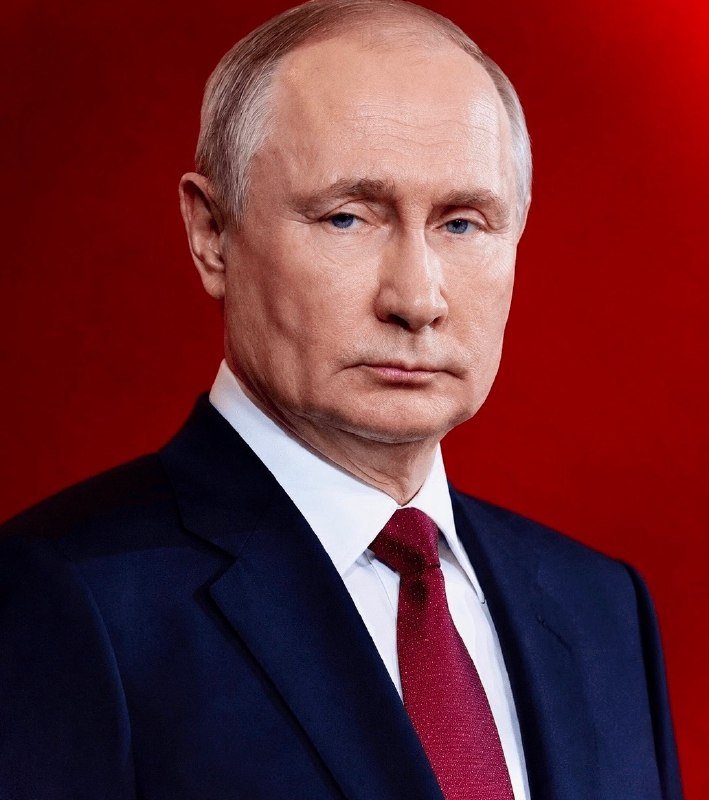
Vladimir Putin used a post-congress interview with Kremlin-pool journalist Pavel Zarubin on 22 August 2026 to accuse Ukraine of trying to disrupt the State Duma vote and of seeking to "damage our economy," framing intensified Russian strikes on Ukrainian cities as a reciprocal response.
The choice of platform, and the timing, are the news. The Zarubin interview was recorded after Putin's address to the United Russia congress that day, per Russian milblogger channel Rybar's summary of the exchange, and the same lines reached Russian-aligned Telegram channels within a tight window in mid-to-late evening UTC. By recasting Ukrainian strikes on Russian logistics as a deliberate assault on the economy, and bundling that allegation with claims of attempted electoral disruption, the Kremlin is converting battlefield attrition into a domestic political narrative weeks before a parliamentary vote the ruling party is engineered to win.
The economic-warfare frame
In the post-congress interview, Putin said the "Kyiv regime has set out to damage our economy," according to translations of his remarks posted to the wfwitness Telegram channel on 22 August 2026. The same channel posted variants of the warning that Ukraine "will receive a taste of their own medicine" at 20:13 UTC and again at 20:21 UTC the same day, with X account Sprinter Press summarising the exchange at 20:18 UTC as Russia having "intensified its strikes on Kyiv and other Ukrainian cities in response to attacks by the Ukrainian Armed Forces (UAF) on warehouses, logistics, and civilian infrastructure."
The Sprinter Press post is the only item in the supplied thread that explicitly enumerates warehouses, logistics, and civilian infrastructure as the targets of Ukrainian action. The wfwitness excerpts carry the more general "damage our economy" line and the "Pandora's box" warning that Russia "will receive a taste of their own medicine," without specifying the categories of target. That distinction matters: the supplied material supports the broad economic-damage frame but does not, on its own, sustain a granular target-list claim.
Russian state media moved quickly to amplify the line. Rybar posted its summary of the Zarubin exchange at 18:39 UTC, with the English-language Rybar in English channel carrying its recap at 18:40 UTC, both on 22 August 2026. The wfwitness channel then circulated variants of the quotes at 20:13, 20:21, and 20:23 UTC the same day. The supplied thread items do not name the broadcast venue on which the Zarubin interview aired, and the quoted excerpts circulate through state-adjacent channels without independent audio or transcript linkage in the supplied material. The fact that the same wording appeared within minutes across multiple state-adjacent channels is consistent, on the evidence available here, with a coordinated release of prepared lines rather than reactive commentary.
The election clock
The second strand was more pointed. Putin accused Ukraine of seeking to "intimidate us and disrupt the elections," framing the alleged threat as "especially important in the run-up to the State Duma elections and other regional" votes, per the wfwitness excerpt. The supplied material carries the phrase "in the run-up to the State Duma elections and other regional" elections but does not specify the precise date of the vote or confirm that regional races sit on the same ballot.
Linking the air war to an imminent election is a familiar Kremlin playbook. Casting Ukraine as the agent of foreign interference performs two functions: it gives United Russia a wartime incumbency argument, and it primes the Russian public to interpret any Ukrainian long-range strike near polling stations as a foreign attack on Russian sovereignty rather than a battlefield exchange. The available source items do not include polling data showing movement in voter sentiment, and the supplied thread does not contain an on-record Ukrainian response to the disruption allegation.
"A taste of their own medicine"
The phrase Putin used, that Ukraine would receive "a taste of their own medicine," is not new in the conflict's lexicon, but the 22 August application is to the economic-damage frame rather than to frontline combat. Previous invocations of the line have followed Ukrainian strikes on Russian territory, from earlier attacks on the Kerch Bridge to longer-range drone campaigns against Russian fuel and rail infrastructure. By translating those strikes into "damage to our economy," the Kremlin absorbs them into the wartime narrative without conceding battlefield reversals, and presents each new Russian strike round as the proportionate counter.
The most natural reading of the messaging, Monexus analysis suggests, is that Putin is using the Zarubin platform to convert tactical escalation into a strategic story ahead of the vote. If Ukrainian strikes are economic sabotage, Russian strikes are the legitimate countermeasure. Each cycle of long-range Ukrainian attacks on Russian refineries, ports, or rail nodes becomes, in Kremlin messaging, justification for further escalation against Ukrainian cities.
What the sources do, and do not, establish
What the cited material does establish is the wording and timing of Putin's remarks: a post-congress Zarubin interview on the evening of 22 August 2026, lines repackaged across Russian state-adjacent channels within minutes, allegations of economic-warfare attacks by Ukraine and attempted electoral disruption, and a stated intent to intensify strikes on Ukrainian cities in response. The supplied thread contains six items across four channels, all of them Russian-aligned or Russian-state-adjacent, and no first-party Ukrainian, Western-wire, or international-organisation rebuttal.
What the cited material does not establish is the operational substance behind the rhetoric. It does not name the specific Ukrainian attacks that triggered the escalation, the scale or location of the Russian strikes Putin referenced, or the cumulative damage of either side's campaign. Ukrainian General Staff briefings, which have been the most reliable public ledger of nightly strike exchanges throughout the war, are not present in the supplied material, and the available Russian-aligned posts do not link to Ukrainian sources for rebuttal. The supplied material also does not specify when the State Duma vote itself is scheduled, beyond the "run-up" framing in Putin's remarks.
The plausible alternative reading is that the Zarubin interview is less about imminent operational change and more about disciplining the Russian information space before the Duma vote, a soft launch of the campaign narrative rather than a strategic shift. The fact that the same quote lines were published within minutes by multiple state-adjacent channels supports that read. Either interpretation points in the same operational direction: continued escalation of strikes on Ukrainian cities through the run-up to the vote.
The stakes are concrete. For Ukraine, the framing raises the political cost of any future negotiation; for Russia's neighbours, it sharpens the security dilemma on the eastern flank; and for the European energy market, an extended campaign against Ukrainian grid and logistics targets has knock-on effects on transit and reconstruction financing already under strain. Watch the next 48 to 72 hours for an independent ledger of the specific strikes Putin referenced, and for any first-party Ukrainian response to the disruption allegation.
Desk note: Monexus framed this story through Russian state-adjacent channels, which carry the wording of Putin's remarks in the supplied material. We have labelled the framing as the Kremlin's and noted where the cited material does not specify operational details. No first-party Ukrainian, Central Election Commission, or Western-wire sources appear in the supplied thread; their absence here is a feature of the source set, not a finding about those institutions.
Wire provenance
This editorial synthesis draws on the following public wire/social posts:
- https://t.me/wfwitness/107974
- https://t.me/wfwitness/107973
- https://t.me/wfwitness/107972
- https://x.com/SprinterPress/status/2091258765043523979
- https://t.me/rybar/82618
- https://t.me/rybar_in_english/33662