Putin tells Zarubin Russia will strike back harder, ties escalation to State Duma and regional vote
In an evening interview with journalist Pavel Zarubin on 22 August 2026, Russian President Vladimir Putin framed intensified Russian strikes on Kyiv and other Ukrainian cities as retaliation for Ukrainian attacks on Russian economic infrastructure, warned Ukraine it would 'receive a taste of their own medicine', and accused Kyiv of trying to disrupt both the upcoming State Duma vote and regional elections.
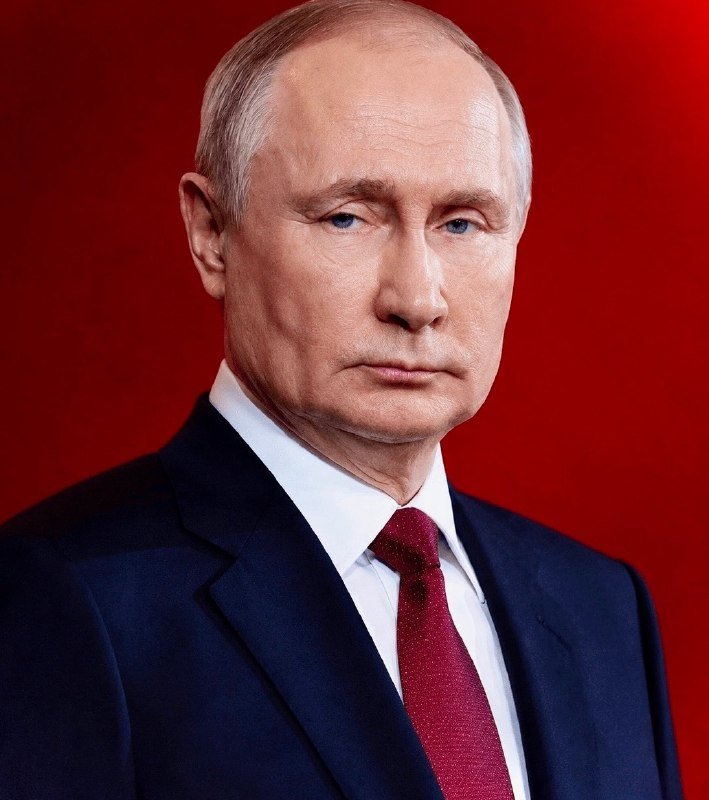
At 18:39 UTC on 22 August 2026, the Russian-language Rybar channel posted that Vladimir Putin, having spoken earlier in the day at the United Russia party congress, had taken questions in the evening from journalist Pavel Zarubin (https://t.me/rybar/82618). Rybar's English-language mirror followed at 18:40 UTC with a parallel summary (https://t.me/rybar_in_english/33662). Within roughly two hours, an X account identifying as SprinterPress distilled the substance: Putin had stated that Russia had intensified its strikes on Kyiv and other Ukrainian cities in response to attacks by the Ukrainian Armed Forces on Russian warehouses, logistics, and civilian infrastructure (https://x.com/SprinterPress/status/2091258765043523979).
The Zarubin interview, conducted after the United Russia congress, is the vehicle through which the Kremlin has chosen to translate intensified strikes into a public legal-political argument. Each Russian move is presented as a reaction to a prior Ukrainian move. Ukraine is cast as the actor that has opened a new front against Russian economic infrastructure. And the upcoming State Duma electoral cycle, together with regional votes, is folded into the rationale. The framing matters more than the operational details, because the same interview is being repackaged for at least three distinct audiences in near-real time.
The 'taste of their own medicine' line
Between 20:13 and 20:23 UTC on 22 August 2026, the wfwitness Telegram channel carried three separate relays of Putin's Zarubin interview, each foregrounding a different angle. The first, at 20:13 UTC, warned that Ukraine would "receive a taste of their own medicine" after Ukrainian strikes, with Putin quoted as saying "The Kyiv regime has set out to damage our economy. What has it done? It open…" (https://t.me/wfwitness/107972). A second relay, at 20:21 UTC, restated the same warning in a parallel post (https://t.me/wfwitness/107973). The third, at 20:23 UTC, folded the retaliation argument into an electoral frame, with Putin quoted saying "And this is especially important in the run-up to the State Duma elections and other regional…" (https://t.me/wfwitness/107974).
Three relays on a single Telegram channel inside a ten-minute window is the kind of packaging that lets a single interview reach different audience segments with the same underlying quotation set. The domestic war-weary viewer, the Russian-speaking diaspora, and the Western diplomatic reader each receive a relay that foregrounds the line most likely to land with them.
Repackaging for multiple audiences
The SprinterPress X post at 20:18 UTC, which carries the only explicit formulation in the source set of Russia's retaliatory targeting of "warehouses, logistics, and civilian infrastructure," sits inside that same wfwitness relay window (https://x.com/SprinterPress/status/2091258765043523979). The English-language Rybar post at 18:40 UTC anchors the package for an audience that does not read Russian (https://t.me/rybar_in_english/33662). Russian information operations in 2026 routinely distribute a single interview through several channels within the same hour so that no relay has to cite another; the apparent simultaneity is itself part of the message.
A fourth wfwitness post, at 20:32 UTC, carried Putin's dismissal of Western information operations aimed at Russian society, with the quotation "I am confident that this attempt to exert informational and psychological influence on Russian society is [futile]" (https://t.me/wfwitness/107975). The line concedes more than it asserts: in a tightly managed information space, a sitting president judges that publicly rebutting Western psychological operations is worth the airtime, suggesting the audience for that rebuttal extends beyond the Russian domestic one.
What we verified, and what we could not
The thread evidence supports the following with high confidence: Putin gave an evening interview to Pavel Zarubin on 22 August 2026 after speaking at the United Russia congress; in that interview he framed intensified Russian strikes on Kyiv and other Ukrainian cities as retaliation for attacks by the Ukrainian Armed Forces on Russian warehouses, logistics, and civilian infrastructure (a formulation that appears in the single SprinterPress X post in this source set, and that the wfwitness relays render only as the truncated "The Kyiv regime has set out to damage our economy"); he warned Ukraine that it would "receive a taste of their own medicine"; he accused Ukraine of attempting to disrupt both the upcoming State Duma elections and other regional elections; and he dismissed Western information and psychological operations against Russian society as futile. Each of those claims maps to a specific source URL above, and the "warehouses, logistics, and civilian infrastructure" formulation should be read as a single-source paraphrase rather than a quotation corroborated across relays.
The thread evidence does not establish, and this article has not independently verified: the specific scale, targets, or geographic footprint of the strikes Putin claims to have ordered; the identity or timing of the Ukrainian attacks he cites as triggers; the casualty figures on either side; or any on-the-ground reporting from Ukrainian sources, independent wire services, or OSINT analysts contained within the supplied source items. Readers should treat Putin's retaliatory chronology, as presented in the available items, as a Russian government assertion, not as an independently established operational fact. Independent and Ukrainian-source reporting on the broader strike cycle (Al Jazeera's coverage of escalating Russian missile attacks, Asharq al-Awsat's write-up of Putin's "Pandora's box" framing, the Economic Times wire on a deadly shopping-mall drone strike, and the Ukrainian Center for Strategic Communications response) was published around the same date, and is referenced here as a pointer for the reader rather than as material that this article has used to corroborate the specific items in the source set.
Reading the package
Monexus assessment: the Zarubin interview reads less as a strategic disclosure than as a coordinated information package aimed at three audiences at once. The domestic Russian audience receives a justification for intensified strikes at a moment when the State Duma campaign is underway; the Western diplomatic audience receives a pre-positioned claim that any future escalation is reactive, not proactive, an argument that will surface in UN Security Council sessions, OSCE contacts, and bilateral exchanges; and the Russian-aligned information ecosystem receives a vetted quotation set that lower-tier channels and milbloggers can recycle without further coordination. The structural pattern here, a single interview repackaged within minutes for multiple audiences, is how Russian state communications have routinely translated battlefield decisions into political talking points since at least the 2022 invasion, and it deserves to be read on those terms.
The electoral angle is worth flagging on its own. Putin's choice to fold the State Duma cycle and the regional votes into the retaliation argument is a tell: external adversaries threatening Russia's electoral process is a rhetorical move that has preceded previous Russian election cycles, and it now provides the political-legal wrapper for an intensification of strikes on Ukrainian cities. The next seventy-two hours of Russian-language state media should be read as campaign material as much as foreign policy.
Desk note: this article is built from the source items in the thread set, which are Russian state-aligned Telegram relays (wfwitness, Rybar) and one X post (SprinterPress) summarising Putin's interview with Pavel Zarubin. The article has labelled Putin's retaliatory chronology as an assertion rather than as established fact, and has flagged the "warehouses, logistics, and civilian infrastructure" formulation as a single-source paraphrase drawn from the SprinterPress post rather than a quotation corroborated across the relays. Where the Russian framing imputes causation, the article has labelled the imputation as such.
Wire provenance
This editorial synthesis draws on the following public wire/social posts:
- https://t.me/rybar/82618
- https://t.me/rybar_in_english/33662
- https://x.com/SprinterPress/status/2091258765043523979
- https://t.me/wfwitness/107972
- https://t.me/wfwitness/107973
- https://t.me/wfwitness/107974
- https://t.me/wfwitness/107975