Rezaee's "economic warfare" warning sets a familiar Gulf script, with one new variable
Tehran's SNSC secretary told neighbours to stay out of a US-led "economic war" and hinted the Strait of Hormuz could be weaponised if pressure continued, language that has preceded Gulf blockades before, but landing in a market already pricing other Hormuz risks.
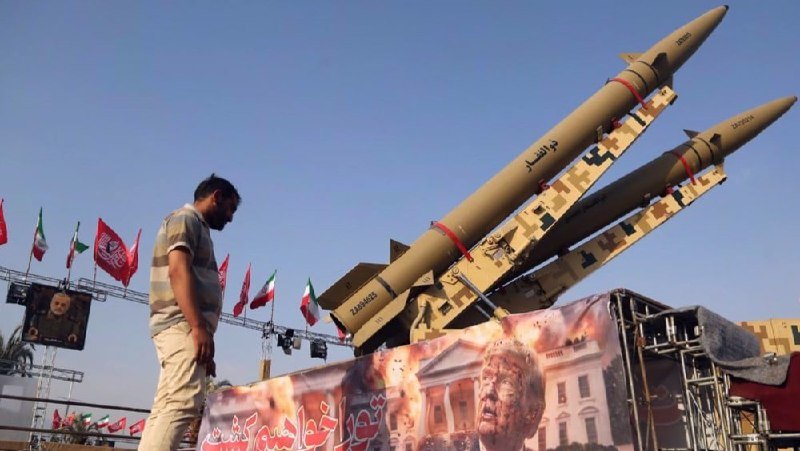
At 18:52 UTC on 22 August 2026, Iran's Tasnim News English feed posted that Mohsen Rezaee, the secretary of the Supreme National Security Council, had accused Donald Trump of having "raised the risk of global trade logistics," framing the dispute with Washington as one the United States "thought they could end…in a few days." Within thirteen minutes, six more posts had echoed the same set of warnings across Iranian state and aligned channels: forces are ready, neighbours should not join a US-led economic war, and the Strait of Hormuz will be treated as a pressure point if Tehran's conditions are not met (Tasnim, 18:52 and 19:05 UTC; Al-Alam, 18:55 and 19:02 UTC; Fotros Resistance, 19:23 and 19:33 UTC; Clash Report, 19:06 UTC; Tasnim Persian/Jahan Tasnim, 19:05 UTC).
The pattern is recognisable. Tehran has threatened the Strait of Hormuz as a lever against Western pressure before, and the rhetorical furniture of "economic war," "earthquake" retaliation, and warnings to Gulf neighbours tracks almost line-for-line with messaging cycles from 2012, 2019, and 2024. What makes this round different is the architecture around it: an SNSC secretary, not the IRGC Navy commander, is the principal voice; the threat is paired explicitly with a plea to regional capitals not to align with US sanctions enforcement; and the language of "ready for operations" is delivered while Iranian messaging simultaneously references recent strikes on F-35s (Al-Alam, 18:55 UTC). The threat is being positioned for a regional audience as much as for Washington.
A familiar Gulf script, with new staging
Rezaee's statement to neighbours is the load-bearing claim. "We are telling all neighboring countries not to participate in the economic war alongside the United States; otherwise, we will hold them accountable," the SNSC secretary said, according to a 19:06 UTC post by Clash Report, which aggregates open-source conflict footage. The same message was carried by Al-Alam at 19:02 UTC and by Tasnim News English at 19:05 UTC. The phrasing matters: it is addressed to capitals, not to Washington, which signals that Tehran is calculating that the binding constraint on US sanctions bite is the willingness of neighbours to enforce secondary measures.
The Strait of Hormuz threat, when it came, was delivered in the same news cycle. "The Strait of Hormuz is closed, but it will be different if the US fulfills its obligations," Rezaee said, per a 19:05 UTC Jahan Tasnim post that also runs on the Tasnim Persian wire. The ambiguity is deliberate: "closed" without specifying by whom or how, conditional on US behaviour, and aimed at the same audience of regional energy importers. Tasnim's English feed added the complementary warning that, if Washington starts an economic war, "not a single drop of oil will leave the Persian Gulf", a more maximalist formulation than the Persian-language version.
The combined picture is a familiar one: a credible-enough threat to move freight rates and insurer surcharges, hedged enough that Tehran retains the option of walking it back. Markets have discounted this kind of messaging before. They will discount it again, unless something else changes.
The structural frame: a corridor, not a country
The Strait of Hormuz carries roughly a fifth of global seaborne oil and a meaningful share of LNG. Any threat against it is not a bilateral US-Iran question; it is a global trade-logistics question, which is precisely the framing Rezaee used in his opening remarks. "Trump has raised the risk of global trade logistics," he said at 18:52 UTC, and the choice of "global trade logistics" rather than "our oil exports" is significant. Tehran is arguing, in effect, that if the US continues to use financial and secondary-sanctions pressure to compress Iranian exports, the resulting disorder will be a shared problem, not an Iranian one.
This is the same logic Tehran has used in earlier Hormuz episodes: present the strait as a common good, and frame any Iranian response as a regrettable but defensive move against US escalation. The novelty in 2026 is the bundling. Rezaee is no longer talking only about oil. He is also telling Iran's neighbours that their banks, ports, and currency-clearing arrangements could become collateral if they align with US enforcement, an "economic war" framing that pulls the financial infrastructure of the Gulf into the threat surface.
What the Iranian messaging does not do, and what mainstream Western and Gulf coverage of past Hormuz episodes has often under-weighted, is engage with the structural reality that several Gulf states have spent the last decade building pipeline and bypass-route capacity specifically to insure themselves against an Iranian closure threat. The UAE's Habshan-Fujairah pipeline, Saudi Arabia's East-West Pipeline running to Yanbu, and Iraq's resumed northern export route through Ceyhan all exist for exactly this scenario. Tehran knows this, which is why the threat is conditional, not absolute.
What "ready for operations" actually means
The IRGC-aligned messaging on 22 August carried the standard rehearsal of military readiness. "Our forces are ready for operations, but we are proceeding with a rational & logical approach," the SNSC secretary said at 19:33 UTC via Fotros Resistance. The same channel, at 19:31 UTC, relayed his claim that Iran "has not attacked any of America's economic interests until now" and has "only targeted military bases." Both points are calibrated: the first reassures neighbours that the threshold for further escalation is being deliberately managed; the second establishes a narrative baseline, in advance, for whatever comes next.
The reference to the F-35 and "Kopal" (an apparent transliteration error for the Russian Ka-52 "Kokopol," or possibly a reference to a portable air-defence system) in an 18:55 UTC Al-Alam post, and the assertion that "if the atomic bomb" were used against Iran, retaliation would follow, sits inside the same messaging architecture. It is not a credible operational claim; it is a deterrence claim, aimed at shaping the political ceiling on any US strike option.
The plain reading is that Tehran is trying to raise the cost of escalation for Washington without crossing thresholds that would unify a Gulf coalition behind US enforcement. That is the standard Iranian playbook, and it is consistent with the public messaging of the last two SNSC cycles under Rezaee's predecessor.
Counterpoint: why this may not move markets
The opposing read is that none of this is new, and the Iranian signalling is being met by an audience that has heard it before. Gulf states have diversified export routes; the IRGC Navy's fast-boat and mine warfare capability, while real, has been publicly modelled and counter-modelled by Western naval planners for over a decade; and the Trump administration's posture, to the extent it is publicly legible from the available items, is to escalate economic pressure rather than to de-escalate. Reuters and Bloomberg, the usual first movers on Hormuz pricing, are not in the cited feed for this cycle, and the cited posts do not specify any corresponding Western or Gulf readout.
The narrower, evidence-led assessment is that the threat is calibrated for a regional audience and is unlikely, on its own, to force a policy reversal in Washington. It is more likely to keep insurance war-risk premia elevated for the next several days, and to give Tehran rhetorical cover if it does elect to act in the strait. What the cited posts do not establish is whether any specific neighbour, Saudi Arabia, the UAE, Iraq, Kuwait, Oman, Qatar, Bahrain, has publicly responded to Rezaee's warning. The available source items do not specify any such response.
Stakes, and what to watch next
If the Iranian threat is carried through, the immediate losers are the Gulf hydrocarbon exporters whose bypass infrastructure is incomplete or whose fields are still gravity-fed to Gulf terminals. The immediate winners are non-Gulf producers with spare capacity, West African and North Sea crude, US Gulf and Permian barrels, and Russian Urals, which already trades at a sanctions discount and would see its relative competitiveness shift only modestly. Asian importers, China, India, Japan, South Korea, would absorb the price impact most directly.
If the threat is not carried through, the longer-term loser is Iranian deterrence credibility, which has historically traded on the perception that Hormuz rhetoric is backed by Hormuz action. The 2026 messaging cycle is being watched not for what Rezaee says but for what, in the seventy-two hours after 22 August, Iranian naval and IRGC units in the strait actually do. That is the read of the cited material in plain editorial voice: a familiar script, weighted toward the regional audience, with the answer sitting not in the speeches but in the shipping telemetry.
Desk note: Monexus is sourcing this cycle from Iranian state and aligned Telegram channels because no Western wire items appear in the supplied thread. Where attribution is given, it is to the named channel. We have flagged the absence of a Reuters, Bloomberg, or official US readout as a source gap rather than as evidence of silence.
Wire provenance
This editorial synthesis draws on the following public wire/social posts:
- https://t.me/tasnimnews_en/32620
- https://t.me/alalamfa/350404
- https://t.me/alalamfa/350405
- https://t.me/tasnimnews_en/32622
- https://t.me/alalamfa/350407
- https://t.me/tasnimnews_en/32623
- https://t.me/JahanTasnim/231215
- https://t.me/ClashReport/93323
- https://t.me/FotrosResistancee/23454
- https://t.me/FotrosResistancee/23455
- https://t.me/FotrosResistancee/23456
- https://t.me/FotrosResistancee/23457
- https://t.me/tasnimnews_en/32620
- https://t.me/alalamfa/350404
- https://t.me/alalamfa/350405
- https://t.me/tasnimnews_en/32622
- https://t.me/alalamfa/350407
- https://t.me/tasnimnews_en/32623
- https://t.me/JahanTasnim/231215
- https://t.me/ClashReport/93323
- https://t.me/FotrosResistancee/23454
- https://t.me/FotrosResistancee/23455
- https://t.me/FotrosResistancee/23456
- https://t.me/FotrosResistancee/23457