Trump Talks Iran 'Right Deal' While Bessent Question Hangs Over the Curve
Inside a single session the White House said Iran will not make the 'right deal,' claimed it did not order a Treasury intervention, and left traders to read between the lines.
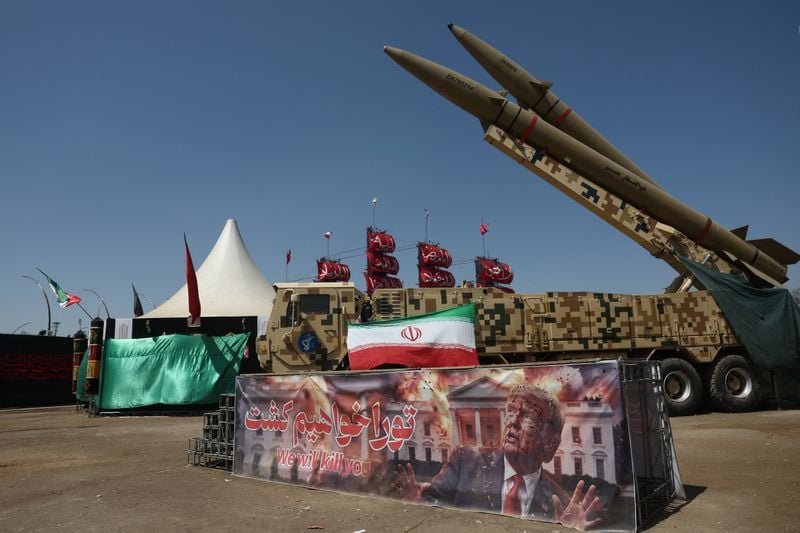
At 23:30 UTC on 21 August 2026, Donald Trump told reporters he had not directed Treasury Secretary Scott Bessent to intervene in the US bond market. Less than two hours later, at 01:42 UTC on 22 August, the same President told reporters that Iran was not ready to make "the right deal." The two statements sit in different departments of government. They landed in the same trading session, and bond desks had to price both.
Monexus analysis: this is a market story wearing geopolitical clothing. The Iran rhetoric is the headline; the Bessent clarification is the tell. The administration's appetite for a nuclear arrangement with Tehran cannot be evaluated separately from whether the US can still sanction, freeze, and pressure a mid-sized economy without unsettling the buyers of its own debt. Both signals moved through the same session.
A negotiation that won't name its terms
Trump's 22 August comments, carried on the Investing.com commodities desk at 01:42 UTC, characterised Iran as unwilling to make the "right deal" without specifying what the right deal would contain. Separately, on X at 23:18 UTC on 21 August, the Sprinter Press account quoted the President as saying a deal would be "not easy" because the United States "has killed too many leaders" and it remains unclear "who is in charge of the country." That framing recasts a sanctions-and-verification problem as a decapitation problem. The negotiating partner is described as a question mark.
The contradiction in the messaging was noted within minutes. A post on the DDGeopolitics Telegram channel at 00:56 UTC on 22 August quoted Trump on B-2 bombers that "a year ago ended Iran's nuclear weapon hope," then asked the obvious follow-up: if that capability was destroyed a year ago, what is the current pressure campaign preventing? The ClashReport Telegram channel carried the same Trump quotation at 23:53 UTC on 21 August. Neither post supplies a Trump answer. The sources in scope for this article do not specify whether the administration has publicly reconciled the two statements.
The structural reading is straightforward. Sanctions regimes require three things to bite: a credible primary sanction, an enforcement coalition, and a financial plumbing system through which the target's exporters and importers cannot route around the prohibition. If the administration believes the military option is already exercised, the diplomatic option must do work the bombs did not. If the administration believes the diplomatic option is now central, then the question is what Tehran is being asked to concede that it has not already conceded under duress. Trump's 22 August comments do not address that asymmetry.
Bessent, the curve, and what wasn't said
The bond-market leg of the session is the less theatrical but more consequential story. At 23:30 UTC on 21 August, Trump told reporters he had not directed Bessent to intervene in the Treasury market. A CryptoBriefing Telegram post at 22:32 UTC paraphrased the same remarks as confirmation that Bessent "acted independently to support bond market" functioning. Investing.com's economy desk covered the exchange at 23:30 UTC. The dispute is procedural on its surface. It is operational underneath.
Monexus assessment: the most natural read of the two wire items taken together is that the administration wants the curve to look orderly while declining to put a paper trail on the table tying a sanctions posture to a debt-management posture. That is a defensible tactic. It is not a durable one. Reserve managers price credibility over months, not press conferences.
A counter-frame should be stated: it is also possible that Bessent's role here is being read into a routine clarification. Treasury Secretaries routinely comment on market functioning without that comment being evidence of an intervention. The Investing.com economy item describes a denial of direction; it does not, in the text available to Monexus, confirm or quantify any specific Treasury purchase or yield-curve operation. The available wire material does not establish the scale, instrument, or timing of any market action.
The financial architecture underneath the sanctions narrative
Iran is the operative test of whether extraterritorial US financial controls still command global compliance. The dollar-clearing system, the correspondent banking network, and the secondary-sanctions regime are the actual instruments. The negotiations are theatre around their calibration. If Washington wants additional Iranian concessions, it must either tighten those instruments further, at the cost of pushing Iran deeper into renminbi- and dirham-based trade settlement, or loosen them, which would be read in Riyadh, Tel Aviv, and Abu Dhabi as evidence that the maximum-pressure framework is exhausted.
A useful counter-frame: a weaker long end of the US Treasury curve is itself a form of sanctions erosion. Higher yields raise the cost of borrowing for the Treasury, which constrains the budget that funds the enforcement coalition. The Bessent clarification, even if read as routine market plumbing, tells foreign holders of Treasuries that the administration may occasionally act in the market without admitting so. That is information. Markets incorporate information.
What remains genuinely uncertain is whether the administration has a defined end-state for the Iran file. The 22 August wire items give no indication that the negotiation has a written framework, a verifiable metric of compliance, or a back-channel architecture comparable to the 2015 Joint Comprehensive Plan of Action. The cited posts do not specify whether Iranian officials have responded publicly to the 22 August remarks. They do not specify whether the IAEA or any third-party technical intermediary has commented on the state of Iran's nuclear infrastructure on the timeline referenced by Trump.
A timing note: the same characterisation of Iran as wanting a deal but not yet ready for the "right deal" has surfaced in earlier reporting this month, including a 15 August 2026 Iran International item under a similar headline. Monexus cannot, from the wire material in scope, determine whether the 22 August Investing.com line reflects a fresh presidential statement or a re-up of an earlier characterisation. Readers should treat the 22 August timestamp as the date of the published wire item and the 01:42 UTC timestamp as the publication time, not as an independently verified moment of presidential utterance.
What to watch by the next session close
The next verifiable beats are market-shaped, not speech-shaped. Watch any 30-year Treasury reopening or auction in the coming sessions: indirect bidders are the foreign reserve managers, and a tail above one basis point will signal that the Bessent clarification did not fully repair credibility. The wire material in scope does not specify the date of the next 30-year operation, and Monexus has not independently established the auction calendar here. Watch the dollar-renminbi fixing onshore: a widening of the onshore-offshore gap above 300 pips reads as confidence stress in the dollar-clearing system. Watch any Iranian Central Bank statement on settlement-currency diversification, which would be the structural counter-move to a maximum-pressure revival.
On the geopolitical side, three items would move the needle: an IAEA inspection report on Iranian enrichment facilities dated within the past 30 days; a Saudi or UAE statement on oil-market contingency planning if Hormuz freight rates spike; and a written US negotiating framework published in any wire outlet. The Investing.com and Telegram items in scope for this article do not specify whether any of those documents exist. Until they do, the administration owns the rhetoric but not the facts.
This piece was written for the markets desk. Monexus has framed the 21-22 August Iran rhetoric and the Bessent clarification as a single news event because they happened inside the same trading session; the 15 August Iran International headline of similar shape is flagged separately so readers are not left assuming a clean first occurrence on 22 August.
Wire provenance
This editorial synthesis draws on the following public wire/social posts:
- https://www.investing.com/news/commodities-news/us-iran-keep-up-hostile-rhetoric-ahead-of-new-sanctions-4872246
- https://www.investing.com/news/economy-news/trump-says-he-did-not-direct-bessent-to-intervene-in-bond-market-4872224
- https://t.me/CryptoBriefing/18817
- https://t.me/DDGeopolitics/191610
- https://t.me/ClashReport/93232
- https://x.com/SprinterPress/status/2090941635613835412
- https://www.investing.com/news/commodities-news/us-iran-keep-up-hostile-rhetoric-ahead-of-new-sanctions-4872246
- https://www.investing.com/news/economy-news/trump-says-he-did-not-direct-bessent-to-intervene-in-bond-market-4872224
- https://t.me/CryptoBriefing/18817
- https://t.me/DDGeopolitics/191610
- https://t.me/ClashReport/93232
- https://x.com/SprinterPress/status/2090941635613835412