Israeli forces raid Tubas and Nablus as settler attack kills Palestinian teen in occupied West Bank
A 17-year-old Palestinian was killed and another person critically injured in a settler attack before reports emerged of Israeli military raids on Tubas and Nablus. The timing links two serious incidents, but the available sources do not establish that they were coordinated.
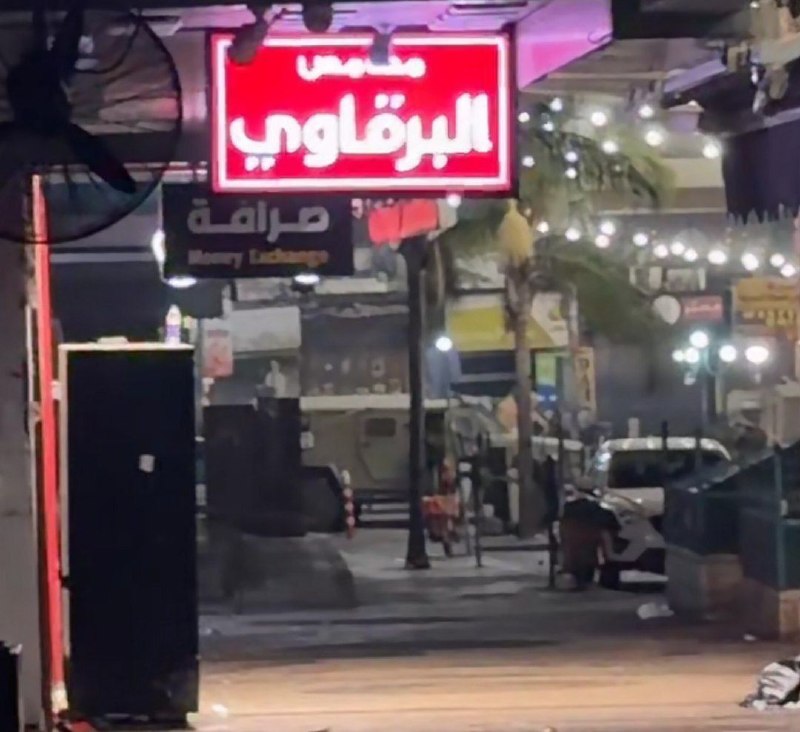
A 17-year-old Palestinian was killed and another person critically injured in a settler attack in the occupied West Bank, according to an Al Jazeera breaking-news report published at 04:30 UTC on 22 August 2026. The report said the UN was responding. Earlier, Telegram posts from Al-Alam Arabic, Tasnim News English, Mehr News and Al-Alam Persian said Israeli forces had raided Tubas and Nablus, citing local or Palestinian sources.
The sequence is troubling because the reports place a deadly attack on a Palestinian minor and large-scale Israeli military operations within the same overnight news cycle. It does not, on the evidence available, establish coordination between the settler attack and the army raids. That distinction is essential: the raids are widely reported by the state-linked channels, but their scale, objectives and relationship to the killing remain unclear.
What happened overnight
The most specific casualty report came from Al Jazeera at 04:30 UTC. Its headline said a 17-year-old Palestinian had been shot and killed in a West Bank attack and that the UN was responding. The item also said another person was critically injured and described the incident as a settler attack. The available source item does not specify the precise location, the circumstances of the shooting, or the identity of the attackers.
The military-operation reports appeared earlier. At 02:17 UTC, Al-Alam Arabic posted an urgent bulletin citing Palestinian sources that Israeli forces had stormed Tubas, a city in the northern West Bank. At 02:16 UTC, Tasnim News English said Israeli forces had raided Tubas and Nablus, citing a local source. At 02:00 UTC, Mehr News carried a similar account of a large-scale raid on both cities. A separate Al-Alam Persian post used the same broad description.
The timing matters, but it proves only proximity. Four Telegram items describe the Tubas and Nablus operations in near-identical language. The first independently timestamped report supplied here is the Al-Alam Arabic post at 02:17 UTC, while the Al Jazeera casualty item followed at 04:30 UTC. Nothing in the available posts links the settler attack to the military operation.
Monexus assessment: the public record is sufficient to report a deadly settler attack and Israeli raids in two West Bank cities, but not to present them as one coordinated operation. The operational claims rely heavily on state-linked Telegram posts relaying local reporting, so certainty should stop at what those posts themselves say.
A narrow account, repeated widely
The raid reports are notable less for the number of outlets than for their shared sourcing pattern. The Tasnim and Mehr items each attribute the account to local sources. Al-Alam Arabic says Palestinian sources, while Al-Alam Persian also describes a large operation. The similarity suggests a common underlying report, although the available items do not identify the local source or establish whether the channels independently checked it.
This is not a minor technical caveat. Calling the raids “massive” or “large-scale” carries an implication of scope and preparation. The supplied posts repeat that characterization, but they provide no troop numbers, duration, targets, casualty figures or account from the Israeli military. The Al Jazeera item is separately sourced and provides casualty information, but it does not report on the Tubas and Nablus raids.
A plausible alternative reading is that the four Telegram channels are carrying the same initial local account rather than four distinct confirmations. On that reading, the number of messages overstates the degree of independent corroboration. The Israeli military did not provide an operational explanation in the cited material, and the available sources do not specify what units were involved or what the raids were intended to achieve.
The opposite reading is that the shared wording reflects a genuinely broad operation. Both Tubas and Nablus are named in three of the four raid items, while the Al-Alam Arabic bulletin confirms the Tubas report. That is enough to treat the raids as reported events, not rumours. It is not enough to assign them the scale implied by the channels' rhetoric.
Two events, one uncertain connection
Palestinian civilian harm and Israeli security concerns must both be handled without collapsing them into a single narrative. The Al Jazeera report gives direct human weight to the settler attack: a 17-year-old was killed and another person was critically injured. The sources, however, do not provide the second victim's identity, age or condition beyond the initial description.
The reports of Israeli raids in Tubas and Nablus describe military activity rather than a stated assault on settlers. Israeli security agencies often conduct arrest and counter-terrorism operations in the West Bank, but that general context is not documented in the supplied items and should not be inserted as a factual account of this operation. Here, the only supported point is that the channels reported the raids and attributed the information to local or Palestinian sources.
The settler attack and the military raids should therefore be reported side by side, not causally joined. A teenager's death remains a grave fact regardless of whether an army operation followed it. The raids remain a matter of concern regardless of whether they had any connection to the attack. What the sources do not establish is whether the two incidents shared a command structure, a trigger or an operational timetable.
The information gap is itself consequential. Without an Israeli military account, readers cannot assess the stated purpose, target or scale of the Tubas and Nablus operations. Without a fuller account of the settler attack, they cannot determine where it occurred, how many people were involved or what led to the shooting. Uncertainty should not be confused with equivalence between the events.
What the record can and cannot carry
Five source items are available for this news cycle. One is an Al Jazeera report focused on the killing and the UN response. Four are Telegram bulletins, three of which describe a large-scale or massive Israeli operation in Tubas and Nablus. That division determines the article's limits.
The strongest supported chronology is narrow. At 02:00 UTC, Mehr News described a large-scale raid on Tubas and Nablus. At 02:16 UTC, Tasnim News English carried a similar account. At 02:17 UTC, Al-Alam Arabic reported that Israeli forces had stormed Tubas. At 04:30 UTC, Al Jazeera reported the death of the 17-year-old in a settler attack and said the UN was responding.
The central risk is overclaiming. Repeated wording across Telegram channels is evidence that a report circulated, not proof that every adjective is independently verified. The posts do not specify whether the raids were simultaneous, how long they lasted, whether anyone was detained or wounded, or whether the Israeli military commented. The casualty item does not specify the attack's exact location or the circumstances of the shooting.
The next useful records would be an Israeli military statement naming the operation and its objective, a UN account of its response to the killing, and independent reporting from the affected cities. Those records could confirm or narrow the raids' scale and clarify the relationship between the two incidents. Until then, the responsible formulation is precise: settlers carried out an attack in which a 17-year-old Palestinian was killed and another person was critically injured, while Israeli military raids were reported in Tubas and Nablus during the same overnight period.
This account separates the reported settler attack from the reported military raids because the available source items do not establish that the two events were coordinated.
Wire provenance
This editorial synthesis draws on the following public wire/social posts:
- https://www.aljazeera.com/video/newsfeed/2026/8/22/palestinian-teen-shot-and-killed-in-west-bank-attack-un-responds?traffic_source=rss
- https://t.me/alalamarabic/496379
- https://t.me/tasnimnews_en/32455
- https://t.me/mehrnews/406423
- https://t.me/alalamfa/350327