Carney picks the fight, Canada draws the line on Trump's tariffs
On 22 August 2026 Ottawa announced sweeping counter-tariffs after Donald Trump's Truth Social broadside accused Canada of wanting "the benefits of being a State, without being one." The fight is now over steel, aluminium, automobiles and farm exports, and neither side has signalled an off-ramp.
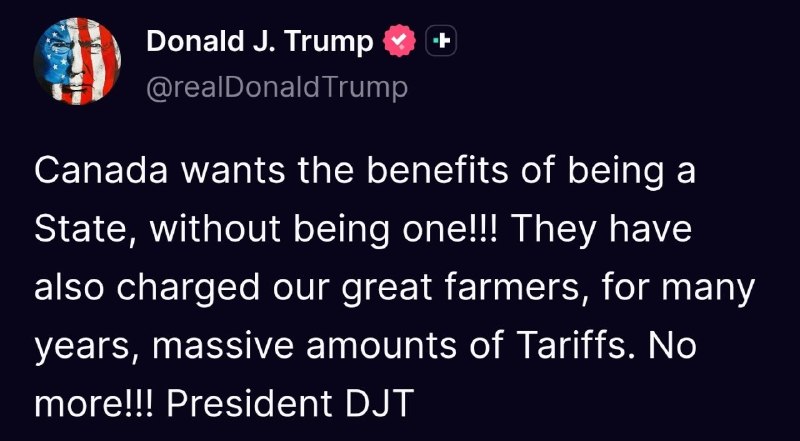
At 02:06 UTC on 23 August 2026, the South China Morning Post reported that Canadian Prime Minister Mark Carney had decided not to take Donald Trump's bait. Less than three hours later, at 05:16 UTC, Trump returned to Truth Social to declare that Canada "wants the benefits of being a State, without being one," and accused Ottawa of charging "our great farmers, for many years, massive amounts of Tariffs." The exchange marks the moment the United States–Canada trade relationship crossed from negotiation theatre into open confrontation, with Ottawa announcing a raft of retaliatory measures on 22 August that now has a White House reply attached.
What began in early 2025 as a tariff shock that was widely expected to be negotiated away has hardened, by late August 2026, into a bilateral standoff with no visible off-ramp. The frame matters: this is no longer a row about dairy quotas or aluminium sheet. It is a contest about whether the smaller of the two economies can impose enough pain on the larger one to force a rethink, and whether Washington is willing to absorb that pain in pursuit of a political point about sovereignty.
The new line in the sand
Carney's government framed its 22 August package as "retaliatory tariffs across a raft of US sectors," according to an Investing.com world-news wire on 22 August 2026. The Canadian announcement landed the same day that a separate Investing.com report described a reversal inside Quebec: after years of polling that consistently showed appetite for another sovereignty referendum, Quebec voters hit by Trump-era tariffs now appear to have lost that appetite, at least for the near term. The available source items do not specify the underlying Quebec polling data in detail.
Monexus analysis: the political geography of the fight has shifted. In 2025 the dominant Canadian fear was that Trump's tariffs would accelerate Quebec separatism by exposing the cost of being inside a continental bloc that no longer protected Canadian industry. By 22 August 2026, the picture had flipped: the Quebec public appears to be reading the tariffs as an external threat that pulls the province closer to the federal government in Ottawa, not further from it. Carney's decision to retaliate rather than negotiate down therefore has a domestic coalition behind it that the earlier timeline did not obviously contain.
The Trump version
Trump's 23 August Truth Social post, distributed in full by the Clash Report channel on Telegram at 05:16 UTC, makes the American grievance explicit: "Canada wants the benefits of being a State, without being one!!! They have also charged our great farmers, for many years, massive amounts of Tariffs. No more!!!" The punctuation is the President's; the substance is the longstanding US complaint that Canada runs a protected agricultural market, with supply-managed dairy and poultry regimes that Washington has tried, and failed, to dislodge through two renegotiations of the United States–Mexico–Canada Agreement. The available source items do not specify the exact dates of those renegotiations or the precise tariff lines at issue.
The "State" formulation is more than rhetorical. It maps onto the position that senior US trade officials have taken since the spring: that Canada should be treated as a dependent market rather than a sovereign counterpart, and that the bilateral trade deficit, weighted heavily by energy flows, is itself evidence of asymmetric dependence. Carney's refusal to engage on that frame is the new fact on the ground. SCMP's 02:06 UTC report explicitly characterised Carney's posture as refusing to take Trump's "bait," a signal that Ottawa is no longer treating the White House's provocations as openings for negotiation.
The shape of retaliation
The 22 August Investing.com dispatch does not enumerate every sector hit by Canadian counter-measures, and the available source items do not specify the full list. What is on the record is the structure: Ottawa has opted for breadth rather than depth, spreading retaliatory tariffs across multiple US export categories rather than concentrating the pain on a single symbolic industry. The strategic logic, plain and unglamorous, is to maximise political friction inside the United States by ensuring that several US congressional districts are touched at once.
The alternative reading, worth naming, is that Canadian retaliation is mostly symbolic because the bilateral trade balance is asymmetric in the wrong direction for Ottawa. Monexus assessment: the bet is not primarily economic. It is political: to raise the cost to the Trump administration of carrying the fight through a US election cycle, in the hope that domestic political pressure in the United States does the work that Canadian tariffs cannot.
What the Quebec reversal tells us
The 22 August Investing.com report on Quebec's changed appetite for early separation is, on its face, a story about Canadian constitutional politics. Read against the broader trade file, it is something more useful: it tells us that the Trump tariffs, whatever their economic effect, have so far failed at their stated political purpose on the Canadian side. The 2025 expectation inside US trade-policy circles was that sustained pressure would create internal Canadian pressure for concessions. By 22 August 2026, the most plausible reading of the Quebec shift is that the pressure has produced the opposite: a rallying-around-the-flag effect that strengthens the federal government and weakens the sovereigntist movement in the province where that movement had its strongest base.
There is a counter-read: that Quebec's reluctance to revisit the question of sovereignty is cyclical rather than structural, and that the moment the tariffs are lifted the old polling baselines will return. The available source items do not specify which read the federal government itself is operating on, and this article has not independently established whether Carney's cabinet has internal polling on this point. The honest answer is that the durability of the Quebec reversal is one of the open questions of the file, and that no one on either side of the border is yet in a position to claim a permanent political victory.
Where this goes next
Three things are worth watching. First, whether the Canadian retaliation list, once fully published, includes US agricultural products from states whose congressional delegations are most exposed in the November midterms; the political geography of the Canadian package will tell Ottawa's bet. Second, whether the Trump administration responds with sector-specific escalation or with a broader invocation of the economic-emergency authorities that have been the preferred escalation tool of the past eighteen months. Third, whether any third party, Mexico, the European Union, or a US business coalition, attempts to mediate; the available source items do not specify any such move, and this article has not independently established whether one is being prepared.
The structural fact underneath the daily noise is older than this fight. Two economies as integrated as the United States and Canada do not tariff each other without paying a price both sides can feel, and the price compounds the longer it runs. Ottawa has decided, in effect, that the political price of absorbing the hit in silence is now higher than the economic price of returning fire. The Trump White House has decided, by posting the "State" message at 05:16 UTC, that the political price of backing down is higher still. That is the standoff, in plain terms: two governments, each betting that the other will blink first.
Desk note: Monexus framed this as a bilateral political-economic standoff rather than a single-issue trade dispute, and resisted the wire framing of "trade war" as a self-contained story. We carried the Trump "State" formulation in his own words and treated Carney's refusal-to-bait posture as the operational fact of the day, on the SCMP filing.
Wire provenance
This editorial synthesis draws on the following public wire/social posts:
- https://t.me/ClashReport/93344
- https://www.scmp.com/news/world/united-states-canada/article/3364948/canadas-carney-refuses-take-trumps-bait-confronting-us-trade-war
- https://www.investing.com/news/world-news/canada-to-impose-retaliatory-tariffs-across-a-raft-of-us-sectors-carney-says-4872377
- https://www.investing.com/news/world-news/hit-by-trump-tariffs-quebec-loses-appetite-for-quick-separation-from-canada-4872328
- https://t.me/ClashReport/93344
- https://www.scmp.com/news/world/united-states-canada/article/3364948/canadas-carney-refuses-take-trumps-bait-confronting-us-trade-war
- https://www.investing.com/news/world-news/canada-to-impose-retaliatory-tariffs-across-a-raft-of-us-sectors-carney-says-4872377
- https://www.investing.com/news/world-news/hit-by-trump-tariffs-quebec-loses-appetite-for-quick-separation-from-canada-4872328