Tehran signals a perimeter as Pakistan's army chief heads to the Iranian capital
Pakistan's army chief travels to Tehran on 24 August 2026, two days after Iran's new security chief warned neighbours they would be treated as 'enemies' if they joined the US economic war against the Islamic Republic.
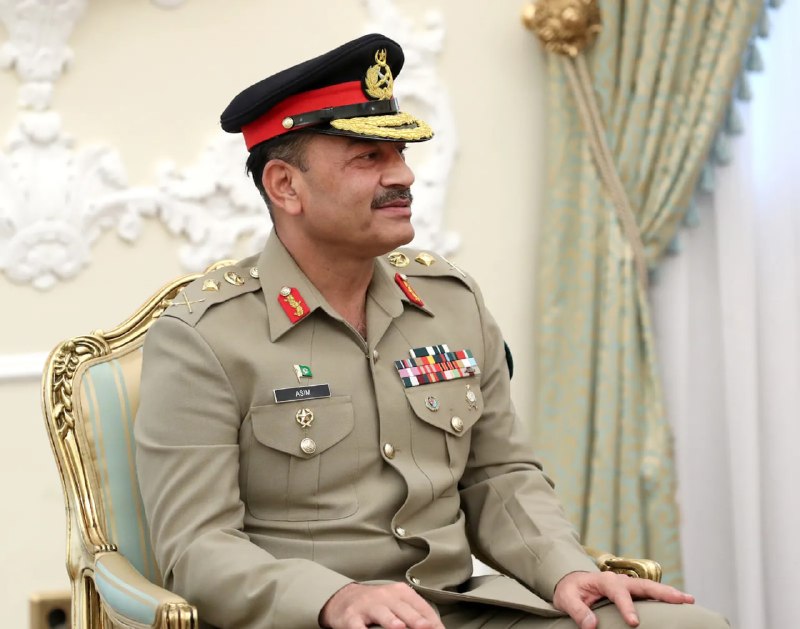
Pakistan's army chief is to travel to Tehran on Monday 24 August 2026, according to a notice reported on 23 August and carried by international wires. The Iranian foreign ministry confirmed the visit; the delegation will meet Iranian security counterparts in the capital, with Tehran framing the trip as a high-level review of regional security coordination.
The trip lands 48 hours after a sharply worded public warning from Tehran aimed at its own neighbours. On 22 August 2026, Iran's new security chief warned that any neighbour joining the US economic war against Tehran would be treated as an enemy, according to first-party reporting carried by The Guardian, The Hindu, The Federal and the Australian Associated Press. The same warning was circulated on social channels and amplified by prediction-market accounts tracking the sanctions question on 23 August 2026. Read together, the public warning and the army chief's visit suggest Tehran is trying to harden its perimeter before any new round of US sanctions arrives, while signalling to Washington that its regional partners will not necessarily fall into line.
The army chief's itinerary
Iran's foreign ministry confirmed on 23 August 2026 that Pakistan's Chief of Army Staff would arrive in Tehran the following day, as carried by Investing.com's commodities desk from the underlying wire. The agenda, as described in those dispatches, is a high-level review of regional security and bilateral coordination; the available source items do not name the counterparties, the delegation's composition, or the readout timetable. What the thread evidence does establish is the date, the destination, the rank of the visitor, and the confirming institution.
The choice of the army chief, rather than a foreign minister or trade envoy, is itself the message. Military-to-military channels have historically been the most resilient line of communication between Islamabad and Tehran through cycles of border tension and US sanctions pressure. Monexus analysis: elevating the visit to the army chief signals that the file Iran most wants to lock down is operational, not diplomatic, even when the public framing on the table is diplomatic language.
The warning that preceded the visit
On 22 August 2026, Iran's new security chief warned that any neighbour joining the US economic war against Tehran would be treated as an enemy, according to first-party reporting in The Guardian, The Hindu, The Federal and AAP. A translation of the warning was circulated on social channels on 23 August 2026 and amplified by prediction-market accounts tracking the sanctions question. The same day, a new Polymarket contract opened on whether the United States would impose new sanctions on Iran by Monday, putting the question on a tradable clock and drawing fresh attention to the sanctions pipeline.
Monexus assessment: the warning is calibrated to a specific audience, and identifying the speaker matters. Iran's new security chief is a named officeholder with a specific institutional portfolio, and the warning's force depends on that attribution. Tehran cannot, in practice, treat every neighbour that complies with US secondary sanctions as a combatant; too many of its border partners already operate inside the American financial perimeter. What it can do is raise the cost of active participation, especially the hosting of sanctions enforcement infrastructure or the explicit endorsement of any new measures at international venues. The Pakistan visit lands that point in the most useful possible theatre, even if Tehran did not explicitly link the two announcements.
What the structural picture looks like
The trip fits a wider pattern visible across 2026: middle powers using bilateral military visits to hedge against a US sanctions regime that increasingly extends beyond its own borders. Pakistan is a useful case because it sits on the line between three different pressure systems. The available source items do not specify the bilateral economic architecture in play; what they do specify is the timing, a visit announced by the Iranian foreign ministry the day after a public warning from Iran's new security chief, and the same week a market opened on imminent US action. Monexus analysis: Tehran is using a public broadcast by a named officeholder to remind regional governments that the price of visible compliance has gone up, while rewarding a neighbour that has, in the same week, kept its diplomatic posture ambiguous enough to accept a chief-of-staff level meeting.
The hedging logic cuts both ways. Islamabad gains a channel to Tehran at a moment when its own exposure to US secondary sanctions on Iranian oil has been a recurring irritant. Tehran gains a photograph of a friendly army chief in the capital, confirmed by its own foreign ministry, at a moment when it most wants to project that its neighbourhood will not isolate it.
What to watch next
Three dates are worth holding. First, the readout from the Tehran meetings expected in the 24-48 hours after the army chief's arrival on 24 August 2026. Second, the close of the Polymarket contract on whether new US sanctions land before Monday's expiry. Third, any movement at the UN Security Council or the Financial Action Task Force, the two venues where Iranian counter-mobilisation has historically been most visible in past sanctions rounds. The available source items do not specify whether new measures are formally in train or merely under discussion inside the US administration; Monexus treats any characterisation of imminent action as the prediction market's read, not confirmed policy. What the thread evidence does confirm is the sequence: a warning from Iran's new security chief on 22 August 2026, a visit confirmed by the Iranian foreign ministry on 23 August 2026, and a sanctions clock running through the weekend.
Desk note: Monexus frames this as a perimeter-defence signal from Tehran rather than a bilateral reset with Islamabad. Where independent first-party reporting identified the warning's author as Iran's new security chief and the visit's confirming institution as the Iranian foreign ministry, the desk defers to those specific attributions; where the thread evidence is silent on agenda detail or delegation composition, the desk has said so plainly rather than infer.
Wire provenance
This editorial synthesis draws on the following public wire/social posts:
- https://www.investing.com/news/commodities-news/iran-says-pakistans-army-chief-to-visit-tehran-on-monday-4872425
- https://x.com/Polymarket/status/2091336038518055348
- https://poly.market/i5H9Am6
- https://x.com/Polymarket/status/2091083452812546537