Syria and Israel hold high-level Jordan talks under US mediation
SANA reported that Foreign Minister Asaad al-Shaibani led a senior Syrian delegation to talks with an Israeli delegation in Jordan under US mediation. Israeli journalist Barak Ravid separately identified Mossad chief Roman Gofman as a participant and linked the meeting to de-escalation efforts.
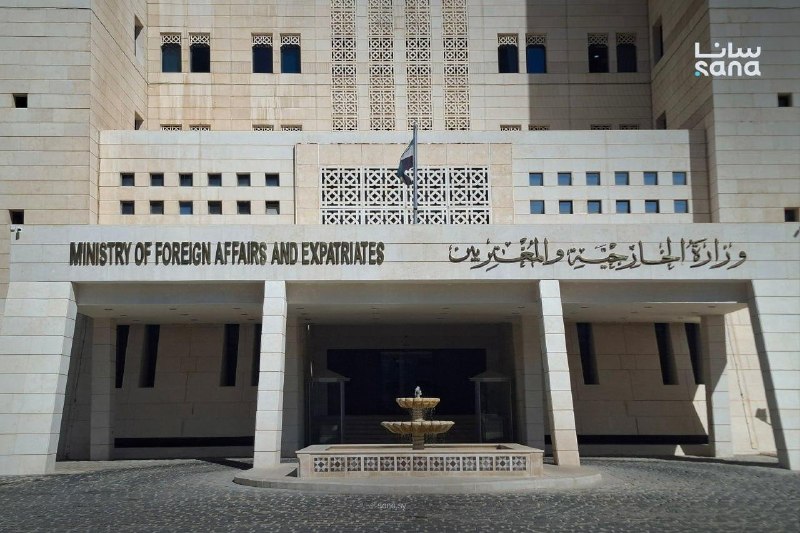
A senior Syrian delegation led by Foreign Minister Asaad al-Shaibani met an Israeli delegation in Jordan on 23 August 2026 under US mediation, according to a Syrian diplomatic source cited by the state news agency SANA. The source said the talks covered mechanisms to halt aggression and establish a sustainable de-escalation track.
The encounter is notable less for what it settled than for who was reportedly in the room. The Syrian delegation included the heads of general and military intelligence, while Israeli journalist Barak Ravid identified Mossad chief Roman Gofman as part of the Israeli side. Ravid linked the talks to efforts to reduce tensions after an Israeli strike at Abu al-Thohur airport. SANA did not specify the strike's location, target, timing, or damage in the available account.
The evidence supports a narrow conclusion: the meeting appears to have established or deepened a security channel between Damascus and Jerusalem at a moment when both governments are trying to manage the risk of escalation. It does not establish a diplomatic normalisation process, a ceasefire, or an agreement on any wider political issue.
Two accounts, one meeting
SANA's account, relayed in a World Food Witness post at 22:23 UTC, described the meeting as a high-level Syrian encounter with a senior Israeli delegation under US mediation. A separate post from Clash Report, citing a Syrian diplomatic source, said al-Shaibani led a delegation that included the heads of general and military intelligence. The talks, according to that account, focused on halting aggression and laying the groundwork for sustainable de-escalation.
Ravid's account, relayed by englishabuali at 15:47 and 20:37 UTC, supplied a different emphasis. He said Gofman met al-Shaibani in Jordan as part of efforts to reduce tensions following an Israeli strike at Abu al-Thohur airport. The available source item places Abu al-Thohur airport in Idlib, a location that should be stated with attribution rather than converted into an unqualified geographical fact.
The accounts are not necessarily contradictory. One describes the diplomatic mechanism and Syrian security representation. The other highlights the intelligence-level connection and the strike that preceded the talks. The distinction matters because a security channel can be operational without being a full diplomatic relationship.
Monexus analysis: the most defensible reading is that the two accounts describe different parts of the same process. SANA presents the meeting as a response to ongoing pressure on Syria. Ravid presents it as a calibrated effort to prevent a particular confrontation from widening. Both descriptions leave the contents of the discussions undisclosed.
The limited meaning of a security channel
The reported presence of intelligence chiefs suggests that the discussion was intended to address security management rather than public diplomacy. That is an inference from the composition of the delegations, not proof of the agenda. The source material does not specify whether the participants discussed military operations, deconfliction arrangements, political recognition, territory, or a specific timetable.
The fact that the meeting occurred under US mediation also requires care. It establishes, on the evidence supplied, US involvement in facilitating the encounter. It does not establish who selected the venue, what commitments Washington made, or whether American officials attended the meeting itself.
There is another plausible explanation: the encounter may be a crisis-management contact, not the beginning of a durable negotiation. Intelligence-led talks often serve to exchange warnings and narrow the risk of miscalculation while governments avoid public commitments. The available material supports that interpretation because it describes de-escalation efforts but provides no evidence of a signed accord or agreed political framework.
Why the context is being read selectively
The meeting has generated competing narratives because each available account begins with a different problem statement. SANA frames the encounter around halting what it calls Israeli aggression and building a sustainable de-escalation track. Ravid's account focuses on reducing tensions after a strike at Abu al-Thohur airport.
The two frames can coexist, but they allocate responsibility differently. The Syrian account implies that the meeting is needed to restrain an existing course of action. The account relayed from Ravid implies that the talks are a response to a recent incident and an attempt to prevent further escalation. The supplied sources do not establish the circumstances of the strike beyond its reported occurrence, so the cause of the meeting cannot be stated with greater certainty.
That uncertainty is not a minor qualification. It determines whether the event is best understood as a temporary channel created after a military incident or as part of a broader process of bilateral engagement. The available evidence supports the former as the more cautious description, while leaving the latter open.
What would show whether it worked
The immediate test is not a peace agreement. It is whether the reported channel changes behaviour between meetings. A further encounter involving the same senior officials, a public reference to an agreed de-escalation mechanism, or a reduction in the incidents that prompted the talks would provide evidence that the contact has acquired substance.
The supplied material does not specify any of those follow-up steps. Nor does it state whether Israel has publicly confirmed the meeting, whether the United States has issued a separate account, or whether Syria and Israel agreed on next steps. Those omissions should be read as limits on the available record, not as evidence that no such action occurred.
The meeting's importance therefore lies in its form. A foreign minister and intelligence chiefs reportedly met a senior Israeli delegation in a third country under US mediation. That is a concrete diplomatic signal, but it is not yet a settlement. Until the parties disclose what was agreed, the prudent assessment is that the encounter demonstrates a channel for crisis management, not a resolution of the underlying conflict.
Wire provenance
This editorial synthesis draws on the following public wire/social posts:
- https://t.me/wfwitness/108060
- https://t.me/ClashReport/93425
- https://t.me/englishabuali/78198
- https://t.me/englishabuali/78176