Ghalibaf tells Munir Iran will not yield; US accused of breaching the Islamabad memorandum
In Tehran on 24 August 2026, Iran's parliament speaker used a meeting with Pakistan's army chief to publicly accuse Washington of breaching the Islamabad memorandum and to insist Tehran will not bend under pressure.
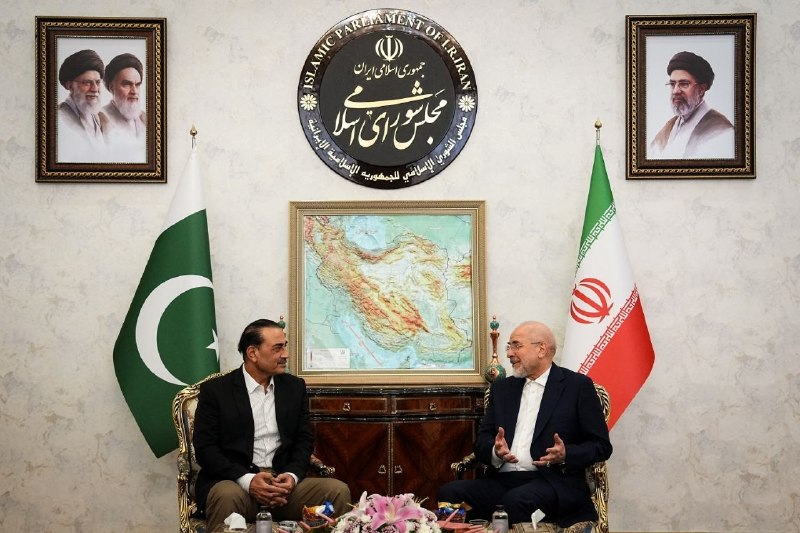
At roughly 16:36 UTC on 24 August 2026, Iran's Parliament Speaker Mohammad Bagher Ghalibaf sat down with Pakistan Army Chief Field Marshal Asim Munir in Tehran and used the occasion to declare that Iran will not yield to foreign pressure, while accusing the United States of repeatedly failing to honour the so-called Islamabad memorandum. The exchange, reported within the hour by Iranian state outlets IRNA and PressTV, was framed as a regional-stability consultation but functioned as something closer to a coordinated public airing of grievance: Washington, Ghalibaf argued, is not living up to commitments Tehran believes it signed up to, and the Islamic Republic is not in the business of bending.
Ghalibaf's remarks land at a delicate moment. The Islamabad memorandum, the framework both sides reference in such encounters, has become shorthand for an attempted de-escalation channel between Washington and Tehran, and any public accusation of breach from a figure of Ghalibaf's standing is itself a signal. The choice of Munir as the audience is not incidental. Pakistan borders Iran, sits adjacent to the Gulf shipping lanes the United States patrols, and maintains working military relations with both Washington and Tehran; the meeting gives Iranian messaging a Pakistani civilian and military audience simultaneously.
The line Tehran is drawing
Ghalibaf's core complaint, as relayed by IRNA and PressTV on 24 August, is that the United States has not honoured what was agreed in Islamabad. He framed Iranian posture as non-negotiable: pressure will not produce concessions, only entrenchment. The phrasing matters. The speaker of Iran's parliament is not the negotiator who would sit across from an American envoy, but he sets the rhetorical ceiling above which any Iranian delegation operates. When he says Iran will not yield, he is establishing the boundary of what the country's political class considers acceptable at the negotiating table.
The explicit invocation of the memorandum, by name, is the part most likely to land in Washington. By tying non-yieldance to a specific document and a specific alleged breach, Tehran gives itself a legal-rhetorical anchor: any future escalation can be cast as a response to American bad faith rather than Iranian intransigence. It is the same framing Tehran has used in previous rounds when sanctions or designations were imposed during talks.
What the meeting actually was
Open Source Intel described the encounter as a discussion of regional stability, with Munir, the senior Pakistani military officer, present in his capacity as army chief. The substantive content of the meeting, beyond the public statements, is not specified in the available reporting. What is specified is the choreography: the head of Iran's legislature meets the head of Pakistan's army in Tehran on a Monday afternoon, and within ninety minutes the same message appears across IRNA, PressTV and the open-source channels monitoring both.
That synchronisation is itself a tell. Iranian messaging rarely moves this quickly through multiple state and quasi-state channels unless the talking points have been pre-coordinated. Ghalibaf's appearance alongside Munir gives the line a regional seal: it is not just Tehran talking to Washington, it is Tehran talking to a neighbouring capital that also has equities in any de-escalation arrangement.
The structural read
Stripped of the diplomatic packaging, what is on display is the routine mechanics of de-escalation under stress. A bilateral channel exists, a written memorandum underwrites it, and one side is now publicly declaring that the other side has not delivered. This is not unusual in the file. What is worth noting is the venue: Ghalibaf used a bilateral meeting with a Pakistani military counterpart to deliver the message, rather than a press conference, an MFA briefing or a parliamentary address. The choice imports Pakistan into the dispute as witness, and possibly as interested party if the channel unravels further.
The underlying pattern is the one the region has run through several times in the past decade: a framework is agreed, partial compliance is observed, public recrimination follows, and the question becomes whether the framework survives the round of bad feeling or is allowed to lapse. The Islamabad memorandum's resilience is the substantive question behind today's headline. As of 24 August, both Iranian and American spokespeople are talking past each other through the document rather than about it.
Stakes and what to watch next
The immediate audience for Ghalibaf's remarks is not Washington but Iran's own negotiating class, the Pakistani military and intelligence establishment, and the Gulf states that will read the transcript closely. For Tehran, the value of declaring non-yieldance publicly is to lock in a domestic position before any back-channel movement can be misread as concession. For Islamabad, the value of hosting the army chief in Tehran is to remain useful to both sides at a moment when both sides are unhappy with each other.
Two dates are worth watching. The first is any follow-up MFA briefing in Tehran or Washington that re-states or walks back the breach allegation; the second is whether the memorandum itself is cited, by name, in the next round of US Treasury designations or diplomatic notes. If the document survives the next seventy-two hours without a public retraction or a clarifying statement from a US side, the position Ghalibaf has laid down will become the working Iranian line until something displaces it.
The sources do not specify the substantive content of the closed-door discussions between Ghalibaf and Munir beyond the public statements on regional stability and the memorandum. Independent confirmation of the meeting's content from a Pakistani military spokesperson is also not present in the available reporting; the framing above draws on the Iranian state and open-source channel coverage that was the basis for the original Telegram thread.
Desk note: Monexus framed this as a coordinated messaging event anchored by a named document, rather than as a fresh diplomatic rupture. The wire reporting on Iran–US channels has tended to read Tehran's public posture through the lens of provocation; this piece foregrounds the venue choice (a bilateral with Pakistan's army chief) and the rhetorical function of citing a specific memorandum by name.
Wire provenance
This editorial synthesis draws on the following public wire/social posts:
- https://t.me/Irna_en/38448
- https://t.me/osintlive/566368
- https://t.me/presstv/204019
- https://t.me/ClashReport/93508