Tehran's gas field announcement lands on the same day Washington readies its 'economic D-Day' against Iran
Iran unveiled a major new gas field hours before the US rolled out what Treasury Secretary Scott Bessent called the 'single greatest financial offensive ever marshaled,' as both sides appear to have run out the clock on a 60-day ceasefire window.
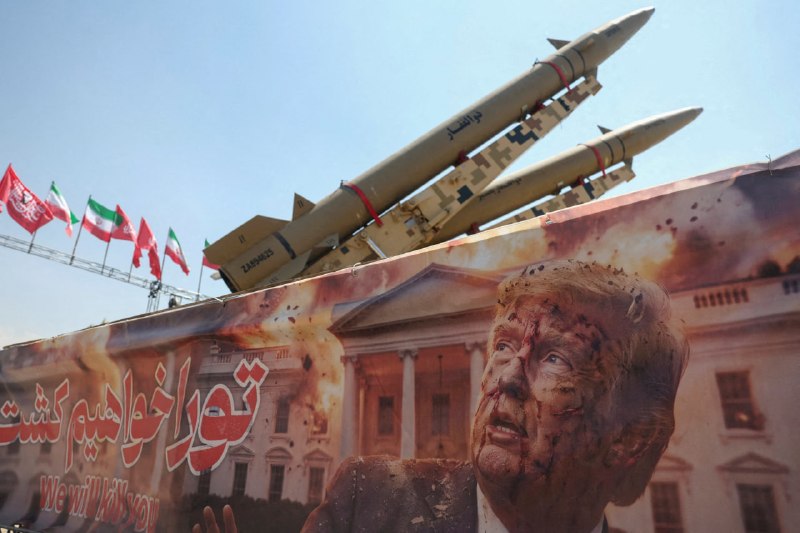
At 11:35 UTC on 24 August 2026, Deutsche Welle reported that Washington was preparing to unveil a new package of sanctions against Iran, framed by the Trump administration as the "single greatest financial offensive ever marshaled." Treasury Secretary Scott Bessent was to lead the rollout, in what Donald Trump had dubbed "economic D-Day." Hours later, at 11:39 UTC, Iran's-aligned outlet The Cradle reported that Tehran had announced the discovery of a massive new gas field, with Iranian officials publicly warning that any US or Israeli strike on Iranian power infrastructure would trigger the collapse of the global energy industry.
The sequencing is not incidental. On the same day the United States escalated its financial siege, Iran announced a hydrocarbon discovery pitched directly at the global energy market, and reiterated its threat to disrupt it. Both governments are now operating in the open, having apparently exhausted a 60-day ceasefire window that had been the formal mechanism for ending the six-month war, according to CNBC's 02:25 UTC dispatch on 24 August.
The 60-day window has closed
CNBC, citing its own reporting on the Iran file, said both Washington and Tehran had missed the window to reach a deal, "closing off the formal truce mechanism to end the six-month war." The wire framed the new sanctions package as the next move in an economic contest that has run alongside the kinetic one since fighting began roughly six months ago. CNBC's report also flagged a parallel escalation at sea, with Tehran threatening ship seizures in the Strait of Hormuz, the chokepoint through which a significant share of seaborne oil and liquefied natural gas transits.
Deutsche Welle carried Washington's framing of the package without qualification: that the new measures would be "the single greatest financial offensive ever marshaled," and that the broader conflict was entering what Trump described as its "endgame." The DW report also carried Tehran's read of the same package: that any third country supporting the measures would be treated as a participant in the conflict.
The gas card
The Cradle's midday report is a single Telegram post rather than a multi-source investigation, and the outlet's positioning on the Iran file is well documented; treat the discovery claim as Tehran's announcement, not as an independently confirmed reserve estimate. Even on those terms, the political signal is clear. Iranian officials chose to go public on the same day the US Treasury was unveiling financial measures designed, in Bessent's formulation, to cripple Iran's economy. The implicit message: Tehran has an energy card to play, in the form of both upstream reserves and downstream disruption in the Strait of Hormuz.
The Cradle post pairs the discovery with an explicit threat. It says Iran has vowed to "collapse the global energy industry" if the US or Israel strikes Iranian power sites, framing the energy system itself as a deterrence asset rather than a sector to be defended. That posture is not new to Iranian declaratory policy, but the timing converts a familiar talking point into a contemporaneous response to a specific sanctions package.
What the economic offensive actually targets
The available source items do not specify which entities, sectors, or counterparties the new US package will hit. Treasury's previous Iran measures have typically combined designations of Iranian banks, shipping, and front companies with secondary sanctions aimed at third-country buyers of Iranian crude. CNBC's framing suggests this rollout is intended to widen that perimeter rather than to substitute for it, with Bessent positioned as the public face of an "economic D-Day" pitch.
Deutsche Welle's read is consistent with that. The wire's headline frames the war as entering "endgame," a word choice that, in this administration's lexicon, has tended to precede maximalist economic moves rather than negotiated exits. DW also relays Tehran's counter-frame: that supporting the measures is an act of participation in the war, language that pre-positions sanctions as a casus belli for Iranian retaliation against third parties.
Stakes over the next 72 hours
Read together, the two posts sketch a scenario in which the financial siege and the energy threat escalate in lockstep rather than in sequence. The Cradle post was filed four minutes after DW's report. The CNBC dispatch, filed nine hours earlier at 02:25 UTC, had already flagged Tehran's threat to seize shipping in the Strait of Hormuz, an option that historically translates into insurance premium spikes, rerouting, and refinery margin pressure within days.
Monexus analysis: the convergence on a single day of a sanctions unveiling, an energy announcement, and a renewed ship-seizure threat is consistent with both governments preparing publics for a phase of the conflict in which energy markets rather than battlefield outcomes become the principal pressure point. The structural pattern is familiar from previous sanctions-and-counter-sanctions episodes: each side uses the other's move as the trigger for a pre-planned next step, in a sequence where escalation feels reactive but is, in practice, scripted.
The forecast question is whether the new US package includes secondary measures tight enough to push China's and India's Iranian crude imports below the threshold that keeps Iran's export revenue politically survivable, and whether Iran's response is calibrated to maximise insurance and freight disruption without producing a coalition response that overrides the threat. The available source items do not specify either. What they do specify, with consistent dating on 24 August 2026, is that both governments have chosen this Monday to signal that the ceasefire window is closed and a different phase is open.
Desk note: the wire frame on 24 August centred on the sanctions package and the missed 60-day window, with Tehran's energy counter-move relegated to Iran-aligned channels. Monexus treats both as first-order facts and reads the gas-field announcement as a calibrated signalling event rather than a reserve discovery in the geological sense.
Wire provenance
This editorial synthesis draws on the following public wire/social posts:
- https://www.dw.com/en/us-to-unveil-new-iran-sanctions-says-war-entering-endgame/a-78483909?maca=en-rss-en-all-1573-rdf
- https://www.cnbc.com/2026/08/24/us-iran-war-trump-hormuz-bessent-economic-sanctions-.html
- https://t.me/TheCradleMedia/66715
- https://t.me/thecradlemedia/66715