Tehran draws red lines as Washington readies fresh Iran sanctions
On 24 August 2026, Iran's army chief and foreign ministry spokesman publicly vowed a firm response to any aggression, ahead of a US sanctions package that pushed oil prices lower in early Asian trade.
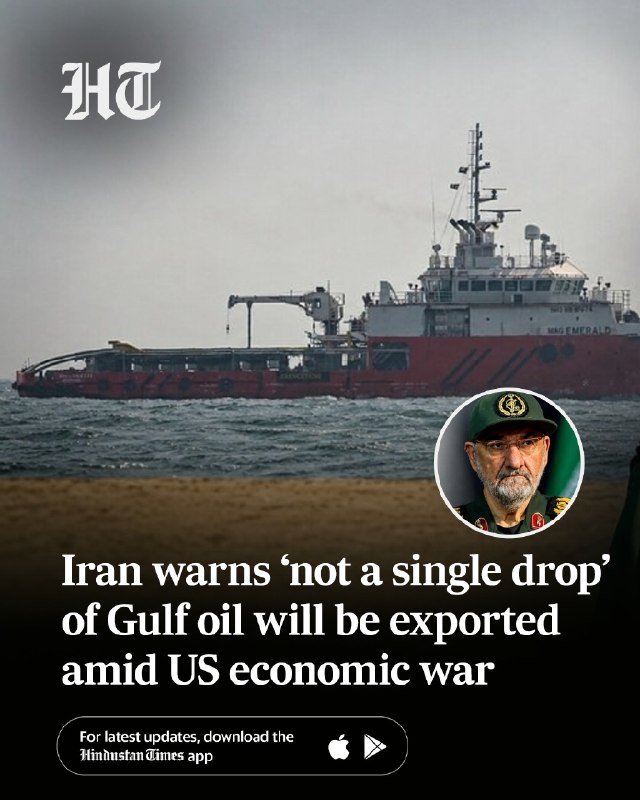
At 07:53 UTC on 24 August 2026, Iran's foreign ministry spokesman told state broadcaster Press TV that Tehran would not let aggressors "to dictate terms for ending war." Ninety minutes later, at 09:22 UTC, Iran's army chief commander used the same Press TV feed to say the armed forces would "firmly respond to any aggression and defend national security." The Reuters headline at 08:45 UTC, "Oil falls as US prepares to unveil new Iran sanctions," had by then already moved the market. The sequencing matters: Tehran's hard line preceded the visible price reaction, and the price reaction preceded the army chief's hard line.
This is the familiar Tehran-Washington feedback loop in compressed form. A US sanctions package moves toward publication, Iranian officials broadcast red lines, traders price the announcement, and the next round of signalling calibrates to whichever entities Washington actually names. What the available source items establish is the choreography. What they do not establish is the substance of the package, the legal instrument, the named entities, or the third-country buyers in the crosshairs, which is to say, almost everything that will determine whether the next seventy-two hours are routine enforcement theatre or the prelude to a sharper escalation.
The package Reuters says is coming
Reuters reported at 08:45 UTC on 24 August that oil futures had fallen in early Asian trade, with the wire attributing the move to "US prepares to unveil new Iran sanctions." The Reuters headline does not specify Brent or WTI, does not name the entities, sectors, or jurisdictions expected to be designated, and does not detail the legal instrument Washington intends to use. Middle East Eye, citing its own live coverage at 09:10 UTC, added that Iran had warned of "consequences" for countries joining the US sanctions architecture; the Middle East Eye bulletin does not specify who carried the Iranian warning, in what forum, or on what authority.
The available source items do not specify whether the package is a Treasury Office of Foreign Assets Control designation round, a State Department advisory, an executive order, or some combination. They also do not specify whether the package is unilateral, coordinated with European partners, or designed to interact with any residual UN architecture after the October 2025 status of UNSCR 2231. Each path produces a different compliance environment for Asian refiners and a different Iranian response curve, and the public signalling on both sides, defiant in Tehran and punitive in Washington, will tighten into specifics only once the package text is published.
Tehran's two-line signal
The Press TV Telegram feed on 24 August carried two statements from named Iranian officials in roughly ninety minutes. The first, attributed to the foreign ministry spokesman, refused to accept dictated end-conditions. The second, attributed to the army chief commander, framed any aggression against Iran as something the armed forces would meet with force. Both statements were carried on Press TV, a state broadcaster, which is itself a fact about audience: the messaging is being directed through a domestic-facing channel as well as outward.
Deutsche Welle reported on the same day that Iran is in the grip of a medicine crisis in which a single chemotherapy session can cost roughly six times the monthly minimum wage, with doctors describing delayed and abandoned treatment. The available source items do not specify the scope of the chemotherapy-cost figure beyond the single-session comparison, and the medicine-crisis reporting is a parallel story, not a direct contradiction of the military signalling. The two together, however, do set the material backdrop against which the rhetoric lands.
The warning to third countries
The most consequential line in the Middle East Eye bulletin is the explicit naming of "countries joining US economic sanctions" as targets for Iranian retaliation. The available source items do not specify which countries Tehran has in mind, nor do they identify the Iranian official or channel through which the warning was issued. The phrasing points, by implication, at large Asian buyers of discounted Iranian crude, including Chinese, Indian, and Turkish refiners, but the bulletin itself does not name them.
Monexus analysis: the structure of the warning suggests Tehran is attempting to raise the political cost of compliance for third-country buyers rather than credibly threatening material retaliation. The phrase "consequences" is the kind of open-ended language governments use when they want to leave room for both action and backdown. The threat value is in the ambiguity, not in any specific mechanism the warning commits Tehran to. Whether Beijing, New Delhi, and Ankara treat it as such depends on factors the source items do not address, including the specific entities named in the forthcoming US package and the political calendar in Washington.
What the next seventy-two hours look like
Expect three things if the announced package lands on the timeline Reuters implies. First, the US announcement itself, which will set the legal perimeter of the new package and disclose the named targets. Second, an Iranian response from the foreign ministry, calibrated to whichever entities are designated, with the foreign ministry spokesman likely to lead, given that the 07:53 UTC Press TV item already established the rhetorical baseline. Third, market reaction in oil benchmarks and in shipping-insurance premiums for tankers calling at Iranian terminals, which will give the cleanest read on whether the package is biting or is being routed around.
The nuance worth holding is also where the source material thins. The available source items do not specify whether the new sanctions will be unilateral US measures, coordinated with European partners, or designed to interact with residual UN architecture after October 2025. They do not specify the named entities, the legal instrument, or the third-country compliance horizon. Until the package text is published, both sides are signalling into a vacuum, and what each side wants the other to believe is doing most of the work in shaping the next round.
Wire provenance
This editorial synthesis draws on the following public wire/social posts:
- https://t.me/presstv/203976
- https://t.me/presstv/203969
- https://www.middleeasteye.net/live-blog/live-blog-update/iran-warns-consequences-countries-joining-us-economic-sanctions?topic=War%2520on%2520Iran&nid=442386&fid=557695
- https://x.com/MiddleEastEye/status/2091815424300077126
- http://reut.rs/4wKpNyA
- https://x.com/Reuters/status/2091809024849092828
- https://www.dw.com/en/iran-s-medicine-crisis-prices-patients-out-of-treatment/a-78455430?maca=en-rss-en-all-1573-rdf
- https://t.me/presstv/203976
- https://t.me/presstv/203969
- https://www.middleeasteye.net/live-blog/live-blog-update/iran-warns-consequences-countries-joining-us-economic-sanctions?topic=War%2520on%2520Iran&nid=442386&fid=557695
- https://x.com/MiddleEastEye/status/2091815424300077126
- http://reut.rs/4wKpNyA
- https://x.com/Reuters/status/2091809024849092828
- https://www.dw.com/en/iran-s-medicine-crisis-prices-patients-out-of-treatment/a-78455430?maca=en-rss-en-all-1573-rdf