Norway tells Brussels: the Barents drill plan moves with or without you
Oslo is appealing a landmark climate ruling to its Supreme Court and signalling that Arctic drilling will continue regardless of EU objections, putting transatlantic energy policy on a fresh collision course.
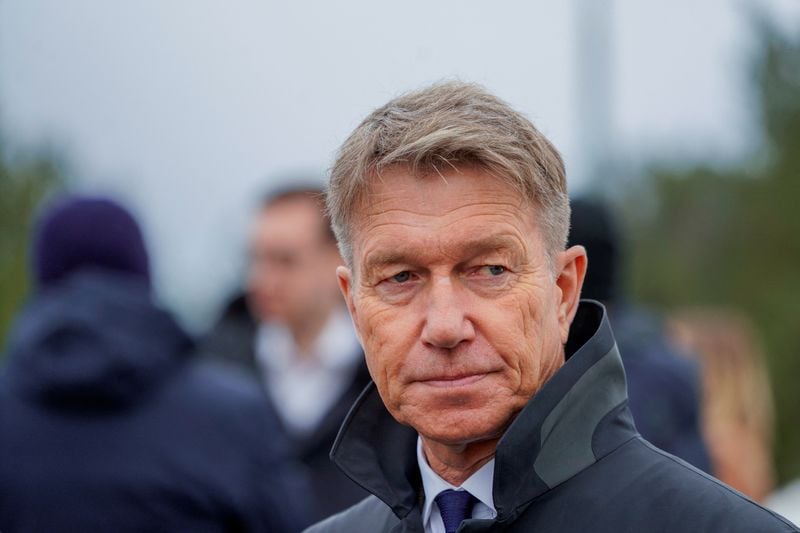
Norway's government asked the country's Supreme Court on 24 August 2026 to overturn a lower-court verdict that found three of its oil and gas licences in the Barents Sea unlawful on climate grounds, doubling down on a drilling programme it has now publicly uncoupled from European Union preferences. The appeal, reported by Reuters, comes alongside a parallel signal from Energy Minister Terje Aasland that Arctic exploration will proceed regardless of where Brussels lands on the same question.
The twin moves frame a quiet but consequential split: a wealthy European democracy telling both its judiciary and its largest trading partner that fossil-fuel licensing is a sovereign prerogative, and that the courts of peer states, along with EU regulatory pressure, will not slow it down. It is a posture that puts European climate diplomacy on notice and gives the rest of the continent's hydrocarbon producers a model to copy.
Two fronts, one message
The Supreme Court appeal targets a December 2024 ruling by the Oslo District Court, later affirmed by the Borgarting Court of Appeal, which found that three Barents Sea licences issued in 2016 and 2017 were invalid because their climate impact had not been properly assessed. The Norwegian government argues that the licences are lawful under domestic petroleum law and that the courts overstepped by reading climate-rights jurisprudence into licensing decisions. According to Reuters, the case now heads to Norway's highest bench.
The same Reuters reporting, carried by Investing.com, quotes Aasland saying Norway will continue Arctic drilling whatever position the EU adopts. The energy ministry has framed the licences as a cornerstone of European energy security at a moment when Russian pipeline gas has been off the table since 2022 and LNG imports have reconfigured the continent's import map. Critics counter that new Barents production is structurally surplus to European demand and is being developed for export markets with weaker carbon rules.
The legal lever, and why Oslo thinks it can win
The Norwegian climate movement's legal route has been the most-watched green-litigation track outside the Dutch Shell and German Constitutional Court files. Greenpeace Norway and the environmental group Natur og Ungdom, backed by the German branch of Greenpeace, argue that the licences violate both the Paris-aligned commitments under Norway's Climate Change Act and the right to a healthy environment implied by the Norwegian constitution. The government's appeal will press the formalist line: petroleum licensing is a regulatory act tied to technical criteria, not a carbon-budget decision.
Oslo's confidence is not baseless. Norway's Supreme Court has historically been cautious about converting international climate commitments into binding domestic obligations absent explicit legislative text. A reversal at the top would also relieve the political pressure that has built around every successive licensing round since the 2024 verdict. A confirmation of the lower courts' reasoning would, by contrast, force a restructuring of the licensing regime that successive governments have used to underwrite the country's sovereign wealth fund.
What the EU has actually said, and what it hasn't
Brussels has not formally blocked Norwegian Arctic drilling. The European Commission has, however, taken a harder line on imported fossil fuels under the Corporate Sustainability Due Diligence Directive and the Carbon Border Adjustment Mechanism, both of which begin charging importers on embedded emissions in 2026. Norwegian officials argue that domestic production, governed by one of the world's strictest offshore environmental regimes, is preferable to importing LNG from jurisdictions with weaker oversight.
That framing sits uneasily with the EU's own climate trajectory. Norway is part of the EEA, contributes to EU climate targets through the Effort Sharing Regulation, and is bound by the Paris-aligned obligations under that agreement. The Aasland comments reported on 24 August leave the practical coordination unsettled. What the available source items do not specify is whether formal EU objections have been lodged through the EEA joint committee, or whether Brussels considers the issue a bilateral trade-and-energy matter rather than an infringement question.
The structural read
Read together, the appeal and the minister's comments look less like a defensive manoeuvre and more like a strategic declaration. European energy demand has not collapsed the way post-2022 modelling assumed, electrification is still scaling, and Norway sits on the largest remaining conventional reserves in western Europe. Licensing those reserves is also fiscal: petroleum revenues flow into the Government Pension Fund Global, which is now the world's largest sovereign wealth fund by assets.
Monexus assessment: the appeal is timed to coincide with a harder EU line on imported fossil emissions, and the message is that domestic political control over licensing will not be subordinated to either judicial review or Brussels' preferences. If the Supreme Court reverses, the precedent will encourage further licensing in sensitive Arctic acreage; if it upholds, the fight moves into the EEA framework and the WTO carbon-border regime. Either way, the question of who gets to decide Norway's remaining petroleum reserves is now openly contested, and the answer will be watched in Aberdeen, Stavanger, and in every Arctic-adjacent capital with a comparable licensing pipeline.
Desk note: this publication frames this as a sovereignty-versus-climate-rights story centred on Norwegian actors and courts, rather than as an EU controversy. Reuters and Investing.com carry the underlying reporting; quoted language is drawn from those wire items.
Wire provenance
This editorial synthesis draws on the following public wire/social posts:
- https://x.com/Reuters/status/2091767648967086212
- https://x.com/Reuters/status/2091757422721298456
- https://www.investing.com/news/stock-market-news/norway-will-drill-in-arctic-regardless-of-eus-position-says-energy-minister-4872633
- http://reut.rs/4gP8RCc
- http://reut.rs/4hR02ZE