Macron fast-tracks air-defence support as UK–Ukraine AI deal opens battlefield images to British researchers
On 24 August 2026, Emmanuel Macron pledged faster air-defence missile deliveries, production licences and financial assistance for Ukraine. A separate report said Britain and Ukraine had signed a deal granting UK researchers access to millions of battlefield images for AI defence training.
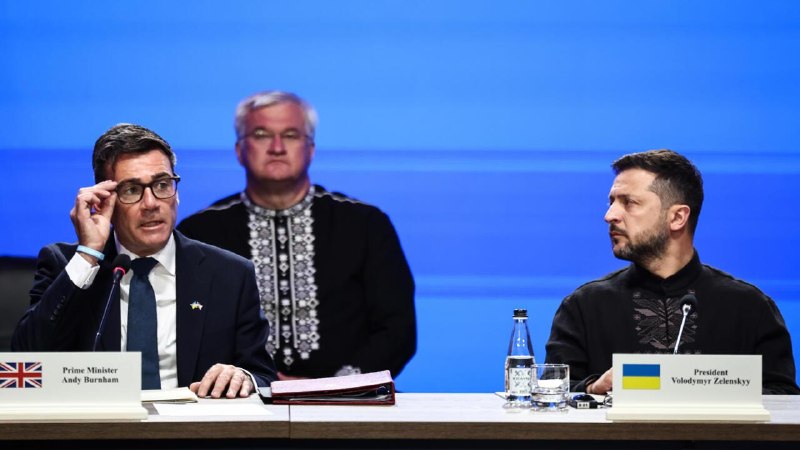
At a meeting of the coalition of the willing on 24 August 2026, French President Emmanuel Macron said France would accelerate deliveries of air-defence missiles to Ukraine, transfer licences for their production, and provide financial assistance. The pledge, reported by SprinterPress at 23:46 UTC, came as Britain and France offered stronger support to Ukraine on Independence Day, according to Reuters.
Hours earlier, a separate report said Britain and Ukraine had signed a deal giving UK researchers access to millions of real-world battlefield images to train AI defence systems. ClashReport published the claim on Telegram at 20:46 UTC. Taken together, the announcements point to a widening European effort that combines immediate military aid with industrial and technological cooperation. But the available source items do not specify delivery schedules, the terms of any production licences, the location of the signing, the agreement’s intellectual-property provisions, or the nature of the research work that will follow.
A coalition pledge with an industrial component
Macron’s package is the clearest immediate commitment in the reporting. The SprinterPress account said France would speed up air-defence missile deliveries, transfer licences for production, and add financial assistance. Reuters separately described the day as one on which Britain and France pledged stronger support to Ukraine as the country marked Independence Day.
The production-licence element deserves attention because it is more than a statement about the number of missiles France can provide. In practical terms, a licence could allow production to continue beyond the initial transfer of weapons or components. That is an assessment of the mechanism, not a claim that a specific production line has already been established. The source item does not identify the missile system, the recipient of the licence, the contractual conditions, or a timetable for implementation.
The same caution applies to the financial assistance. The pledge establishes that France intends to provide support, but the available reporting does not state the amount, the form it will take, or the date on which it will be disbursed. The significance of the announcement therefore lies in the combination of faster deliveries, licensing and financing, rather than in any undisclosed scale or timing.
Britain turns to battlefield data
ClashReport’s Telegram item said Britain and Ukraine had signed an agreement giving UK researchers access to millions of real-world battlefield images. The stated purpose was to train AI defence systems. That is the only verified detail about the arrangement in the supplied material.
Monexus analysis: the claim is consequential because it places data, rather than a weapon system, at the centre of the bilateral announcement. If the arrangement is implemented as described, researchers could use a large collection of battlefield images to develop or test defence-related AI systems. That possibility explains why the deal matters to military research, while also raising questions about access, governance and the use of sensitive material.
The available source does not identify the researchers, the institutions involved, the systems being trained, the source of the images, or the safeguards attached to their use. It also does not say whether the images are newly created for the project, supplied from an existing Ukrainian archive, or transferred under a particular data-sharing arrangement. Those omissions limit the strength of any conclusion about the deal’s practical effect.
What the announcements do, and do not, establish
The strongest version of the argument is that the two announcements show European support extending across different layers of the war effort. France is offering faster deliveries, production licensing and financial assistance. Britain is reported to be opening battlefield imagery to researchers for AI defence training. One concerns material support and industrial access; the other concerns data and research access.
The counterpoint is that an announcement is not the same thing as an operating capability. Missile deliveries depend on inventories, production and transport. Production licences depend on industrial capacity, regulatory approval and commercial arrangements. An image-access agreement depends on usable data, research access, technical standards and controls over how the material is handled. The source items do not provide evidence that those conditions have been met.
There is also a difference between the level of verification attached to the two reports. Macron’s pledge is described in a social-media post by SprinterPress, while the UK–Ukraine image-access claim appears in a Telegram report. Reuters provides independent support for the broader description of stronger British and French backing, but not for every detail in either account. The result is a clear political signal, not a complete operational picture.
The next evidence to watch
The first test will be whether France’s promised acceleration produces a specified delivery timetable or a publicly identified licensing arrangement. The second will be whether the UK–Ukraine agreement produces a documented research programme, technical standard or training outcome tied to the battlefield images. Until those details appear, the announcements should be read as commitments whose implementation remains to be established.
The most important uncertainty is the boundary between access and control. Access to millions of images can be useful for AI research, but the source items do not establish who may use them, for what purpose, under what security conditions, or with what restrictions on onward sharing. They also do not establish whether Ukrainian researchers or institutions have a formal role beyond the bilateral description.
The strategic question is therefore straightforward. European governments are expanding the instruments of support beyond immediate deliveries, but the value of the new instruments will depend on whether they become repeatable industrial and research capacity. The next meaningful signal will not be another pledge. It will be a contract, a production schedule, a trained system or a published technical result.
Desk note: Monexus used three source items published on 24 August 2026, including two X posts and one Telegram report. Where the evidence was relay-only or incomplete, the article attributes the claim and does not infer the signing location, participating laboratories, contract terms, operational effects or wider battlefield context.
Wire provenance
This editorial synthesis draws on the following public wire/social posts:
- https://x.com/SprinterPress/status/2092035861198123041
- https://x.com/Reuters/status/2091996510456086877
- https://reut.rs/4gOySl3
- https://t.me/ClashReport/93575