Bessent unveils 'Operation Economic Outcast,' a financial pressure campaign against Tehran
Treasury Secretary Scott Bessent on 24 August 2026 announced an 'unprecedented' sanctions drive targeting Iran's financial networks and any third-country 'enablers,' with the rollout branded as 'Economic D-Day' in coverage relayed by BellumActa.
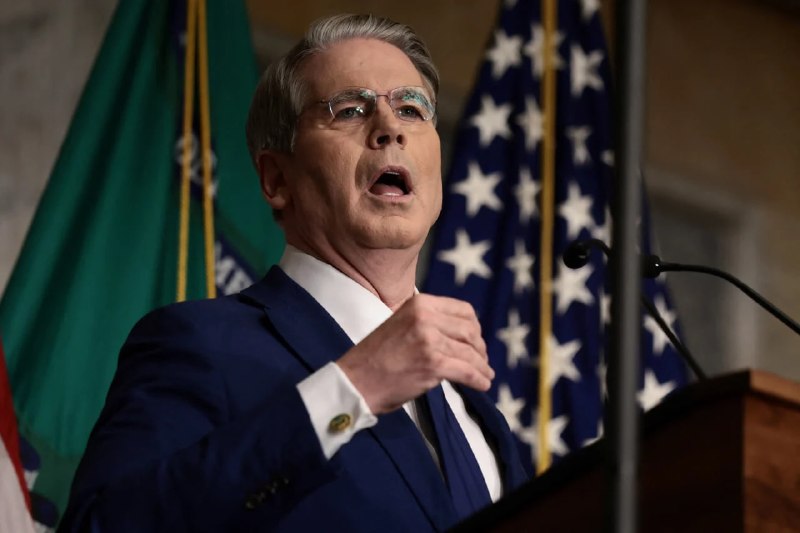
Treasury Secretary Scott Bessent, on 24 August 2026, rolled out a new sanctions architecture branded "Operation Economic Outcast," a campaign the U.S. Treasury says is designed to "cripple" Iran's economy by going after Tehran's financial plumbing and any third-country intermediaries that keep it running. Reporting relayed by OANN, the Middle East Spectator channel, the intelslava feed and several other geopolitical Telegram channels shows the announcement was framed in some of the coverage as "Economic D-Day" against the Islamic Republic, with President Donald Trump personally tied to the launch. The campaign's reach, judging by the language Treasury used, is at least as much about Iran's external enablers as it is about Iranian state entities themselves.
The bet behind the brand is straightforward. Past U.S. sanctions on Iran have been partial: tight enough to constrain oil exports and banking access, but porous enough that Chinese, Turkish and Emirati counterparties have kept revenue trickling in. By putting the word "outcast" in the operation's name, the administration is signalling that the target is not merely Iran but the network of buyers, shippers, refiners and front companies that absorbs Iranian crude and settles Iranian trade. Whether the legal and diplomatic machinery is in fact broader than what has gone before is the question the next 72 hours will answer.
What Bessent actually said
Multiple channels carried the same core formulation. According to the Middle East Spectator relay, Bessent "officially announced the start of 'Operation Economic Outcast' against Iran," and the channel paraphrased the launch as an "economic isolation campaign that includes sanctions, secondary sanctions, and cutting off every economic lifeline." The BellumActa feed, in two near-simultaneous posts, quoted Bessent as saying: "President Trump has taken action that his predecessors have long deferred, and under his leadership, America is no longer managing the Iranian threat." A second BellumActa item called 24 August "Economic D-Day against the Islamic Republic of Iran," with the post opening with Bessent's framing: "Today, at President Trump's direction…" Trump himself, per a third BellumActa relay, was cast as the author of the operation's launch, with that post describing Trump as announcing an "Economic D-Day against the Islamic Republic of Iran, as American pressure on Iranian financial capabilities reaches another level."
The OANN relay of the announcement leaned on the verb "cripple." The intelslava and rnintel channels both flagged the word "unprecedented." The rnintel relay framed the rollout as "an economic onslaught against Iran's financial capabilities," and BellumActa's D-Day-branded items carried the same rhetorical register, suggesting the Treasury communications shop has decided the campaign needs a marketing edge as much as a legal one. Bessent's operational language, where quoted directly, focuses on Iran's "financial networks" and the countries and firms that sustain them.
The counter-read from Tehran and the buyers
The source items in this thread do not include an Iranian Foreign Ministry, Central Bank or presidency response to the announcement. The available Telegram posts do not contain an Iranian state-media readout of the launch, and they do not specify whether Tehran issued a counter-statement in the hours after Bessent spoke. When Iranian state outlets have responded to past U.S. Treasury actions, the standard line carried in earlier cycles is that sanctions are a continuation of "economic warfare" and that Iran will rely on its own resilience and on partners outside the U.S. financial perimeter; that framing is not present in the current source set, so this article cannot say whether Tehran is signalling continuity with that line, escalation, or silence.
The structural counter-read from outside Iran is more interesting than any Iranian line itself. Sanctions on Iran's oil exports have, for the better part of a decade, been routed through a quiet ecosystem of Asian teapot refineries, Turkish trading houses, Malaysian storage intermediaries, and UAE-based re-exporters. The framing of "Operation Economic Outcast" implies Treasury intends to lean on those counterparties, not just on Iranian fronts. Whether it can is the campaign's real stress test.
The pattern this fits
Monexus analysis: read against the last decade of U.S. sanctions policy, "Economic Outcast" is less a new doctrine than an escalation of one already in use. Secondary sanctions against buyers of Iranian oil, against intermediary networks linked to Iran's security services, and against shippers using forged bills of lading have been the bread and butter of OFAC enforcement in past cycles. What the Bessent announcement adds, in tone at least, is a public branding exercise that ties the next round of designations explicitly to the President. The dollar's role as the spine of the global financial system is what makes this kind of campaign possible, and what makes its effectiveness turn on the willingness of non-U.S. firms to choose access to U.S. banks over access to Iranian trade.
The administration's framing of "enablers" is also a tell. By naming the third-country side of the equation in the announcement itself, Treasury is signalling that the first wave of designations may be aimed at foreign firms as much as at Iranian ones. If the early designations follow patterns seen in earlier cycles, the most consequential question is not what hits Iran but what hits refiners in countries that have, to this point, treated Iranian crude as a price arbitrage.
What to watch this week
Three threads matter over the next 72 hours. First, the actual designations: the U.S. Treasury publishes SDN updates on its public list, and the specific names added in the first wave will tell readers whether "enablers" means a handful of front companies or a broader sectoral move. Second, Asian buyer behaviour: independent tanker-trackers and the monthly crude-sourcing disclosures of major refiners are the most reliable read on whether Iranian flows actually contract. Third, the diplomatic fallout in the Gulf and in Turkey, where the political cost of being publicly named as an enabler is real.
The headline-grabbing language is easier to issue than to enforce. The campaign's credibility will be measured not by how many designations Treasury announces but by whether Iran's seaborne and overland oil flows actually move in the months that follow. Monexus will be tracking both the legal texts and the independent shipping data, because in this corner of sanctions policy the gap between announcement and effect is where the story lives.
Desk note: Monexus carried the Treasury announcement as reported in the channel feeds, separating Treasury's own verbs ("cripple," "unprecedented," "outcast") from the D-Day branding that appears in BellumActa's relay of Bessent's remarks and Trump's accompanying statement. The available source items do not specify an Iranian state response, and this article does not infer one.
Wire provenance
This editorial synthesis draws on the following public wire/social posts:
- https://t.me/OANNTV/17117
- https://t.me/intelslava/93133
- https://t.me/rnintel/65724
- https://t.me/Middle_East_Spectator/36037
- https://t.me/GeoPWatch/38779
- https://t.me/BellumActaNews/176648
- https://t.me/BellumActaNews/176647
- https://t.me/BellumActaNews/176646