Shein returns to the public markets, this time with a Hong Kong price tag and a $1.8bn ask
After abandoned filings in New York and London, Shein opened a Hong Kong listing of up to $1.8 billion on 24 August 2026, valuing the fast-fashion group at as much as $27 billion and reserving up to $3.5 billion for a small circle of pre-IPO backers.
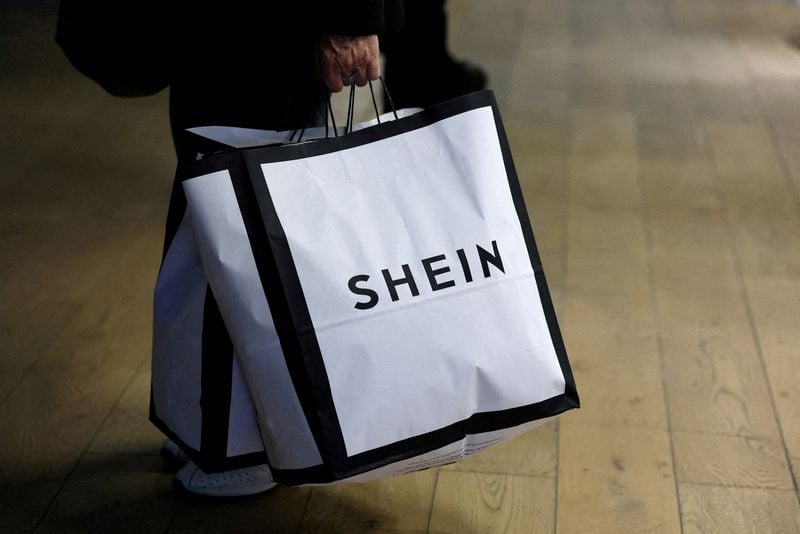
Shein opened bookbuilding in Hong Kong on 24 August 2026 with an indicative valuation of up to $27 billion and a target raise of as much as $1.8 billion, ending a years-long detour through New York and London and giving the fast-fashion platform its first proper listing window in the city that actually sells what it makes. Reuters put the price talk at the high end of a range that had been re-cut repeatedly over the summer; the company is also reserving up to $3.5 billion of upside for a small circle of pre-IPO investors who agreed to back the deal ahead of the formal launch.
The Hong Kong float is not a comeback story. It is a reroute. Investing.com's running IPO chronology tracks Shein's path from a New York filing, through a London attempt, and finally to Hong Kong; the listing has landed in the one exchange where the company already had political cover and a familiar sell-side bench. The deal is a stress test, not just for Shein, but for Hong Kong's claim that it can absorb the listings nobody else will take.
The price, the buyers, the float
Reuters reported on 24 August that Shein is targeting an up-to $1.8 billion float, with a valuation range that puts the upper bound near $27 billion. That is materially below the $66 billion private mark Shein carried at its 2023 peak, as documented in Investing.com's history of the company's pursuit of a public listing. It is also, by the standards of consumer-internet IPOs in 2026, a comparatively modest raise: Shein is selling a slice, not a stake. The structure matters. A small float with a tight price-to-sales multiple is a way to clear the tape without surrendering the discount that early backers paid for. Reuters separately disclosed that as much as $3.5 billion of the deal will flow back to select pre-IPO investors through cornerstone-style arrangements and side letters, a mechanism that has drawn scrutiny in Hong Kong listings because it lets anchor holders clip a guaranteed return while the public float takes the first-day risk.
Shein is also paying close to $40 million in fees to an expanded roster of Hong Kong banks, according to Investing.com. Bank syndicate size in a Hong Kong book is itself a soft signal: more arrangers means more distribution capacity, but it also means more wallets that need an allocation. For a company that has spent several years telling investors it does not need a window, that is a meaningful tell.
Why Hong Kong, and why now
The political economy has shifted faster than the prospectus. The Trump administration's de minimis tariff exemption, the route that lets Shein ship low-value parcels into the United States without duties, was tightened and then tightened again across 2025, eroding the unit economics that defined the company's first decade, according to Investing.com's chronology. Singapore, the formal headquarters, does not have a deep retail-investor pool and was never a serious listing venue. Hong Kong re-enters the picture because the city's regulator is willing to clear a deal the United States and the United Kingdom would not, and because Chinese-language retail capital is, on the evidence of Alibaba's recent placements, still willing to underwrite consumer-facing names at scale.
The Alibaba context is the tell. On the same day Shein opened its book, Alibaba's Hong Kong shares fell around 8 percent after a $10.2 billion placement designed to fund the company's AI build-out, according to Investing.com's market coverage. That is two large Chinese-consumer stories trading in opposite directions on the same tape: a $10 billion-plus incumbent selling into a discount to fund a strategic pivot, and a foreign-domiciled fast-fashion platform landing with a $1.8 billion primary raise. The price action is the market's read of which capital is fungible. It is not, yet, fully reassuring.
Counter-narrative: this is a deal, not a deliverance
The reading that Hong Kong's boosters want is straightforward: a marquee global name has chosen the city over New York and London, validating Hong Kong's post-2020 role as the natural home for cross-border consumer listings with mainland manufacturing exposure. The reading that the same boosters do not want is also straightforward: Shein has spent several years failing to list anywhere else, and Hong Kong is the venue that said yes after everyone else said no. That is not the same thing as endorsement. The fact that the upper bound of the valuation is roughly a third of Shein's 2023 private peak is, on its face, evidence that the market is not buying the bull case.
The pre-IPO payment structure sharpens the point. Reuters' reporting that up to $3.5 billion will flow back to select backers is not a footnote. It is the deal's defining feature. In plain editorial terms: anchor investors are being offered protection that retail buyers are not, and that protection is being priced into the headline raise. Hong Kong's listing rules permit these arrangements within limits, and there is no allegation in the public reporting that the structure breaches them, but the optics are not flattering for a float that is supposed to mark a fresh start.
The structural read
What the Shein listing actually tests is whether Hong Kong can absorb the listings that New York and London have stopped clearing, and whether the city's capital can do so at price discovery that holds after the bell. The mainstream US framing of late has been that Chinese-supply-chain-adjacent names belong in a discount box, that de minimis reform has broken the Shein model, and that the only sensible outcome is a subdued listing at a haircut. The structural counterpoint, which the deal itself partially ratifies, is that capital is more mobile than politics: Shein's manufacturing footprint is in mainland China, its customer base is global, its listing is in Hong Kong, and the marginal buyer of its shares is a Hong Kong retail investor who reads the prospectus in Chinese. The company has spent several years trying to fit into a US-style disclosure and listing envelope and failed; the Hong Kong envelope fits, for now, on the first try.
There is also a broader industrial-policy angle that the Western wire coverage understates. Shein is one of the largest direct-to-consumer exports of Chinese apparel manufacturing. A subdued Hong Kong valuation is, in effect, a tax on that export channel at the moment when Beijing's industrial-policy focus is shifting toward higher-value categories: EVs, batteries, AI infrastructure. Alibaba's concurrent $10.2 billion raise to fund AI is the larger story. Shein's listing is, in this framing, a small piece of a much bigger re-pricing of Chinese consumer-tech capital. The market is rotating.
What to watch next
The book is open. Pricing and allocation are expected to follow within weeks under standard Hong Kong timelines, with first trading likely in September 2026 if the deal clears the customary regulatory and exchange approvals. Three things will tell us whether the float holds its line. First, the final price within the range: a print at the top would be a vote of confidence in the company's growth narrative; a print at the bottom would confirm that the $27 billion headline is aspirational. Second, the post-listing trading: Hong Kong retail flows have a tendency to swing hard in the first month, and a Shein that drops 20 percent from issue would undercut the message the listing is meant to send. Third, whether the regulatory questions that closed Shein's US and UK files resurface in any Hong Kong context, around the supply-chain disclosures that have to be carried in the prospectus.
The sources do not specify how Shein's Hong Kong prospectus treats the supply-chain sourcing question in detail, and this publication has not independently verified the final disclosure language. That uncertainty is, at this stage, the most consequential unknown. A Hong Kong listing does not exempt a company from the global reputational questions that chased it out of New York and London; it only moves those questions to a venue where the regulatory bar is calibrated differently.
Desk note: Monexus framed the Shein float against the Alibaba placement that ran on the same tape, on the read that the two transactions together are the cleaner story of Chinese consumer capital this week. We treated the $3.5 billion pre-IPO payment as the structural centre of the deal rather than a sidebar, because Reuters' reporting makes clear it is. We have avoided characterising the listing as either vindication or capitulation, because the evidence on price and aftermarket performance is not yet in.
Wire provenance
This editorial synthesis draws on the following public wire/social posts:
- http://reut.rs/4c5LkdJ
- http://reut.rs/45Ot7Oa
- https://www.investing.com/news/stock-market-news/shein-launches-up-to-18-bln-hong-kong-ipo-after-years-of-scrutiny-4872584
- https://www.investing.com/news/stock-market-news/shein-to-pay-nearly-40-million-fees-to-expanded-roster-of-hong-kong-ipo-banks-4872590
- https://www.investing.com/news/stock-market-news/shein-launches-up-to-18-billion-hong-kong-ipo-4872479
- https://www.investing.com/news/stock-market-news/sheins-pursuit-of-an-ipo-from-new-york-to-london-to-hong-kong-4872563
- https://www.investing.com/news/stock-market-news/shein-to-pay-up-to-35-billion-to-select-preipo-investors-around-hong-kong-listing-4872600
- https://www.investing.com/news/stock-market-news/alibaba-shares-fall-8-after-10-billion-hong-kong-share-sale-4872570
- https://www.investing.com/news/stock-market-news/alibaba-stock-slumps-in-hong-kong-after-102-billion-share-placement-to-fund-ai-4872593
- https://x.com/Reuters/status/2091793901136838677
- https://x.com/Reuters/status/2091777562179473746
- http://reut.rs/4c5LkdJ
- http://reut.rs/45Ot7Oa
- https://www.investing.com/news/stock-market-news/shein-launches-up-to-18-bln-hong-kong-ipo-after-years-of-scrutiny-4872584
- https://www.investing.com/news/stock-market-news/shein-to-pay-nearly-40-million-fees-to-expanded-roster-of-hong-kong-ipo-banks-4872590
- https://www.investing.com/news/stock-market-news/shein-launches-up-to-18-billion-hong-kong-ipo-4872479
- https://www.investing.com/news/stock-market-news/sheins-pursuit-of-an-ipo-from-new-york-to-london-to-hong-kong-4872563
- https://www.investing.com/news/stock-market-news/shein-to-pay-up-to-35-billion-to-select-preipo-investors-around-hong-kong-listing-4872600
- https://www.investing.com/news/stock-market-news/alibaba-shares-fall-8-after-10-billion-hong-kong-share-sale-4872570
- https://www.investing.com/news/stock-market-news/alibaba-stock-slumps-in-hong-kong-after-102-billion-share-placement-to-fund-ai-4872593
- https://x.com/Reuters/status/2091793901136838677
- https://x.com/Reuters/status/2091777562179473746