Syria and Israel sit down in Amman, with Washington holding the pen
High-level Syrian and Israeli delegations met in Amman under US mediation on 24 August 2026 to lower the temperature after Israeli strikes on Syrian territory, as Tel Aviv separately eyes the F-47 for its next-generation fighter procurement.
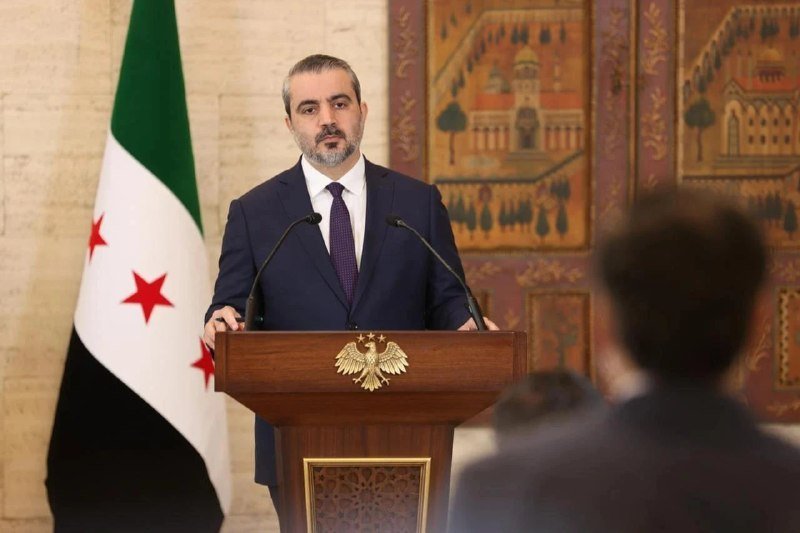
Syria's foreign minister sat across from Israeli officials in Amman on Sunday, 24 August 2026, with the Jordanian capital serving as the backdrop for the first publicly disclosed high-level contact between the two governments in years. The talks, mediated by the United States, were aimed at de-escalating tensions following Israeli strikes on Syrian territory, according to Al Jazeera's breaking-news bulletin filed at 03:56 UTC on 24 August. The meeting lands at a moment when the Israeli air force is also weighing its next major procurement cycle, a question that has quietly begun to intertwine with the diplomatic track.
The news that Damascus and Tel Aviv are talking at all is the story. For the better part of two decades, the channel between them has run through third parties at best and through silence at worst. What changes here is not the substance of any agreement, which the available reporting does not specify, but the fact that a meeting took place at a senior level, in a third country's capital, with a US mediation footprint visible to outside observers. The framework matters: it sets the precedent for what follows if the strikes resume.
The Amman track
Al Jazeera's report identifies the core agenda: de-escalation after Israeli strikes inside Syrian territory, including an incident near the Turkish border that brought an additional regional actor into the immediate geometry of the confrontation. Syria's foreign minister led the Syrian delegation; Israeli officials represented Tel Aviv; the venue was Jordan. The OSINTdefender Telegram channel, summarising the same talks at 04:00 UTC on 24 August, framed the meeting in identical terms: a high-level engagement aimed at lowering the temperature.
The PressTV relay of Syria's state news agency SANA, posted at 05:58 UTC on 24 August, used sharper language, describing the meeting as taking place "while Syrian soil remains under Israeli occupation with full US support." That framing is the Damascus line: talks are happening, and worth reporting, but they are happening against a backdrop that Damascus considers illegitimate. The PressTV/SANA characterisation is a counter-claim; it does not establish territorial facts on its own. What it does establish is that the Syrian government's public position is that talks and occupation coexist, not that one displaces the other.
Two practical questions follow. First, what the mediator actually offered: the sources do not specify whether Washington tabled a written framework, a set of confidence-building measures, or merely a venue and a date. Second, what the strikes were. The reporting names "recent Israeli strikes on Syrian territory" and references a strike near the Turkish border, but the available source items do not specify the target, the date of the strike, or the claimed justification. Until those details are on the record from Israeli or US spokespeople, the diplomatic event and the military event behind it remain only loosely joined in the public reporting.
The F-47 question, sitting one desk over
Roughly twenty minutes before the Amman talks broke into English-language news, the OSINTdefender channel posted a separate item at 03:35 UTC on 24 August noting that Israel "is examining whether the F-47 could eventually be made available to the Israeli Air Force as part of its ongoing procurement efforts for advanced fighter jets." The two stories appear in adjacent slots on the same morning's intelligence ticker; whether they are connected in any operational sense is not something the available sources address.
What the F-47 item does is flag the longer arc. Israel's fighter procurement is a multi-year process with political weight well beyond the airframes themselves. If Tel Aviv is being sounded out on the next-generation US platform, the conversation is happening with a customer that is simultaneously striking inside Syrian territory and sitting down with Damascus in Amman. The diplomatic and the defence-procurement tracks run on different clocks, but they share a customer and a supplier.
Monexus assessment: the F-47 item is best read as a procurement-exploration signal, not a contract announcement. The reporting uses the word "examining," which is the kind of language that precedes, by years in some cases, any actual delivery commitment. Treating it as imminent would overstate what the source says.
What the framing leaves out
The Western-wire version of this story, as carried by Al Jazeera's English service, centres the talks as a de-escalation success: a channel opened, a mediator present, a strike as the proximate cause. The SANA/PressTV version, relayed from Damascus, centres the talks as a concession forced by occupation: Israel is talking because it has been hitting Syrian soil, and the United States is mediating because it enabled those hits. Both readings are coherent with the same set of facts, and both are present in the source material this article is built on.
The structural reading sits underneath both. A US-mediated Syria–Israel channel, opened in a Jordanian capital that itself mediates quietly across multiple Middle East files, is the kind of architecture that absorbs a strike crisis without resolving the underlying dispute. That is useful to Washington, which prefers managed friction to open rupture, and to Amman, which has a strong interest in keeping its border with Syria quiet. Whether it is useful to Damascus or to the populations inside the Syrian territory that has been struck is a separate question, and one the available sources do not address.
The Israeli security concern that motivates strikes inside Syrian territory is treated here as a first-order fact: weapons flows, militia positioning, and the specific strike near the Turkish border are the kinds of events that, in the Israeli government's public framing, justify cross-border action. The reporting this article draws on does not detail what, exactly, Israel said it was striking or why; it records only that strikes occurred and that a meeting followed. That asymmetry is worth naming rather than smoothing over.
What to watch next
Three near-term indicators will tell whether the Amman track has any durability. First, whether there is a second strike inside Syrian territory in the days after 24 August: any such strike is the cleanest evidence that the channel failed to produce even a short-term halt. Second, whether the US State Department puts its name on the meeting in any on-the-record form; the available reporting describes US mediation but does not cite a named US official or department. Third, whether the F-47 procurement thread produces a public Israeli comment in the same news cycle, which would tell readers whether the two stories are being run separately, as the sources suggest, or together.
The sources do not specify the agenda of any follow-up meeting, the composition of any working group, or the duration of any de-escalation commitment. Until those details are on the record, the Amman meeting is best treated as an opening move in a process that has not yet disclosed its own rules.
This article is built on wire-level reporting and Telegram relays from 24 August 2026. The diplomatic substance of the Amman meeting, the targets of the Israeli strikes, and the status of the F-47 examination all require first-party confirmation from the governments involved before they can be treated as established.
Wire provenance
This editorial synthesis draws on the following public wire/social posts:
- https://www.aljazeera.com/news/2026/8/24/syria-israel-hold-us-mediated-talks-in-jordan-to-de-escalate-tensions?traffic_source=rss
- https://t.me/OSINTdefender/19971
- https://t.me/osintdefender/19971
- https://t.me/presstv/203959
- https://t.me/OSINTdefender/19969
- https://t.me/osintdefender/19969