Trump sets 50% Canadian auto tariffs for 2027
President Donald Trump said on 24 August 2026 that US tariffs on Canadian cars, trucks, automotive parts and steel would rise to 50% on 1 January 2027, accusing Canada of taking advantage of the United States.
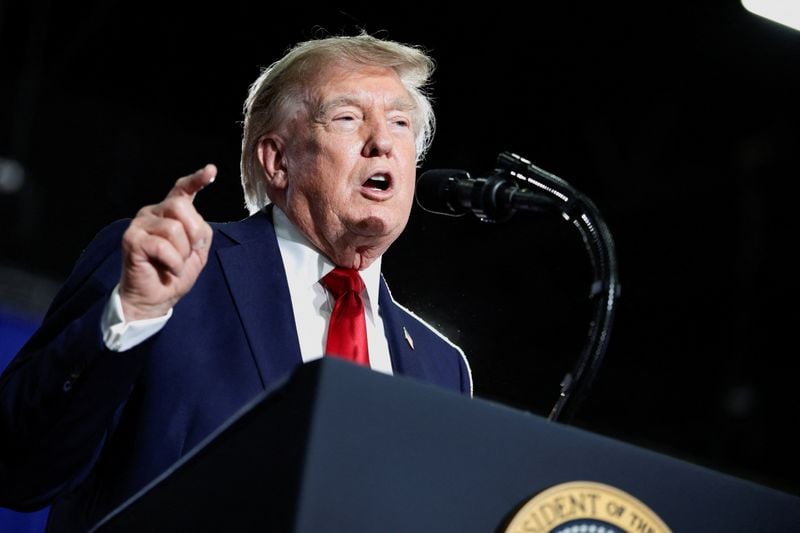
On 24 August 2026, US President Donald Trump announced that tariffs on Canadian cars, trucks, automotive parts and steel would increase to 50% on 1 January 2027. He accused Canada of taking advantage of the United States through agricultural tariffs and a bilateral goods deficit he put at $60 billion. The announcement was carried by CNBC, France 24 and Investing.com after it appeared on social media and in Telegram-based news accounts. By 14:30 UTC, the dispute had moved from a statement about the bilateral relationship to a dated threat against a major industrial supply chain.
Monexus analysis: the consequential feature of the announcement is the date attached to the threat, not the claim that trade relations are deteriorating. The cited reports establish what Trump said would happen on 1 January 2027. They do not establish a 10% baseline, a prior threatened rate, or the legal instrument through which the new measure will be implemented. The available reporting therefore supports a narrower conclusion: the 50% announcement raises the risk to Canadian-US commerce, but its relationship to earlier tariff actions is not specified in the supplied source material.
A dated threat against a cross-border industry
The 50% rate announced by Trump covers cars, trucks, automotive parts and steel imported from Canada, according to CNBC and France 24. France 24 said the increase would take effect on 1 January 2027 and described the announcement as a doubling of auto tariffs after trade talks collapsed. CNBC likewise described the move as an increase to 50% amid an escalating trade war. Those descriptions establish the announcement and its proposed timing, but they do not provide the earlier tariff level that would make the increase calculable from the baseline described in the earlier version of this article.
Trump's stated justification was political as much as commercial. In the report relayed by Republican Intel, he said Canada was taking advantage of the United States through high tariffs on American agricultural products and cited a $60 billion bilateral goods deficit. The source item is a Telegram account's account of the accusation, so the number and the allegation should be treated as claims made by Trump, not as independently established measurements in this article.
The 1 January 2027 date leaves a defined period for governments and companies to respond. The available source items do not specify what Canadian retaliatory measures, if any, followed the 24 August announcement, nor do they identify a formal notice, a waiver process or the precise customs treatment of the affected goods. That limits the claim that can be made about the measure's practical reach. What is clear is that the proposed tariff would cover several linked parts of the North American automotive economy at a rate reported as 50%.
The market signal, without the invented detail
Investing.com reported that US automaker stocks fell after Trump announced the tariff increase. The headline supports that broad market reaction. It does not name the individual companies leading the decline, and the supplied source does not establish traders' precise explanation for the move. Any account that assigns the fall to named companies or to a particular expectation about retaliation would go beyond the evidence available here.
Monexus assessment: the equity reaction is nevertheless important because it shows that the announcement was treated by market participants as potentially material. The sources establish a fall in US automaker shares, but not the magnitude, timing within the trading session, or the exact market mechanism behind it. The safer reading is that investors responded to the prospect of a higher tariff on Canadian automotive goods, without treating the reported decline as proof that the measure will take effect unchanged.
The limited evidence also cuts against presenting the 24 August post as the beginning of the dispute. France 24 framed its report as a tariff increase after trade talks collapsed, while the source material contains references to an earlier 25% rate and to events before 24 August. The supplied material does not provide a complete chronology or reconcile every earlier report with the latest announcement. The defensible account is therefore that the post added a new 50% threat and a 1 January 2027 date to an already tense bilateral trade relationship.
The state language is political framing
Trump also used language about Canada receiving the benefits of being a US state. Unusual Whales relayed that claim as a BBC-based social-media item on 24 August, while Polymarket posted a separate formulation saying Canada would “be treated like a state no longer.” The available items do not establish that Polymarket was summarising the BBC item. They also do not show that either phrase appeared in a formal US government instrument.
Monexus analysis: the state-related vocabulary is best treated as political framing, not as evidence of a change in Canada's legal status or a specific tariff mechanism. The source material supports the fact that the language was used in public posts and relayed by accounts. It does not support claims about annexation, Canadian institutions, the identity of the prime minister, or a formal alteration of the bilateral relationship. Those are precisely the details a restrained account should leave out.
That distinction matters because the tariff claim and the sovereignty claim carry different evidentiary burdens. A date, a rate and a list of covered products can be reported from the announcement. A claim that Canada is seeking the benefits of statehood is a statement by Trump, as relayed in the available source items. Separating those claims prevents rhetoric from being converted into a factual description of government policy.
The unresolved test is implementation
The central question now is not whether Trump issued the threat. It is whether the 50% measure enters into force as described on 1 January 2027, and what Washington and Ottawa do before then. The available reports do not identify the relevant legal notice, the administration of any exemptions, or Canada's response to the specific 24 August announcement. They also do not provide a complete record of the preceding tariff measures, despite the broader trade-war references in the reporting.
A negotiation could change the rate, scope or timing. A further exchange of measures could increase costs for the automotive and steel trade. Those are possible paths, not established outcomes. The supplied sources support only the announcement of a proposed increase and the reported fall in US automaker shares. Any forecast that assigns probabilities to negotiation, retaliation or a company-level impact would therefore exceed the evidence.
The date to watch remains 1 January 2027. Until a formal instrument or a documented reciprocal response establishes more, the 50% announcement should be read as a serious tariff threat embedded in an existing trade dispute, not as a fully implemented measure whose exact relationship to earlier actions can be reconstructed from the available material.
Desk note: Monexus separated Trump's tariff announcement from the separate state-related political rhetoric and did not infer a prior 10% baseline, named company losers, specific production sites or a formal change in Canada's status.
Wire provenance
This editorial synthesis draws on the following public wire/social posts:
- https://t.me/insiderpaper/44106
- https://t.me/insiderpaper/44107
- https://www.cnbc.com/2026/08/24/trump-canada-auto-tariffs-trade-war.html
- https://www.investing.com/news/stock-market-news/us-automaker-stocks-fall-after-trump-announces-canada-tariff-hike-93CH-4873730
- https://www.investing.com/news/stock-market-news/trump-threatens-tariffs-on-all-cars-and-trucks-to-50-amid-canada-trade-spat-4873756
- https://www.france24.com/en/americas/20260824-canada-trump-threatens-double-auto-tariffs-after-trade-talks-collapse
- https://t.me/france24_en/18340
- https://t.me/rnintel/65719
- https://x.com/unusual_whales/status/2091897567629992427
- https://x.com/Polymarket/status/2091886217583280581
- https://t.me/insiderpaper/44106
- https://t.me/insiderpaper/44107
- https://www.cnbc.com/2026/08/24/trump-canada-auto-tariffs-trade-war.html
- https://www.investing.com/news/stock-market-news/us-automaker-stocks-fall-after-trump-announces-canada-tariff-hike-93CH-4873730
- https://www.investing.com/news/stock-market-news/trump-threatens-tariffs-on-all-cars-and-trucks-to-50-amid-canada-trade-spat-4873756
- https://www.france24.com/en/americas/20260824-canada-trump-threatens-double-auto-tariffs-after-trade-talks-collapse
- https://t.me/france24_en/18340
- https://t.me/rnintel/65719
- https://x.com/unusual_whales/status/2091897567629992427
- https://x.com/Polymarket/status/2091886217583280581