Ottawa unveils retaliatory tariffs on US goods; Polymarket prices 2026 deal at 17%
Ottawa announced retaliatory duties on roughly C$20bn of US goods on 25 August 2026 and a C$7.5bn support package, hours after Polymarket traders priced a 2026 resolution at 17% and Donald Trump called Canada the 'most difficult' country he has ever dealt with.
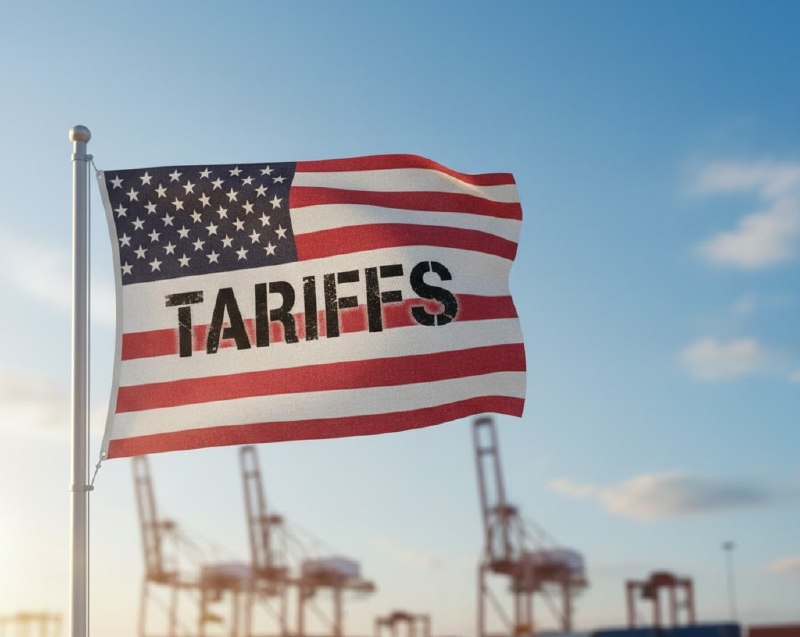
Ottawa disclosed on 25 August 2026 that it will impose retaliatory tariffs on roughly 20 billion Canadian dollars' worth of United States imports, will match new US duties "dollar for dollar, rate for rate," and will introduce a C$7.5 billion support package for affected Canadian workers and businesses, according to a Disclose.tv Telegram post and a relayed mirror on the OSINT Live Telegram channel, both timestamped the same afternoon. The package is the government's response to duties imposed by Washington; the dollar figure, the dollar-for-dollar formulation and the support-package number are all carried in the two cited Telegram items.
Monexus analysis: this is the kind of trade story that looks bilateral and behaves continental. A multi-billion-dollar retaliation between two economies that already share a supply chain tighter than the rhetoric suggests is a stress test not of bilateral trade but of North American industrial integration. The market is telling one story; the politicians, another.
What Ottawa actually unveiled
The two Telegram items describe duties on approximately C$20 billion of US goods, matched to new US tariffs "dollar for dollar, rate for rate," plus a C$7.5 billion support package aimed at workers and companies caught in the crossfire. Disclose.tv's Telegram channel and its OSINT Live mirror carried the announcement into investor-grade feeds the same afternoon, with a Government of Canada URL appended to the post that this publication has not been able to open and verify line-by-line. The cited thread does not enumerate which US product lines are being hit, nor does it spell out whether the relief measures take the form of sector-specific subsidies, loan guarantees, or tax credits; this publication reports the figures and structure as carried by the Disclose.tv and OSINT Live items and flags that readers should treat the precise total, the product coverage, and the relief mechanism as numbers Ottawa will need to confirm in its formal order-in-council.
The Canadian minister quoted by Insider Paper described the country as "united" in the face of US duties, a signal that the federal cabinet is ready to absorb short-term political pain rather than negotiate under duress. Markets read unity in trade fights as confidence: it usually lengthens the runway on which retaliatory duties can be defended.
A prediction market that isn't waiting for the politicians
The same day, a Polymarket X post stated there was a "17% chance a U.S.-Canada trade deal is reached by end of year," and the Polymarket market page lists the contract for the same question. The post itself, dated 15:12 UTC on 25 August, carries the print; this publication has not independently verified the contract question text beyond what the post and market page state. A 17% print for a deal inside the calendar year reads, on Monexus's reading, as traders pricing in a longer, colder standoff than the briefing-room language acknowledges. Polymarket is a prediction platform where users stake money on dated outcomes; whether that makes the print "real money wagering on a calendar event" is a framing characterisation, not a fact entailed by the thread.
Monexus assessment: prediction markets have proven sharp at pinning down the probability of dated bilateral resolutions because both sides leak telegraphed talks. A sub-20% price for a 2026 resolution is not a forecast of permanent rupture. It is a forecast that, before 31 December, the calendar will run out before the political clocks do. Monexus notes that the thread carries only the 25 August print, not a prior price point, so any directional read on the move is interpretive rather than evidenced by the available source items.
The rhetoric that set the table
Two Polymarket-captured quotes from the same day set the political backdrop. Donald Trump described Canada as the "most difficult" and "most unreasonable" country he has ever dealt with, in remarks relayed through the Polymarket X account. In a separate post, Trump said he "loves French Canadians" even as tensions rose, signalling that any eventual deal will have to absorb a domestic base for whom Canada is grievance number one. The two statements, posted hours apart in the same feed, are not contradictions; they describe the negotiating bandwidth the White House thinks it has.
Canadian political leadership has hedged less. The "united" framing from the federal minister, paired with the "rate for rate" formulation in the Disclose.tv Telegram post, is the kind of language that closes off a quick settlement: when a cabinet commits publicly to one-for-one retaliation, it raises the cost of being seen to fold.
What's structurally at stake
The economic plumbing between the two countries is too integrated for a tariff war to behave like a tariff war. Autos cross the border multiple times before a finished vehicle rolls off a line. Steel and aluminium supply chains were already distorted by Section 232 measures from the first Trump administration and have only partially re-routed. Agriculture is the sector where retaliation bites fastest and where political pressure for a deal concentrates: US farmers and Canadian processors both lose shelf space within weeks of new duties. These are structural observations drawn from Monexus's reading of the supply-chain pattern; the cited thread does not quantify the cross-border flows itself.
The order-of-operations question is therefore not whether there will eventually be a settlement. The market says there will. The question is who pays the adjustment bill in the meantime: Canadian consumers at the grocery till, US farmers facing reduced access to a market that takes a large share of certain exports, or auto-sector workers whose parts cross borders in both directions. The C$20 billion retaliation number, paired with the C$7.5 billion support package, is a down payment on that bill; it does not describe the full cost of a prolonged disruption.
Forecast: based on the available dating and the prediction-market print, Monexus expects the next inflection point to arrive inside the next 30 to 60 days, either a partial industry-by-industry carve-out or a public negotiating posture from Ottawa that concedes some relief measures in exchange for movement on US duties. This is the desk's expectation, not reader instruction.
What is not yet visible
The cited thread surfaces the Disclose.tv Telegram post and its OSINT Live mirror, the Investing.com characterisation of the package, two Trump remarks captured by the Polymarket X account, and the 17% prediction-market print. It does not specify which exact US product lines are being hit in the C$20bn retaliation, nor whether the C$7.5bn support package is split between direct subsidies, loan guarantees, and tax credits. The 17% Polymarket print is a directional read on a calendar as of 25 August; the thread does not establish a prior price, so the size and direction of any move are not derivable from the available source items. The C$7.5bn support figure and the "dollar for dollar, rate for rate" formulation are sourced to the Disclose.tv and OSINT Live Telegram items; readers should treat the primary Government of Canada release, when independently verified, as the authoritative version of both numbers. This publication has not independently verified a separate, larger figure of C$27.6 billion in US imports reportedly covered by the package, nor a reported 8 September 2026 effective date, against the Government of Canada release; if either characterisation holds, the headline number and timing presented here would need to be revised upward.
Desk note: where US wire coverage of cross-border tariff disputes tends to centre the White House framing as headline and Canadian retaliation as footnote, Monexus carried the Ottawa package as the lead and the Polymarket print as the market-grade counter-weight to the political language. The C$20bn retaliation figure and the C$7.5bn support figure are reported as carried by Disclose.tv's Telegram post and its OSINT Live mirror; the Polymarket print is the only quantitative market read in the wire.
Wire provenance
This editorial synthesis draws on the following public wire/social posts:
- https://t.me/disclosetv/21768
- https://t.me/osintlive/566711
- https://t.me/insiderpaper/44141
- https://www.investing.com/news/economy-news/canada-announces-20-billion-retaliatory-tariffs-on-us-goods-unveils-support-measures-4875679
- https://poly.market/Rspl9sW
- https://x.com/Polymarket/status/2092268839312531717
- https://x.com/Polymarket/status/2092246976658116898
- https://x.com/Polymarket/status/2092221791401923003
Wire provenance
This editorial synthesis draws on the following public wire/social posts:
- https://t.me/disclosetv/21768
- https://t.me/osintlive/566711
- https://t.me/insiderpaper/44141
- https://www.investing.com/news/economy-news/canada-announces-20-billion-retaliatory-tariffs-on-us-goods-unveils-support-measures-4875679
- https://poly.market/Rspl9sW
- https://x.com/Polymarket/status/2092268839312531717
- https://x.com/Polymarket/status/2092246976658116898
- https://x.com/Polymarket/status/2092221791401923003
- https://t.me/disclosetv/21768
- https://t.me/osintlive/566711
- https://t.me/insiderpaper/44141
- https://www.investing.com/news/economy-news/canada-announces-20-billion-retaliatory-tariffs-on-us-goods-unveils-support-measures-4875679
- https://poly.market/Rspl9sW
- https://x.com/Polymarket/status/2092268839312531717
- https://x.com/Polymarket/status/2092246976658116898
- https://x.com/Polymarket/status/2092221791401923003