Oman and Iran announce a Hormuz corridor as Trump claims the strait is already demined
Iran and Oman said on 25 August 2026 that they had agreed a temporary joint corridor and a joint minesweeping procedure. Hours earlier, Donald Trump said the strait had already been demined. Two announcements, one waterway, an insurance market still waiting on proof.
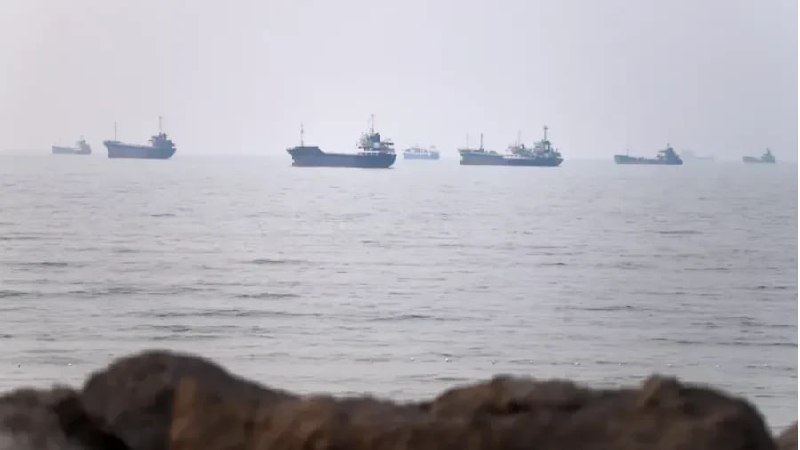
Iran and Oman announced on 25 August 2026 that they had agreed to establish a temporary joint maritime corridor through the Strait of Hormuz and to implement a joint minesweeping procedure, according to a statement on Iranian state outlet PressTV's Telegram channel. Hours earlier, Donald Trump had said the strait had already been demined and warned Tehran against laying fresh ordnance. Two announcements, one waterway, and a tanker market that has spent weeks pricing in the worst case now waiting on paperwork.
The corridor proposal is narrow in scope but high in consequence. A jointly managed route through the strait would restore the channel that the CNBC report on 25 August 2026 described as the route through which Oman and Iran are discussing both a joint shipping lane and a mine-clearing mission. That is the immediate prize. The wider prize is diplomatic: a working channel between Tehran and a Gulf mediator that has stayed on speaking terms with Washington while larger powers have traded threats.
What was actually announced
The headline out of Muscat and Tehran, as relayed by PressTV on Telegram on 25 August 2026, is that the two sides "agreed to establish a temporary joint maritime corridor through the Strait of Hormuz and implement a joint minesweeping procedure." The same PressTV post used the phrase "phased framework" to describe the sequencing, indicating that the agreement is staged rather than a single political settlement. Oman's foreign minister, on his own social media account as quoted in a separate PressTV Telegram post on the same day, called the talks "constructive dialogue in Tehran with my colleague Dr. Araghchi" and said he was "hopeful we will soon announce a temporary corridor for the Strait of Hormuz."
CNBC's reporting on 25 August 2026 framed the announcement as a joint shipping route plus a mine-clearing mission, with the mine-clearing component treated as the load-bearing element. A temporary corridor that still runs through a minefield is not a corridor; it is a suggestion. Which is why Trump's claim later the same day, that the strait "has been demined," landed harder than a routine presidential aside. If true, it changes the operational picture overnight. If aspirational, it raises the question of who did the work.
A Telegram post from BRICS News, timestamped 25 August 2026 at 18:40 UTC, condensed the announcement: "Oman and Iran discuss creating a temporary joint shipping corridor through the Strait of Hormuz." The sources reviewed for this article use the verbs "discuss," "discussed" and "agreed" interchangeably across the day, and the difference between those verbs is itself part of the story.
Two timelines running in parallel
Reading the day's reporting closely, two distinct narratives sit on top of each other. The first is the Omani-Iranian diplomatic track: a phased framework, technical talks, and the announcement, per PressTV, of an agreement to establish a temporary joint maritime corridor and a joint minesweeping procedure. The second is the American political track: a presidential declaration that the mine threat is already gone, paired with a warning that any new mining will be treated as a hostile act.
An investing.com wire piece at 15:07 UTC on 25 August 2026 carried Trump's claim that the strait "has been demined" and his warning to Iran against planting fresh ordnance. The PressTV Telegram post on the Omani-Iranian talks followed, with the BRICS News condensation landing at 18:40 UTC the same day.
Monexus assessment: the cleanest reading of the day is that two announcements were made for two audiences. The Omani-Iranian statement is calibrated for shipping insurers, Gulf ministries, and oil buyers in Beijing and beyond, all of whom need a credible technical arrangement before they will reprice war risk. The Trump statement is calibrated for the bond market and the American domestic audience, which wants the headline of resolution. Neither track cancels the other, but neither confirms the other either. The corridor only exists once the mines are verifiably gone, and the mines are only verifiably gone once an independent third party says so.
Why the insurance market matters more than the press release
Tankers do not move on the strength of communiqués. They move on the strength of war-risk insurance premiums, set in Lloyd's of London and a handful of specialist syndicates. The source material reviewed for this article does not specify current premium levels or recent moves in those markets. What the sources do specify is that a joint minesweeping procedure is part of the announced agreement. Whether underwriters treat that as a binding change will determine whether hull premiums ease and whether owners switch their transponders back on, or reroute.
A "phased framework" from Tehran and Muscat, even one endorsed by Washington, will not move premiums until it specifies: who escorts, who inspects, who pays for the minesweeping, and what happens to a vessel that drifts off the agreed lane. The sources reviewed for this article do not specify any of those four points. The press statements describe the destination, not the route. The phrase "phased framework," as used in the PressTV reporting on 25 August 2026, is itself an indicator. It implies sequenced steps, each of which is a decision point at which either side can pause.
The Trump variable
The American intervention adds an unusual feature: a presidential claim of completion without an evident operational chain behind it. The investing.com report carries Trump stating the strait "has been demined," without naming the mine-countermeasure forces involved or providing a confirmation from a third party. The source material reviewed for this article does not record a Pentagon briefing on the clearance operation on 25 August.
Monexus analysis: there are three plausible explanations, in descending order of likelihood. First, the United States or a partner conducted a covert clearance, and the political benefit of announcing it exceeded the operational benefit of keeping it quiet. Second, the United States conducted partial clearance of a specific channel rather than the full waterway, and the presidential language collapsed the distinction. Third, the statement is forward-leaning: a description of what the administration intends to have happened, framed in the past tense. The source material reviewed does not adjudicate between these. It records the claim; it does not corroborate it.
What can be said from the source set is that the Omani-Iranian announcement, per PressTV, includes a "joint minesweeping procedure," which implies that the two governments themselves do not regard the strait as already cleared. The two statements, taken together, are harder to reconcile than either is on its own.
What remains uncertain
The cleanest way to read 25 August 2026 is to separate the verifiable from the announced. Verifiable, per PressTV's Telegram post on 25 August 2026: Iran and Oman "agreed to establish a temporary joint maritime corridor through the Strait of Hormuz and implement a joint minesweeping procedure," with Oman's foreign minister describing his talks in Tehran with Dr. Araghchi as constructive. Verifiable, per the investing.com wire at 15:07 UTC the same day: Trump said publicly that the strait has been demined. Not verifiable from the sources reviewed here: who cleared the mines, on whose authority, with what assets, and against what definition of clearance. Not specified: the legal status of any joint corridor, the rules of navigation within it, and whether insurance underwriters will accept it without an independent certification.
The next plausible test is whether Iranian, Omani, and American technical teams can put a written procedure on a table within days, and whether that procedure can attract an underwriter's signature before the next tanker schedule is set. Until then, the corridor exists in the grammar of diplomacy rather than on the charts that ship pilots use.
What to watch by 1 September
Three concrete markers will tell us whether 25 August was the start of a corridor or the high-water mark of one. First, a Lloyd's market bulletin or a major P&I club circular adjusting Gulf war-risk terms in response to the announcement; the available source items do not specify whether any such bulletin has been issued. Second, a confirmed mine-countermeasure tasking order from the US Fifth Fleet or a partner navy, naming the vessels and the area cleared; the available source items do not specify any such order. Third, a resumption of normal AIS (Automatic Identification System) transponder signals from VLCCs in the strait, which would signal that owners believe the risk envelope has actually moved.
None of these is rhetorical. All three are operational. And all three will arrive, or fail to arrive, before the diplomatic language has a chance to harden into a routine that the markets can price.
Desk note: Monexus framed this as two parallel tracks rather than a single deal. The PressTV Telegram post, which describes the two sides as having agreed a corridor and a minesweeping procedure, is the strongest first-party statement in the source set and is given that weight. The Trump statement, which carries no independent operational confirmation in the sources reviewed, is labelled as such rather than laundered into the same factual register.
Wire provenance
This editorial synthesis draws on the following public wire/social posts:
- https://www.cnbc.com/2026/08/25/iran-oman-strait-hormuz-oil.html
- https://www.investing.com/news/commodities-news/trump-says-strait-of-hormuz-has-been-demined-warns-iran-not-to-plant-more-4875671
- https://t.me/bricsnews/17867
- https://t.me/presstv/204171
- https://t.me/presstv/204168