Canada's dollar-for-dollar reply puts Trump's tariff calculus back in play
Ottawa matched a 50% US tariff threat on Canadian vehicles and steel with C$27.6 billion in countermeasures, turning a 2027 deadline into a near-term test of political will on both sides of the border.
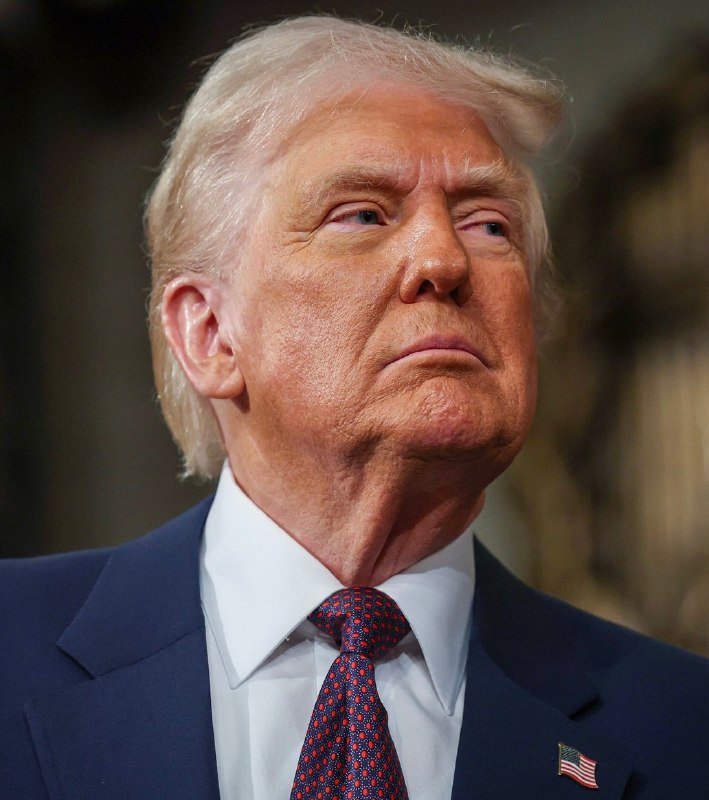
By 17:40 UTC on 25 August 2026, the trade war between the United States and Canada had acquired a number: 50. That is the tariff rate President Donald Trump said he will slap on Canadian vehicles and steel starting in January 2027, according to a report carried by TeleSUR English, the multi-state Latin American outlet aligned with the Bolivarian ALBA bloc. TeleSUR framed the announcement as a further escalation, language that signals how the move is being read in capitals well beyond Ottawa and Washington.
Less than half an hour earlier, France 24 had reported that Ottawa had already answered, and in the same units. Canada announced retaliatory tariffs on C$27.6 billion (US$19.94 billion) worth of American goods, including steel and dairy products, framed as a dollar-for-dollar response to Trump's pending action. The sequence matters. Ottawa moved first on paper, before the US measure has even taken legal effect. By the time the 50% rate activates in January 2027, both sides will have spent more than four months publicly rehearsing the choreography of a trade fight that, in dollar terms, is already one of the largest bilateral confrontations of the cycle.
What Trump actually announced, and when it bites
The 50% rate, as reported by TeleSUR English on 25 August, is scheduled to take effect in January 2027, not immediately. That timing is doing real political work. A future start date lets the White House keep the threat alive as leverage through the autumn US budget cycle, while leaving room, in principle, for negotiations, exemptions, or quiet walk-backs. It also lets Canadian industry calculate, however roughly, which assembly lines and which steel mills are most exposed if the threat is carried out. Vehicles and steel were the two sectors named in the TeleSUR summary; the report did not specify whether the 50% rate would stack on top of existing Section 232 steel and aluminum duties or replace them.
The choice of those two sectors is not accidental. Canadian steel exports to the United States run through an integrated North American supply chain that feeds American automakers and construction. Canadian vehicles, assembled in Ontario with engines, transmissions, and parts crossing the border multiple times before a finished car rolls off the line, sit at the heart of the post-NAFTA architecture. A 50% tariff on either is, functionally, a tariff on the North American production model itself. That is what makes the threat more disruptive than the headline rate implies. The rate is the number; the casualty is the supply chain.
Canada's reply, calibrated to the dollar
France 24's 16:15 UTC dispatch on 25 August describes the Canadian package as a dollar-for-dollar response covering steel and dairy products. The C$27.6 billion (US$19.94 billion) figure puts Ottawa's package at a scale calibrated to Trump's threat, not a symbolic gesture. Dairy is a pointed inclusion: the US dairy lobby has been one of the loudest voices in Congress pressing Canada to dismantle its supply-managed dairy regime, and Canada's retaliatory list effectively weaponises the same rural constituencies that American trade negotiators have tried to shield.
The political signal is as important as the trade math. By retaliating before the US measure has even taken effect, Ottawa is signalling that it will not absorb a 50% rate passively, and is preparing its own producers for the disruption. It is also signalling to other capitals watching the confrontation that a measured response, matched in scale rather than inflated for theatre, is the available playbook. In a global trade environment where tariffs have become the default instrument, the question other foreign ministries will be asking is not whether retaliation is coming but whether it will arrive in the same units.
The structural frame: what the exchange is really about
Strip away the bilateral theatre and what is being contested is the operating logic of the North American trading bloc. The USMCA review window, the automotive rules-of-origin thresholds, and the steel and aluminum arrangements negotiated between 2018 and 2020 were all built on the premise that integration produces political alignment. The Trump administration's tariff threat tests the other half of that premise: that political alignment, once lost, can be reimposed through the customs schedule. Historically, that hypothesis has a poor record. Tariffs raised and then withdrawn tend to leave behind permanent diversification by the targeted country, not permanent concessions.
There is a second, quieter pattern in the framing. The TeleSUR English report frames the US move as part of an escalating trade war; the France 24 report frames Canada's response as retaliation within that war. Both narratives treat the dispute as a discrete bilateral problem. The structural reading is that it is also a stress test of the dollar-based financial architecture that underwrites cross-border trade invoicing. When tariffs reach the 50% range, the working assumption that bilateral trade volumes stay roughly stable begins to fail, and the question of which currency, which bank, and which settlement system absorbs the shock moves from technical to political.
The counter-read, and what remains contested
The dominant framing, on both TeleSUR English and France 24, is that Ottawa is reacting to a unilateral US move. The alternate reading is that the exchange is itself the point. A 50% threat announced for January 2027 leaves four months of negotiation, exemption, and political signalling in which the threat can be dialled down or up. Critics of the Canadian position argue that matching dollar-for-dollar locks in a higher equilibrium of tariffs than either side would have settled at through quiet diplomacy, and signals to Washington that escalation will beget escalation rather than compromise. Critics of the US position argue that the threat itself is the destabilising act, because it imposes planning costs on Canadian producers months before any tariff is collected, and rewards the most aggressive framing of bilateral relations.
The sources do not specify whether the 50% figure includes carve-outs for USMCA-compliant content, whether the January 2027 date is contingent on prior negotiation, or whether Canada's C$27.6 billion package is itself conditional on the US action taking effect. Those are the load-bearing details of the story, and they remain to be clarified in the days ahead. They will determine whether this exchange is the opening round of a sustained confrontation or the loud preamble to a negotiated settlement.
What to watch before January 2027
The trajectory from here depends on three dates that have not yet been written. First, whether the US formally files the 50% tariff under Section 232 or another authority, which would trigger the legal clock on Canadian retaliation. Second, whether Ottawa expands its C$27.6 billion list or narrows it as a negotiating lever. Third, whether either side uses the autumn USMCA review process to recast the dispute inside a multilateral framework rather than a bilateral one. The reported framing on both sides, in TeleSUR English and France 24, suggests bilateral escalation. The history of US-Canada trade disputes suggests that the resolution, when it comes, will more likely be quiet, technical, and largely invisible in the headlines that announce it.
The desk note: Monexus frames this as a bilateral escalation with structural consequences for North American supply chains, not as a discrete tariff dispute. The dominant wire line on 25 August, split between TeleSUR English and France 24, treats both moves as fait accompli; the analysis above flags the January 2027 start date as a negotiating window, not a fixed point, and reads the dollar-for-dollar retaliation as a calibrated signal to third-country capitals rather than as a closing posture.
Wire provenance
This editorial synthesis draws on the following public wire/social posts:
- https://www.telesurenglish.net/trump-announces-50-tariff-on-canadian-vehicles-and-steel-starting-in-2027
- https://x.com/TelesurEnglish/status/2092306008240705606
- https://www.france24.com/en/americas/20260825-canada-strikes-back-trump-with-retaliatory-tariffs-us-trade-war-escalates
- https://f24.my/C7cW.g
- https://t.me/france24_en/18354
- https://www.telesurenglish.net/trump-announces-50-tariff-on-canadian-vehicles-and-steel-starting-in-2027
- https://x.com/TelesurEnglish/status/2092306008240705606
- https://www.france24.com/en/americas/20260825-canada-strikes-back-trump-with-retaliatory-tariffs-us-trade-war-escalates
- https://f24.my/C7cW.g
- https://t.me/france24_en/18354